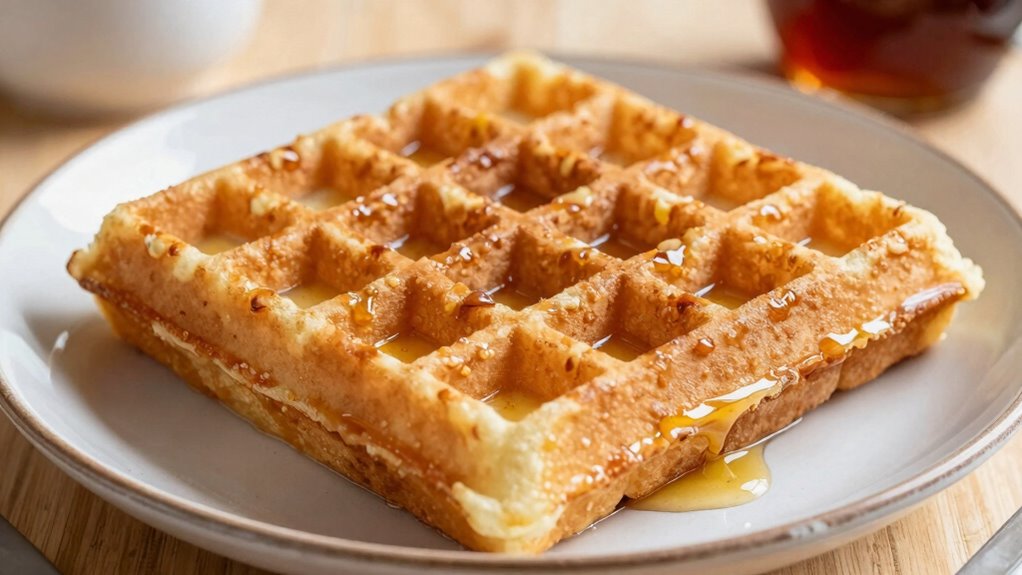

If your waffles taste oily despite using a good recipe, it’s often due to ingredient issues or cooking methods. Using old fats or rancid oils introduces excess greasiness and off-flavors. Even proper measurements matter—too much butter or oil can leave your waffles greasy. Also, improper mixing or cooking at the wrong temperature can trap fats and prevent proper evaporation. To fix this, focus on fresh ingredients and precise techniques; more tips await if you keep exploring.

Get baking supplies delivered free with Prime
- Fast, free delivery on millions of items
- Prime Video, Amazon Music and more included
- Member-only deals all year
Key Takeaways
- Using rancid or spoiled fats introduces undesirable flavors and excess greasiness despite a good recipe.
- Overusing or improperly measuring fats can cause waffles to become greasy even if the recipe is correct.
- Inadequate mixing can lead to uneven fat distribution, resulting in oily spots in the waffles.
- Cooking at too high a temperature prevents proper fat evaporation, leading to a greasy texture.
- Poor storage of ingredients accelerates spoilage, causing fats to rancidify and affect waffle taste.
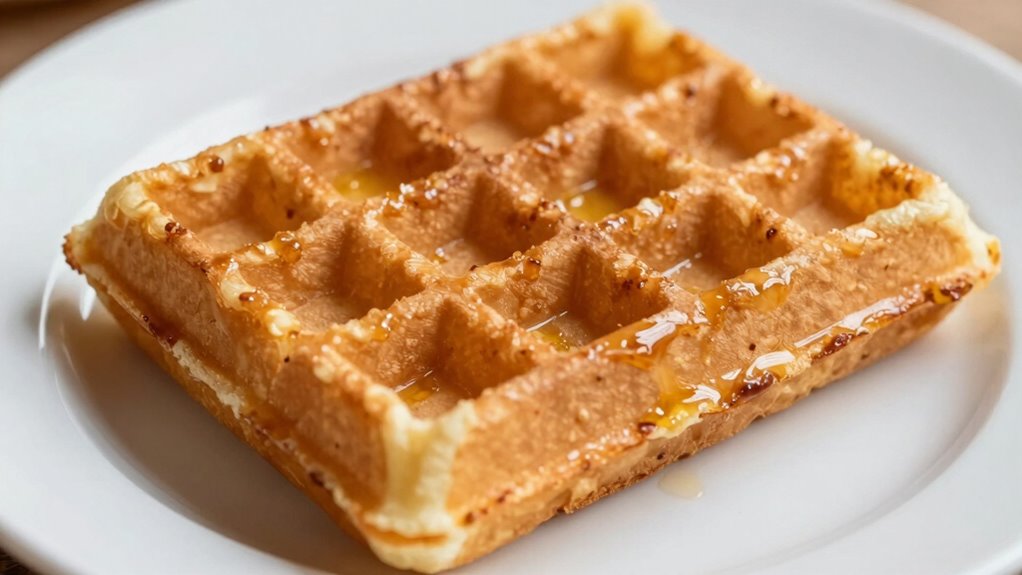
If your waffles taste oily, it’s likely due to the ingredients or cooking process. The key to avoiding that greasy flavor often comes down to understanding how ingredient freshness affects the waffle texture and how they interact during cooking. When ingredients aren’t fresh, they can introduce excess fats or oils that don’t evaporate properly, making your waffles feel greasy rather than light and crispy. For example, using old butter or rancid oils adds unwanted richness and a greasy mouthfeel. Fresh ingredients, on the other hand, help guarantee that your waffles have a desirable, tender interior with a crisp exterior without an oily aftertaste.
Your choice of fats plays a significant role in the overall waffle texture and taste. If you use too much butter or oil, or if the fat isn’t of good quality, it can lead to an oily flavor. High-quality, fresh fats melt evenly and distribute throughout the batter, helping create a balanced texture. When fats are expired or stored improperly, they can develop a strong, unpleasant odor and flavor, which transfers into your waffles. Overusing fats or adding them at the wrong stage of mixing can also cause excess grease, especially if you don’t measure carefully. To prevent this, stick to the recommended amounts and verify your fats are fresh and of good quality. Additionally, understanding how ingredient interaction during mixing influences the final result can help you avoid excess greasiness. Proper storage practices for your ingredients can also maintain their freshness and prevent unintended greasiness. Incorporating proper temperature control during cooking is crucial to ensure excess oils are properly evaporated and your waffles achieve the perfect crispy texture. Furthermore, being aware of cooking techniques can help optimize moisture and fat distribution for the best results.
high-quality vegetable oil for baking
As an affiliate, we earn on qualifying purchases.
As an affiliate, we earn on qualifying purchases.
Frequently Asked Questions
Can Using Certain Oils Make Waffles Taste Oilier?
Yes, using certain oils can make your waffles taste oilier. Some oils, like coconut or butter, can enhance flavor but also increase oil absorption, leading to a greasier texture. To prevent this, choose oils with a neutral flavor and lighter consistency, like vegetable or canola oil. This way, you still enjoy flavor enhancement without sacrificing a crisp, non-oily waffle.
Does Overmixing Batter Affect the Oiliness of Waffles?
Overmixing batter can make your waffles taste incredibly oily, almost like they’re soaked in a river of grease. When you overmix, the gluten develops too much, leading to a denser, greasier texture. This impacts batter consistency, making it more likely to trap excess oil. Ingredient substitutions, like using different oils, can also affect this. To avoid oily waffles, mix just until combined and stick to your recipe’s recommended ingredients.
How Does Waffle Iron Temperature Influence Oiliness?
Your waffle iron temperature directly affects the waffle texture and oiliness. If your cooking temperature is too low, the batter may not crisp up properly, making the waffles seem greasy or oily. Conversely, an excessively high temperature can burn the exterior while leaving the inside undercooked, also causing oily notes. To prevent this, find the right balance with a consistent temperature that crisps the waffle without trapping excess oil, ensuring a perfect texture.
Do Storage Methods Impact the Oiliness of Cooked Waffles?
Yes, storage methods can impact the oiliness of cooked waffles. If you store waffles improperly, they might absorb excess oil from the environment, especially if stored in a humid or greasy area. To maintain the right moisture balance, keep waffles in an airtight container at room temperature or in the refrigerator. Proper storage prevents oil absorption from external factors, helping your waffles stay crisp and less greasy when you enjoy them later.
Are There Specific Ingredients That Cause Waffles to Taste Greasy?
Think of your waffle as a balanced symphony; too much of certain ingredients can throw it off. Using low-quality oils or excess butter can make it taste greasy, overshadowing delicate flavors. Ingredients like margarine or cheap oils can create a heavy, oily mouthfeel. To keep that perfect flavor balance, choose high-quality ingredients and measure carefully. This way, your waffles stay light and crispy, not greasy and dull.
Conclusion
So, next time your waffles turn out oily despite following a good recipe, don’t rush to blame the ingredients. There’s a hidden culprit waiting to surprise you—something subtle yet impactful. Uncovering this secret might just change your entire waffle game. Are you ready to dig deeper and discover what’s been lurking behind that oily taste? The answer could be closer than you think, and once revealed, your perfect, non-oily waffles will never be the same.
Halloween Picks
halloween
As an affiliate, we earn on qualifying purchases.