To prevent your mix-ins from sinking, start by coating them lightly in flour to help them stay suspended. Adjust your batter to be thicker by reducing liquids or adding more flour, which resists gravity. Use gentle folding and start baking at a higher temperature to set the batter quickly, then lower it for even doneness. Choosing lighter or smaller ingredients also helps. Follow these tips to keep your mix-ins evenly distributed—you’ll discover more techniques that can make a difference.

Get baking supplies delivered free with Prime
- Fast, free delivery on millions of items
- Prime Video, Amazon Music and more included
- Member-only deals all year
Key Takeaways
- Coat mix-ins lightly in flour before adding to batter to improve suspension during baking.
- Use a thicker, more viscous batter by reducing liquids or adding extra flour.
- Fold mix-ins gently into the batter to preserve structure and prevent sinking.
- Opt for smaller or chopped pieces of mix-ins to reduce their density.
- Start baking at a higher temperature to set the batter quickly, then lower the heat for even baking.
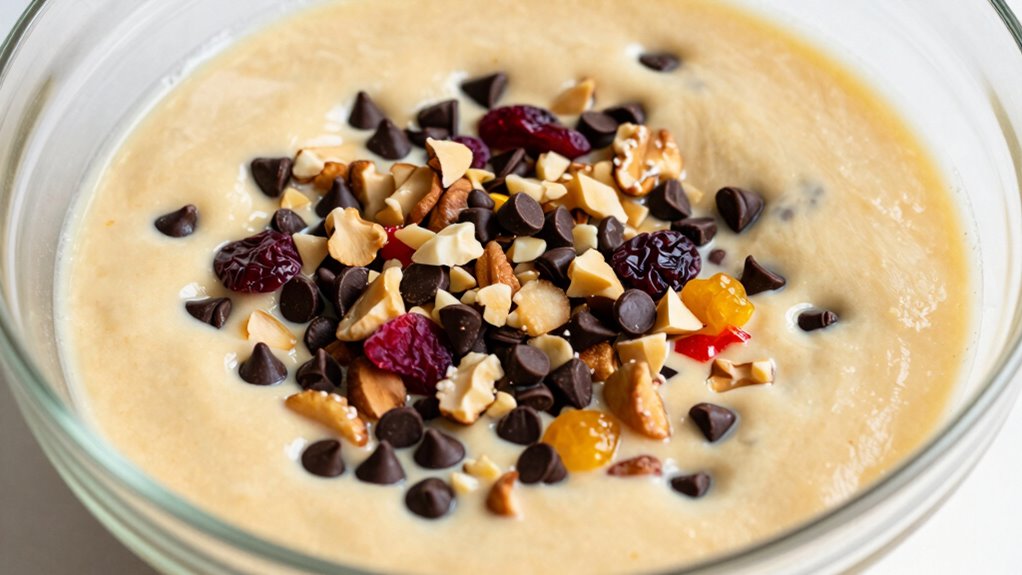
Ever wonder why your mix-ins, like fruit or chocolate chips, often sink to the bottom of your batter? It’s a common dilemma, especially when you’re aiming for evenly distributed flavor combinations in your baked goods. The key lies in understanding how the weight and moisture content of your mix-ins interact with your batter, as well as employing specific baking techniques to keep everything evenly spread.
One effective way to prevent sinkage is to coat your mix-ins in a little flour before adding them to the batter. This simple step creates a light barrier that helps suspend them during baking. When you toss your chocolate chips or dried fruit in flour, they adhere lightly, reducing their density relative to the batter. This technique is especially useful for heavier ingredients, ensuring they don’t settle at the bottom before the heat even reaches your oven.
Coat mix-ins in flour to keep them suspended and evenly distributed during baking.
Adjusting your batter’s consistency can also make a significant difference. Thicker batters tend to hold mix-ins better because they provide more resistance against gravity. If your batter is too thin, consider adding a touch more flour or reducing the liquid slightly. This doesn’t mean sacrificing moisture—just enough to create a more viscous mixture that keeps your mix-ins afloat. When you’re experimenting with flavor combinations, think about the overall texture of your batter; a slightly stiffer batter can be your best defense against sinking ingredients. Proper batter consistency is crucial for achieving evenly distributed ingredients. Additionally, using the right ingredient density can influence how well your mix-ins stay suspended during baking.
Baking techniques play an essential role as well. For instance, starting your baking at a slightly higher temperature for the first few minutes can help set the batter quickly, trapping the mix-ins in place. Then, lowering the temperature to finish baking ensures even doneness without additional sinking. Gentle folding, rather than stirring vigorously, also helps distribute ingredients evenly without breaking down the batter’s structure. When incorporating mix-ins, fold them in carefully to maintain the batter’s integrity and prevent them from sinking to the bottom. Being mindful of the density of ingredients can help you choose the best mix-ins for your recipe, as lighter ingredients are less prone to sinking. Choosing the right mix-ins for your recipe is also important. Heavier fruits like chopped apples or large chocolate chunks are more prone to sinking, so consider chopping them into smaller pieces or selecting lighter options. Combining strategic coating, batter consistency adjustments, and proper baking techniques will give you better control over the distribution of your ingredients. By paying attention to these details, you’ll create baked goods with delightful, evenly distributed flavor combinations, making every bite just as delicious as you envisioned.
flour coating for chocolate chips
As an affiliate, we earn on qualifying purchases.
As an affiliate, we earn on qualifying purchases.
Frequently Asked Questions
Can the Type of Mix-In Affect Sinking?
Yes, the type of mix-in can affect sinking, impacting both flavor enhancement and texture variation. Denser mix-ins, like chocolate chips or nuts, tend to sink more easily, while lighter ones, like dried fruit or mini chocolate chips, stay suspended better. Choosing the right mix-in based on weight and texture helps guarantee even distribution, enhancing the flavor and creating a pleasing variation in texture throughout your baked good.
Does Batter Consistency Influence Mix-In Distribution?
They say “a stitch in time saves nine,” and that applies to batter consistency too. Yes, your batter viscosity influences mix-in distribution—thicker batters hold mix-ins better, preventing sinking. Use proper mixing techniques, like folding gently, to evenly distribute ingredients. Adjust batter viscosity by altering liquid or flour amounts, ensuring your mix-ins stay suspended, giving you evenly baked goodies with delightful texture and flavor.
Are There Specific Mix-Ins That Are Less Likely to Sink?
Certain mix-ins, like chopped nuts, chocolate chips, or dried fruit, are less likely to sink because of their size and density. For better mix-in placement, choose flavor variations that are larger or heavier, but consider their weight to prevent sinking. To guarantee even distribution, gently fold these mix-ins into the batter, and consider tossing them in a little flour beforehand to help keep them suspended during baking.
How Does Temperature Impact Mix-In Sinking?
Temperature plays a vital role in preventing mix-ins from sinking. When your batter is too warm, it’s thinner, making it easier for mix-ins to settle at the bottom, disrupting your flavor pairing. To avoid this, chill your batter slightly and incorporate baking techniques like tossing mix-ins in flour before folding. This helps them stay suspended, ensuring even distribution and enhanced flavor throughout your baked treat.
Can Pre-Coating Mix-Ins Prevent Them From Sinking?
Pre-coating your mix-ins with a little flour or batter can work wonders, preventing them from sinking and creating a perfect mix-in texture. It’s like giving them a tiny shield against the batter’s density, keeping them evenly distributed. This simple trick keeps your treats looking professional and guarantees each bite has the right mix-in flavor without sinking to the bottom, even when your batter is thick or dense.
Conclusion
Next time your chocolate chips sink to the bottom, remember you’re not alone—many bakers face this challenge. Imagine Sarah, who thought her cookies were ruined because her blueberries sank. But she learned to toss them lightly in flour first, and her next batch was perfectly dotted with fruit. With a little patience and the right technique, you’ll turn sinking mishaps into beautifully textured treats. Keep experimenting, and your baked goods will always shine!
Fall Picks
fall essentials
As an affiliate, we earn on qualifying purchases.