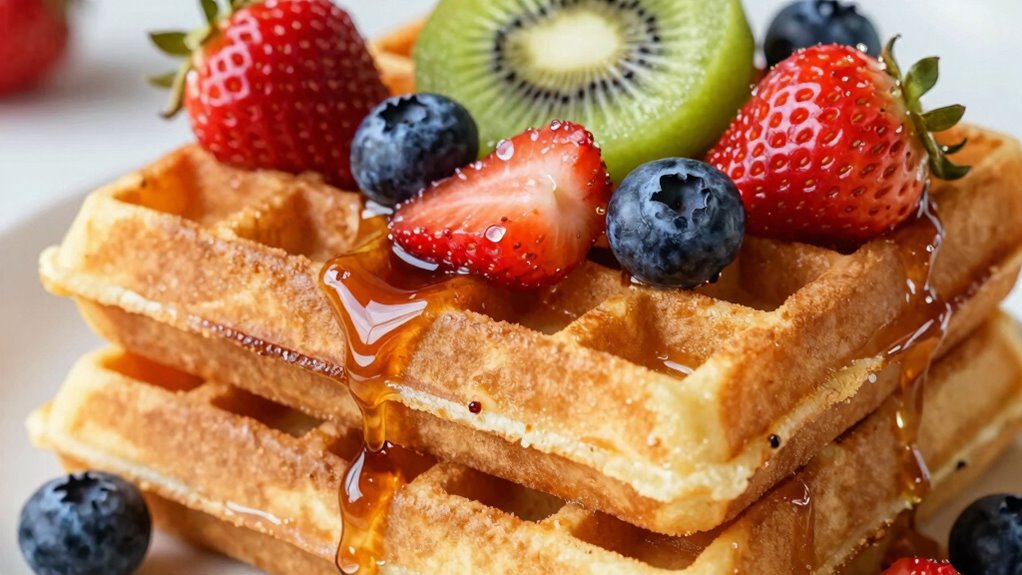

Adding fresh fruit to waffles can wreck their texture because the fruit’s moisture seeps into the waffle’s porous surface, causing it to become mushy and soggy. As fruit juices are released, they soften the crisp edges and dampen the waffle’s structure, spoiling the ideal crunch. To keep your waffles perfect, you need to understand which fruits cause less sogginess and how to prevent moisture from ruining your treat. Keep going to discover effective tips and tricks.

Get baking supplies delivered free — and shop member deals
- Fast, free delivery on millions of items
- Access to Prime Big Deal Days deals on October 6–7
- Prime Video, Amazon Music and more included
Key Takeaways
- Fresh fruit releases moisture that softens and soggifies the waffle’s crispy exterior.
- Porous waffle surfaces allow fruit juices to penetrate and cause mushiness.
- Adding fruit too early leads to increased moisture spread, compromising texture.
- High-moisture fruits can quickly turn waffles soggy and unappealing.
- Proper preparation and timing are essential to prevent fruit moisture from ruining waffles.
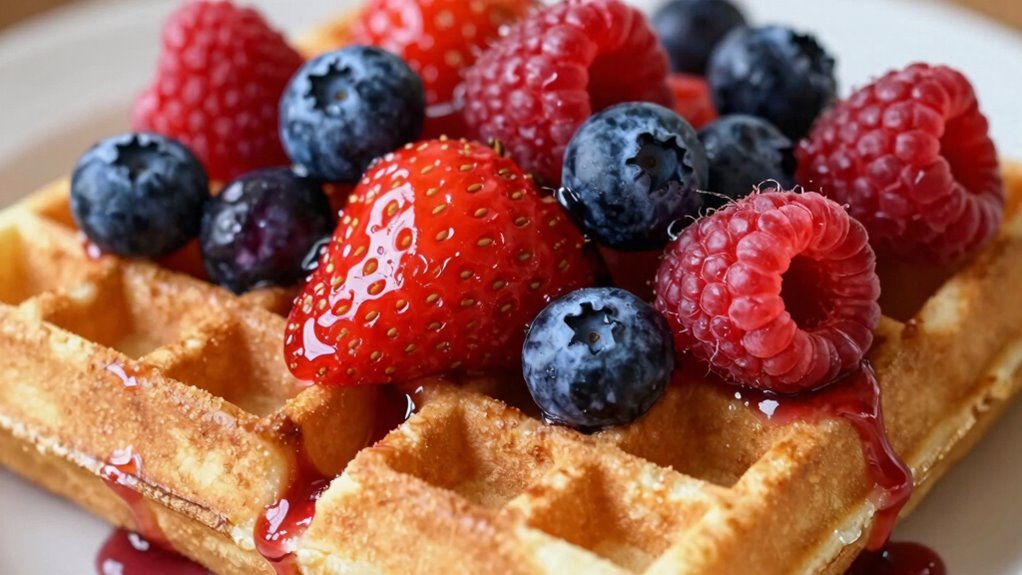
Fresh fruit might seem like the perfect topping for waffles, but it often ends up wrecking them instead. The main culprit is fruit moisture. When you pile fresh fruit onto a warm waffle, the moisture from the fruit seeps into the waffle’s surface. Waffles are designed to be crispy on the outside and tender inside, but that moisture can quickly turn that crisp edge into soggy mess. When fruit releases its juices, it dampens the waffle’s exterior, softening its structure and ruining the texture you’re after. Instead of enjoying that satisfying crunch, you get a floppy, unappetizing bite.
Fresh fruit can ruin waffles by releasing moisture, turning crispy edges soggy and compromising texture.
Your waffle’s texture is delicate, and adding wet toppings like fresh fruit can undermine it in seconds. The moisture penetrates the waffle’s porous surface, causing it to lose its crispness and become mushy. If you’re aiming for that perfect contrast—crispy exterior with fluffy interior—fruit moisture works against you. The longer the fruit sits on the waffle, the more moisture it releases, making the waffle soggy and less enjoyable. This not only affects the eating experience but also diminishes the visual appeal, as a soggy waffle looks less inviting. Understanding moisture transfer and how it affects food textures can help you make better topping choices.
Another factor to take into account is how quickly moisture moves within the waffle. The heat from the waffle initially keeps it crisp, but once the fruit is added, the heat causes the fruit to release more juice. That juice then spreads throughout the waffle, softening the texture from the inside out. If you want to preserve the waffle’s integrity, you need to be strategic. For example, adding fruit just before serving minimizes the time for moisture transfer, helping to keep the texture intact. Alternatively, pre-treating the fruit by draining excess juice or using dried fruit can help reduce moisture transfer altogether. Additionally, understanding biodiversity and how different fruits vary in moisture content can help you choose options that are less likely to soggy your waffle. A good knowledge of fruit moisture content can guide you in selecting the best toppings for maintaining that perfect texture.
While fresh fruit adds flavor and natural sweetness, it’s essential to recognize how its moisture impacts your waffle’s texture. If you love the look and taste of fresh fruit on your waffles, think about adding it in small quantities or just before eating. You might also consider layering techniques—placing the fruit between the waffle and a protective topping like whipped cream or syrup, which can act as a barrier and slow down moisture absorption. Ultimately, understanding how fruit moisture interacts with waffle texture helps you make smarter choices so your breakfast remains crispy and delightful, rather than soggy and disappointing.
As an affiliate, we earn on qualifying purchases.
Frequently Asked Questions
How Can I Prevent Fruit From Making Waffles Soggy?
To prevent fruit from making your waffles soggy, keep the fruit dry before adding it and layer it carefully. You can also toss the fruit in a little fruit syrup or lemon juice to slow moisture absorption. Serve the waffles immediately after adding the fruit to preserve the crisp waffle texture. This way, your waffles stay crispy longer, and the fruit remains fresh without compromising the overall dish.
What Types of Fruit Are Best for Waffles?
Imagine a symphony—your waffle and fruit working in harmony. Bright berries like strawberries and blueberries are excellent choices, offering vibrant flavor pairings and moisture control. Ripe bananas add natural sweetness without sogginess, while firm apple slices hold up well. Choose fruit varieties that complement your waffle’s flavor and avoid overly juicy options. This way, you guarantee each bite sings with balance, texture, and deliciousness.
Should Fruit Be Cooked Before Adding to Waffles?
You should cook fruit before adding it to waffles to enhance its flavor and prevent excess moisture from ruining the waffle texture. Cooking concentrates the fruit’s natural sweetness and reduces juiciness, ensuring your waffles stay crispy and fluffy. Fresh fruit can release water when added raw, making waffles soggy. So, pre-cooking your fruit helps maintain the ideal balance of fruit flavor and waffle texture, resulting in a tastier breakfast.
How Do I Store Leftover Fruit-Topped Waffles?
Ever wonder how to keep your waffle toppings fresh? To store leftover fruit-topped waffles, wrap them tightly in plastic wrap or place them in an airtight container and refrigerate. For best fruit preservation, add fresh fruit toppings just before serving. Reheat waffles gently in a toaster or oven, then top with fresh fruit for a delicious, crisp breakfast. This way, your toppings stay fresh and flavorful longer.
Can Frozen Fruit Be Used Instead of Fresh?
Yes, you can use frozen fruit instead of fresh for your waffles. Just thaw and drain excess moisture first, as excess water can make your waffles soggy. Frozen fruit works well for various fruit pairings and flavor combinations, offering convenience and consistent quality. Keep in mind that thawed fruit might release more juice, so consider adjusting toppings or adding a touch of syrup to balance flavors and textures.
Conclusion
So, next time you’re craving fresh fruit on your waffles, think twice. That juicy berry or ripe banana might seem perfect, but it can turn your crispy masterpiece soggy in minutes. Did you know that moisture from fresh fruit can reduce waffle crispiness by up to 30%? To keep your waffles crisp and delicious, consider adding fruit just before eating or opting for dried or cooked options. Your taste buds will thank you!
Halloween Picks
halloween
As an affiliate, we earn on qualifying purchases.