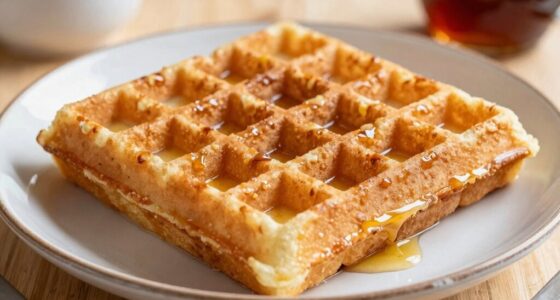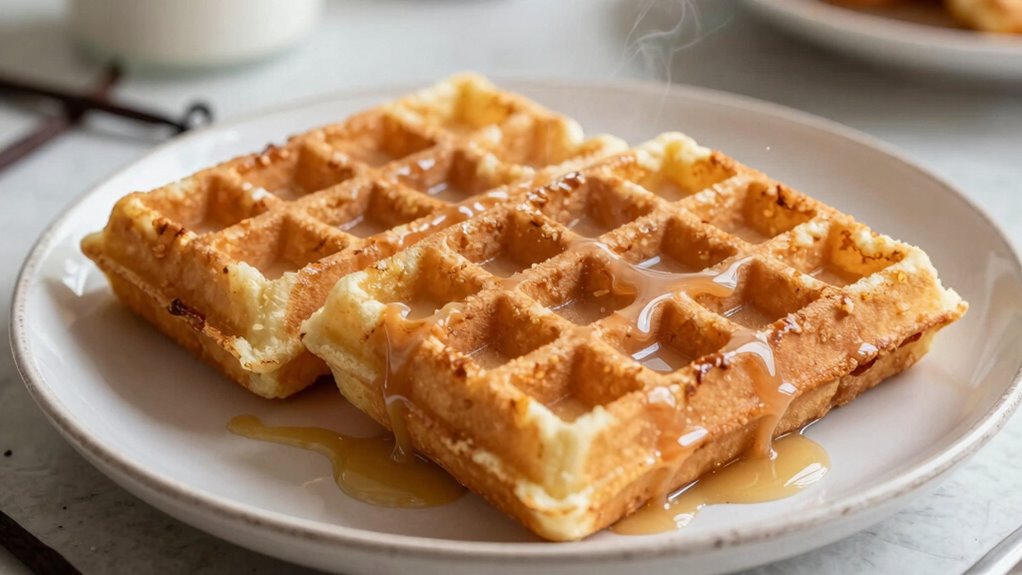

If your homemade waffles taste flat despite using lots of vanilla, the issue might be with your batter’s aeration, ingredient proportions, or cooking temperature. Overmixing can deflate air bubbles, while using the wrong leavening or inaccurate ingredient amounts can prevent proper rising. Also, if your waffle iron isn’t preheated enough, the batter won’t set and rise correctly. Paying attention to these factors can help you perfect your waffles, and there’s more to discover if you want better results.

Get baking supplies delivered free with Prime
- Fast, free delivery on millions of items
- Prime Video, Amazon Music and more included
- Member-only deals all year
Key Takeaways
- Overmixing batter can deflate air bubbles, leading to flat waffles despite the vanilla flavor.
- Insufficient preheating of the waffle iron prevents proper batter setting and rising.
- Using incorrect ingredient proportions, especially leavening agents, hampers proper rise.
- Not allowing batter to rest can reduce gluten development and air trapping, causing flatness.
- Excessively hot or uneven waffle iron temperature can burn outside without proper interior rise.

If your homemade waffles taste flat, it’s likely because something in the batter or preparation process isn’t quite right. Even if you’ve added plenty of vanilla to boost flavor, the texture and rise might still fall short. One common issue is ingredient substitutions. For example, swapping out buttermilk for regular milk can affect the batter’s acidity, which plays a vital role in activating leavening agents like baking powder. When you replace ingredients without taking into account their impact, the waffles may not rise properly, resulting in a dense, flat texture. Similarly, using a different type of flour—like whole wheat instead of all-purpose—can change the batter’s consistency and how well it aerates. To avoid this, stick to the recipe’s recommended ingredients or understand how substitutions influence the chemistry of your batter.
Beyond ingredients, cooking temperature is another essential factor that can cause flat waffles. If the waffle iron isn’t hot enough, the batter won’t immediately set and rise properly, leading to a flimsy, lackluster texture. Conversely, if it’s too hot, the outside can burn before the interior has a chance to rise, making the waffle flat and dense. The ideal temperature varies between waffle irons, but a good rule of thumb is to preheat your iron until it’s hot enough that a drop of water sizzles upon contact. Maintaining consistent heat guarantees the batter cooks evenly and traps the gases produced by leavening agents, resulting in a fluffy, well-risen waffle. Remember, the cooking temperature isn’t just about the iron; it’s about the overall environment where you’re preparing your waffles. Additionally, ensuring the batter’s aeration** is preserved during mixing is crucial for achieving a fluffy texture. Proper ingredient proportions are also key, as too much or too little of certain ingredients can impact the overall rise and texture of your waffles. Also, consider the resting time** for the batter, as allowing it to rest can help develop gluten and trap more air, leading to a lighter waffle.
Another aspect to take into account is how you handle the batter before cooking. Overmixing can deflate the batter, knocking out the air bubbles that help create lift. Gentle folding when combining wet and dry ingredients preserves the aeration and leads to a lighter texture. If your batter is not mixed carefully, it can also cause gluten development, which might make the waffles tougher rather than fluffy. If you’ve made ingredient substitutions, be mindful that some can alter the batter’s structure—like using less fat or different leavening agents—so adjust your mixing technique accordingly. Also, allowing the batter to rest for a few minutes can help develop gluten and stabilize the batter, which can improve the final rise and texture.
In essence, making sure your waffles are fluffy and flavorful requires paying attention to both the ingredients and the cooking temperature. Small adjustments, such as choosing compatible ingredient substitutions and preheating your waffle iron properly, can make a big difference. When you master these details, vanilla’s flavor will shine through in a perfectly risen, tender waffle rather than a flat, disappointing one.
waffle iron preheating thermometer
As an affiliate, we earn on qualifying purchases.
As an affiliate, we earn on qualifying purchases.
Frequently Asked Questions
Can the Type of Vanilla Affect Waffle Flavor?
Yes, the type of vanilla can considerably affect your waffle flavor. Using high-quality vanilla extract from pure vanilla beans enhances the richness and aroma, making your waffles taste more vibrant. Cheaper or artificial vanilla extracts often lack depth, resulting in a flat flavor even if you use plenty. So, investing in good vanilla extract and choosing beans with strong, fragrant qualities can elevate your waffles and prevent them from tasting dull.
Does Overmixing Batter Impact Waffle Fluffiness?
Overmixing your batter can make your waffles dense and flat, like a pancake that lost its air. When you mix too vigorously, gluten develops too much, affecting batter consistency and preventing proper rise. To keep waffles fluffy, gently fold ingredients until just combined. Think of it as a delicate dance—too much force ruins the rhythm. Proper mixing technique guarantees your batter stays light, giving you that perfect, airy waffle every time.
How Does Waffle Iron Temperature Influence Taste?
Your waffle iron’s temperature considerably influences taste by affecting the cooking temperature, which impacts the flavor profile. If it’s too hot, the outside may burn before the inside cooks, resulting in a bitter or uneven flavor. If it’s too low, your waffles won’t develop a crisp exterior, dulling the overall taste. Maintain a consistent, appropriate temperature to enhance flavor and achieve perfectly cooked, flavorful waffles every time.
Can Using Expired Ingredients Make Waffles Flat?
Using expired ingredients is like trying to paint with faded colors — it dulls your waffle’s flavor and can make them taste flat. Expired ingredients, especially baking powder or vanilla, undergo flavor deterioration, losing their punch. This reduces the leavening power and flavor impact, resulting in waffles that lack the lively taste you’re aiming for. Always check expiration dates to keep your waffles fresh and flavorful.
Does Altitude Change Waffle Batter Behavior?
Altitude effects can considerably change your waffle batter’s behavior. At higher elevations, the air is thinner, causing batter to rise faster and potentially become less consistent. You might notice your batter is thinner or more runny, which affects the texture of your waffles. To fix this, adjust the amount of leavening and liquids, and beat your batter less. These tweaks help maintain proper batter consistency and guarantee fluffy, tasty waffles.
Conclusion
So, if your waffles wonder why they lack a lively lift, don’t despair. Double-check your ingredients, avoid overmixing, and embrace the balance of vanilla’s vibrant vibe. With a little patience and precision, you’ll produce perfectly fluffy, flavor-filled waffles that fascinate and fulfill. Remember, small shifts in your technique can turn flat fails into fabulous feasts. Keep experimenting, stay excited, and savor the sweet success of your homemade masterpiece!
Halloween Picks
halloween
As an affiliate, we earn on qualifying purchases.