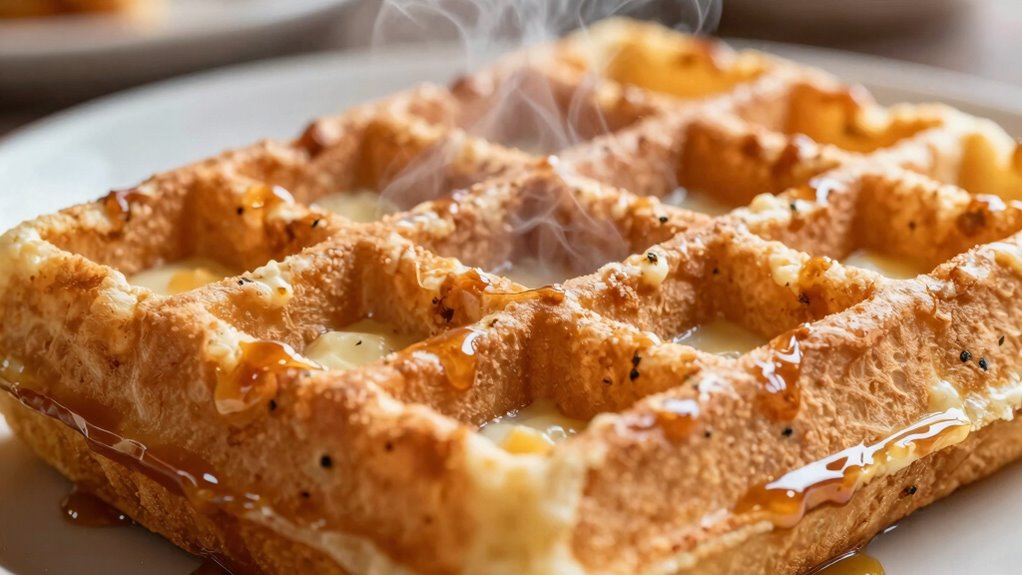

Savory waffles often refuse to crisp because they contain higher moisture levels from ingredients like cheese, bacon, or wet toppings, which create steam during cooking and make the crust soggy. Overcrowding the waffle iron, not preheating it enough, or pressing too firmly can trap moisture and prevent browning. Using alternative batters with less gluten or adding toppings too early also affects crispness. Keep exploring to discover more tips for perfectly crunchy waffles.

Get baking supplies delivered free with Prime
- Fast, free delivery on millions of items
- Prime Video, Amazon Music and more included
- Member-only deals all year
Key Takeaways
- Excess moisture in batter or toppings creates steam, preventing the crust from crisping properly.
- Insufficient preheating or overly high moisture content hampers proper browning and crunch.
- Using alternative flours lacking gluten can weaken crust formation and crispness.
- Overcrowding or pressing the waffle iron traps moisture, leading to sogginess.
- Improper storage, such as stacking or covering, causes leftover waffles to absorb moisture and lose crunch.

If you’re expecting your savory waffles to turn out crispy, you might be disappointed, as they often end up soft instead. The main reason for this is that savory batters tend to contain higher moisture levels, which can prevent the crust from crisping up properly. When you pour batter into the waffle iron, steam is generated from the water content, and if there’s too much moisture, it creates a soggy interior rather than a crunchy exterior. To combat this, some cooks add ingredients like cheese or bacon to their batter, but even then, the moisture can still be a challenge.
Another factor that impacts crispiness is the choice of toppings and how they’re added. Sweet toppings like syrup or fruit might seem unrelated, but they influence the overall texture of your waffle. If you add toppings too early or use toppings with high moisture content, they can make your waffle soggy quickly. It’s best to add sweet toppings after cooking, allowing the waffle to remain crisp longer. Similarly, if you’re using alternative batters—such as those made with almond flour, chickpea flour, or other gluten-free options—you might notice they don’t crisp up as easily as traditional waffle batter. Many alternative batters contain different moisture levels or lack the gluten structure that helps create a firm crust, so adjusting your recipe or technique is key.
The type of waffle iron you use also matters. If it’s not hot enough, the batter won’t crisp up properly. Preheating your waffle iron thoroughly ensures the batter hits a hot surface right away, encouraging browning and crunch. Overcrowding the iron or pressing it too firmly can trap moisture inside, leading to softer waffles. It’s worth experimenting with the cooking time and temperature settings to find the ideal balance for crispness. Additionally, proper preheating and maintenance of your waffle iron can make a significant difference in achieving a crispy finish. Furthermore, a clean waffle iron surface prevents uneven heat distribution, which can hinder crispiness. In addition, using a light coating of oil or non-stick spray can help promote even browning and crispness.
Additionally, how you store and serve your waffles influences their texture. If you leave cooked waffles sitting out uncovered, they absorb ambient moisture and lose their crispiness. To keep them crispy longer, store leftovers in a single layer on a wire rack instead of stacking them, and reheat in a toaster or oven rather than a microwave, which tends to make them soggy. Proper air circulation plays a crucial role in maintaining that desirable crisp texture.
As an affiliate, we earn on qualifying purchases.
Frequently Asked Questions
Can Adding Too Much Liquid Affect Waffle Crispiness?
Yes, adding too much liquid can affect waffle crispiness. When moisture content is too high, the excess liquid weakens the ingredient ratio, causing the waffle to stay soggy instead of crisp. To prevent this, measure ingredients carefully and stick to the recommended liquid amounts. A proper balance guarantees the waffle cooks evenly, develops a crunchy exterior, and stays light and fluffy inside. Too much liquid disrupts this ideal texture.
Does the Type of Waffle Iron Influence Texture?
Yes, the type of waffle iron influences texture. Waffle iron materials, like cast iron or non-stick coatings, distribute heat differently, affecting crispiness. Additionally, precise temperature settings guarantee the waffle cooks evenly; too low, and it won’t crisp up, too high, and it might burn. Using the right waffle iron and adjusting temperature settings accordingly helps achieve that perfect, crispy exterior while maintaining a tender interior.
How Does Resting Batter Impact Crispness?
Resting batter is like giving it a power-up—your waffles will turn into crispy champions! During this time, fermentation effects develop, enhancing flavor and structure, while batter hydration reaches just the right level. This makes the gluten better, creating a sturdier, crispier exterior. So, don’t rush it; resting lets the batter’s full potential shine, transforming soggy waffles into crispy, golden masterpieces you’ll love.
Can Using Whole Wheat Flour Change Crispiness?
Using whole wheat flour can affect the crispiness of your waffles. It promotes gluten development, which can make the texture denser and less crisp. However, it also offers a richer flavor infusion, enhancing taste. To maintain crispiness, consider balancing whole wheat with lighter flours and adjusting moisture levels. This way, you get the flavor benefits without sacrificing that desirable crispy exterior.
Is There an Ideal Cooking Time for Crispy Savory Waffles?
Think of the ideal cooking time like a tightrope walk—you want just enough to crisp without burning. Typically, 4-6 minutes on a hot waffle iron works well. Keep an eye out for golden-brown color. For flavor variations, try adding cheese or herbs before cooking. Serving suggestions include topped with savory spreads or eggs. Adjust time based on your waffle maker’s heat, and you’ll get perfect, crispy results every time.
Conclusion
So, next time your savory waffle refuses to crisp, remember: it’s not just a stubborn flaw but a whisper from the batter, reminding you to tweak your technique. Like a detective uncovering clues, you can adjust ingredients, temperature, or resting time to release that perfect crunch. Don’t let sogginess be your story’s villain—embrace the challenge, for every soggy waffle holds the promise of crispy triumph. After all, every great chef knows: persistence turns batter into brilliance.
Fall Picks
fall essentials
As an affiliate, we earn on qualifying purchases.