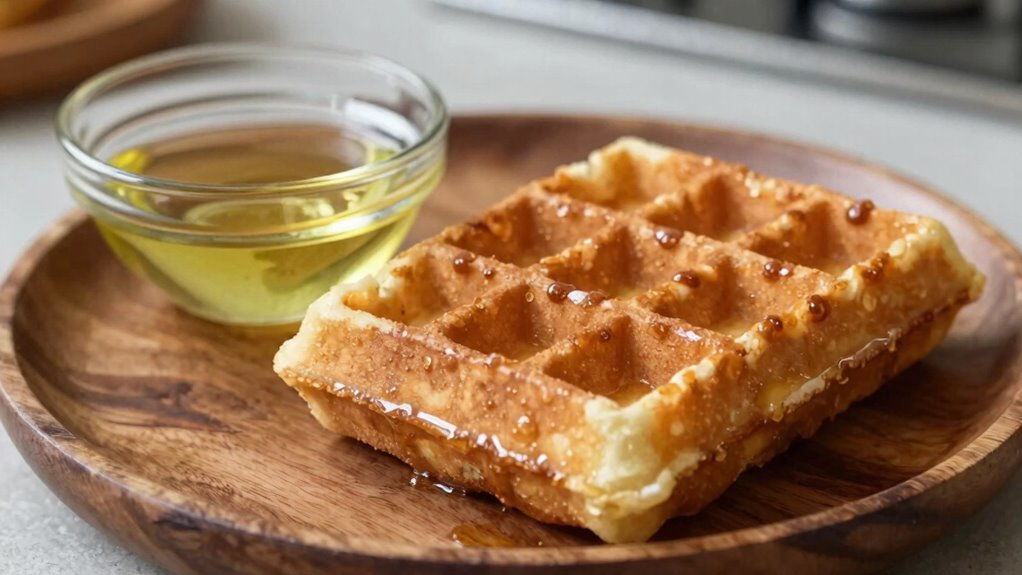

When you swap butter for neutral oil in a waffle recipe, you’ll notice a milder flavor that lets toppings and syrups stand out more. The waffles become lighter and less crispy, as neutral oil doesn’t add the tenderness and flaky layers that butter provides. The batter may also be slightly denser since oil doesn’t aerate as well. Want to learn how to adjust your technique for the best results? Keep exploring these cooking tips.
Play games included with Prime
Start a Prime free trial and play with Amazon Luna on your devices.
As an affiliate, we earn on qualifying purchases.
Key Takeaways
- Replacing butter with neutral oil results in a milder, less rich flavor, allowing toppings to stand out more.
- Waffles become lighter, softer, and less crisp, with a more uniform texture.
- Neutral oil reduces batter aeration, potentially leading to denser waffles unless whipped egg whites are added.
- The absence of butter decreases flaky layers and exterior crispness, affecting overall structure.
- Using neutral oil creates a cleaner taste, ideal for highlighting flavors or toppings without added richness.
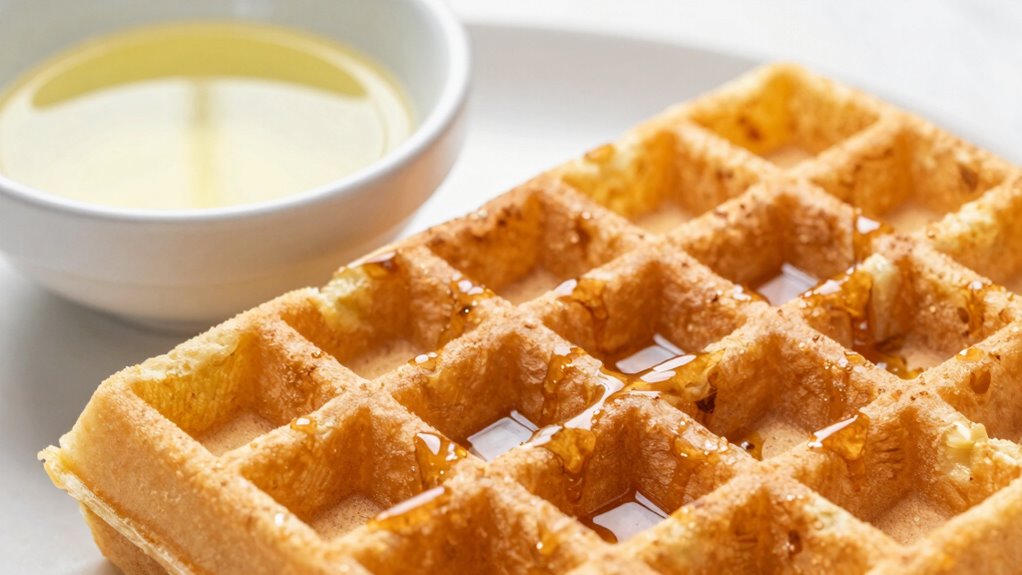
When you swap butter for neutral oil in a waffle recipe, you’ll notice immediate differences in texture and flavor. This simple substitution can markedly alter the final product, influencing both how your waffles taste and how they feel when you bite into them. Since butter has a distinctive flavor and a solid state at room temperature, replacing it with a neutral oil changes the overall profile and structure of your waffles.
Regarding flavor impact, using neutral oil results in a more subdued taste. Butter contributes a rich, creamy flavor that enhances the overall warmth and sweetness of your waffles. When you switch to a neutral oil like vegetable or canola oil, those flavor notes diminish, leaving a cleaner, more neutral taste. This can be desirable if you want your toppings or syrups to shine without competing with the waffle itself. However, if you’re after that classic buttery flavor, the substitution might feel like a missed opportunity, making your waffles less indulgent and more plain.
Using neutral oil yields a cleaner taste, letting toppings shine, but sacrifices the rich, buttery flavor.
Texture changes are equally noticeable. Butter, being semi-solid at room temperature, adds a certain tenderness and slight crispness to the exterior of your waffles. Its fat content also aids in creating a flaky, airy interior. When you use neutral oil, which remains liquid at room temperature, the structure of the batter shifts. The waffles tend to be a bit lighter and less crisp on the outside, often resulting in a softer, more uniform texture. This can be advantageous if you prefer a more delicate, less dense waffle, but it may also mean you lose some of that satisfying crunch that butter provides. Moreover, because oils don’t incorporate air as effectively as butter when mixed, your batter may not aerate as well, leading to slightly denser waffles. Incorporating air incorporation techniques such as folding in whipped egg whites can help improve aeration when using neutral oils. Additionally, understanding the baking behavior of ingredients like butter and oil can help you better control the final texture of your waffles. For example, incorporating whipped eggs or adjusting the mixing technique can help improve aeration when using neutral oils. Being mindful of these ingredient properties can help you adapt your recipe to achieve the desired results.
As an affiliate, we earn on qualifying purchases.
Frequently Asked Questions
Does Using Neutral Oil Affect the Waffle’s Flavor?
Using neutral oil in your waffle recipe doesn’t considerably affect the flavor profile, as it lacks strong taste notes like butter. Instead, it allows the natural flavors of the other ingredients to shine, providing a more subtle taste enhancement. You might notice a lighter, less rich waffle, but overall, the neutral oil keeps the focus on the waffle’s core flavors without overpowering them.
Can I Substitute Any Neutral Oil in the Recipe?
Think of neutral oils as the blank canvas of your waffle recipe—they can be swapped easily. You can substitute any neutral oil like canola, vegetable, or grapeseed without affecting flavor enhancement. Just keep in mind the cooking temperature, as some oils have lower smoke points. For best results, select oils with high smoke points to prevent burning and make sure your waffles turn out perfectly crispy.
How Does Oil Impact Waffle Crispiness Compared to Butter?
Oil tends to make your waffles crisper than butter because it has a higher smoke point and doesn’t contain water, which helps achieve that ideal crunch. While butter adds flavor enhancement and a rich taste, it can make waffles softer. Cooking temperature also influences crispiness, so using neutral oil allows you to control heat better, ensuring your waffles stay crispy. Overall, oil promotes a crunchier texture compared to butter.
Will the Texture Change if I Use a Different Neutral Oil?
Yes, the texture may change when you use a different neutral oil because each oil has a unique flavor profile and smoke point, affecting the final waffle. For example, light olive oil adds a subtle fruitiness, while canola remains neutral. These differences can influence how the batter cooks at various temperatures, impacting crispiness and tenderness. So, choose your neutral oil carefully to maintain the desired texture and flavor.
Is There a Difference in Nutritional Value Between Butter and Neutral Oil?
Yes, there’s a nutritional difference between butter and neutral oil. Butter contains saturated fats, cholesterol, and small amounts of dairy proteins, while neutral oils like vegetable or canola oil are usually lower in saturated fat and contain more unsaturated fats. If you’re exploring dairy alternatives or adjusting cooking techniques, consider how these differences affect your health and recipe texture. Neutral oils often make recipes lighter, while butter adds richer flavor.
Conclusion
Swapping butter for neutral oil in your waffle recipe results in a slightly different texture—think lighter and crisper, with less richness. While butter adds flavor and tenderness, oil can make your waffles more evenly browned and crispier. Notably, studies show that using oil instead of butter can reduce saturated fat intake by up to 10%, making your breakfast a bit healthier. So, experiment and find the balance that suits your taste and dietary preferences best.
NFL season / tailgating Picks
team gear
As an affiliate, we earn on qualifying purchases.