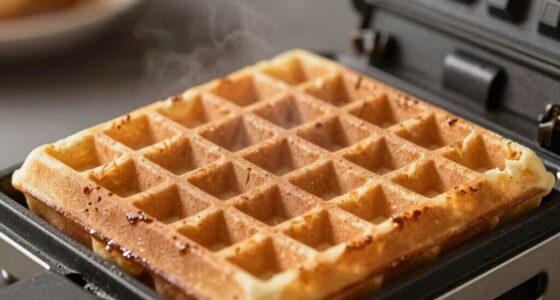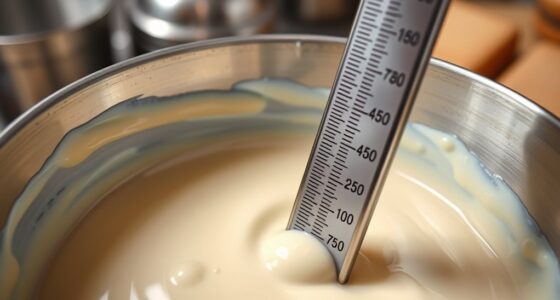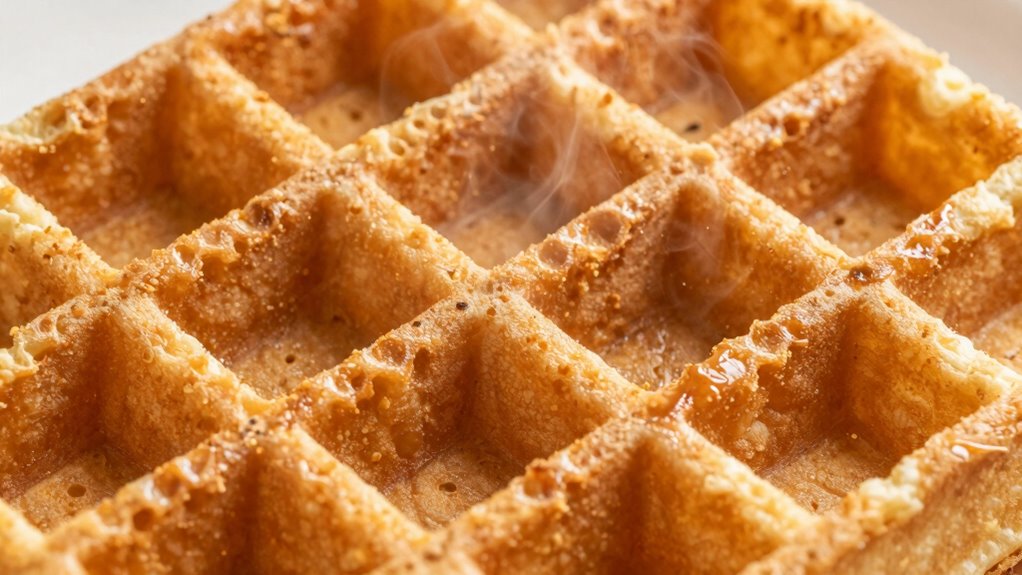

Yeasted waffles feel more complex even before toppings because fermentation allows the yeast to produce flavor-enhancing compounds like carbon dioxide, alcohol, and subtle acids. This process creates layers of nuanced taste and aroma, making the batter richer and more interesting. As fermentation progresses, the batter becomes more elastic and develops a better gluten structure, resulting in a satisfying texture. If you keep exploring, you’ll discover how the timing and conditions boost both flavor and texture even further.

Get baking supplies delivered free with Prime
- Fast, free delivery on millions of items
- Prime Video, Amazon Music and more included
- Member-only deals all year
Key Takeaways
- Fermentation develops subtle flavors and aromas that add depth even without toppings.
- Extended fermentation enhances the batter’s complexity, producing tangy and nuanced taste notes.
- The chemical reactions during fermentation create a richer flavor profile and improved texture.
- Longer fermentation improves gluten structure, resulting in a more satisfying, layered mouthfeel.
- The natural byproducts of yeast activity contribute to a more sophisticated, layered flavor experience.
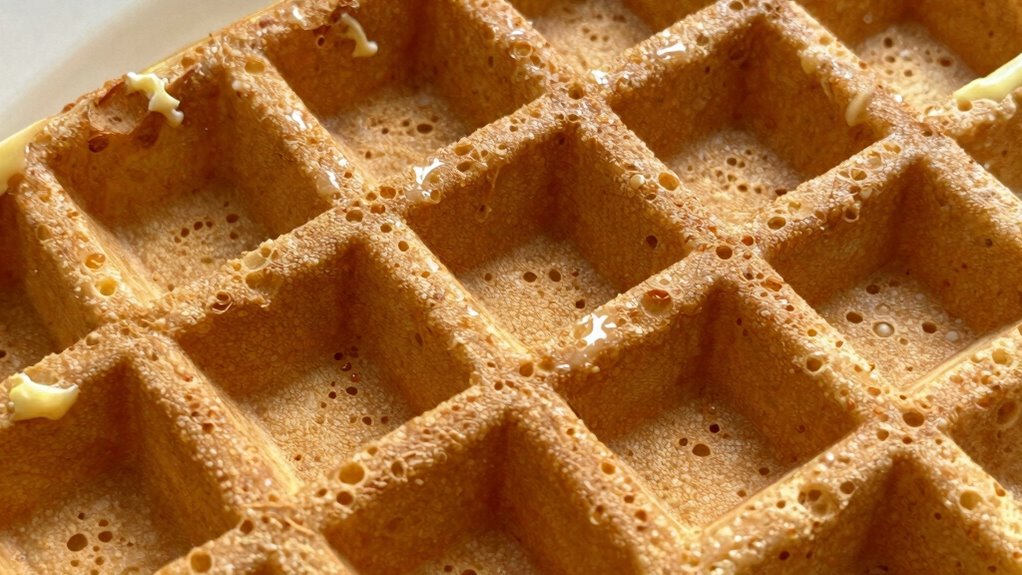
Yeasted waffles might seem straightforward, but their complexity lies in the subtle balance of ingredients and fermentation timing. When you make yeast-based batter, you’re engaging in a delicate dance that impacts not just texture but also the overall flavor. The fermentation process is the key to revealing this complexity. As the yeast consumes sugars, it produces carbon dioxide and alcohol, which create bubbles that give the waffles their airy structure. But beyond that, this process also influences flavor development in ways that quick-rise recipes simply can’t replicate.
During fermentation, the ingredients interact over time, allowing enzymes to break down complex carbohydrates into simpler sugars. This slow transformation enhances the batter’s richness and depth, giving the waffles a nuanced taste that’s difficult to achieve with baking powder alone. You might notice that longer fermentation results in a tangy, slightly sour note—much like sourdough bread—that adds a layer of sophistication. This flavor development is subtle but unmistakable, and it’s what separates yeasted waffles from their quicker counterparts.
Timing is everything when it comes to fermentation. If you rush the process, you miss out on the full spectrum of flavors that develop naturally. Patience allows the yeast to work thoroughly, creating a batter with a complex aroma and taste. You might find that a longer fermentation also improves the batter’s texture, making the waffles crisp on the outside while remaining tender inside. This balance is partly due to the acids and alcohols produced during fermentation, which influence the gluten structure and help achieve that perfect mouthfeel.
Another aspect that adds to the complexity is how fermentation affects the batter’s consistency. As the yeast ferments, the batter becomes slightly more elastic and easier to work with. This elasticity contributes to the final texture of the waffles, giving them that satisfying chew. Furthermore, the fermentation process can be adjusted to suit your taste preferences. If you prefer a milder flavor, you can shorten the fermentation; if you crave more tang and depth, extend it. Understanding fermentation timing can help you customize your waffle experience for optimal flavor and texture. Additionally, controlling temperature during fermentation plays a crucial role in how the yeast develops, impacting both flavor and rise.
Finally, understanding the chemical reactions involved in fermentation can help you better control the process and achieve consistent results. All these factors—timing, ingredient interactions, and fermentation—combine to create a batter that’s far more than just a base for toppings. Yeasted waffles offer a complexity that’s rooted in the fermentation process and flavor development, making each bite a richer experience even before you add syrup, fruit, or whipped cream. It’s this intricate process that elevates simple waffle batter into something truly special.
As an affiliate, we earn on qualifying purchases.
Frequently Asked Questions
How Does Yeast Fermentation Influence Waffle Texture?
Yeast fermentation influences waffle texture by promoting gluten development, which creates a tender yet structured crumb. As yeast ferments, it produces gas that expands within the batter, forming tiny air pockets that make the waffles light and airy. This gas expansion also contributes to a slightly chewy texture, giving yeasted waffles their characteristic richness. Overall, fermentation enhances both the structure and mouthfeel, making your waffles uniquely complex and satisfying.
Why Do Yeasted Waffles Smell More Aromatic?
Imagine the irresistible allure of a bakery—yeasted waffles smell more aromatic because fermentation releases aromatic compounds that fill the air with a warm, inviting aroma. This fermentation aroma enhances the scent, making it richer and more complex. As yeast ferments, it produces these aromatic compounds, creating a delightful smell that’s more intense and enticing than non-yeasted waffles, inviting you to indulge before you even taste them.
Does Yeast Impact Waffle Crunchiness?
Yes, yeast impacts waffle crunchiness by influencing dough elasticity and gluten development. As yeast ferments, it produces gases that create a lighter, airier batter, which can lead to a crispier exterior when cooked. Proper gluten development ensures the waffle holds its shape and texture. If the gluten isn’t well-developed, the waffle may turn out denser and less crunchy. So, yeast plays a crucial role in achieving that perfect crispy, yet tender, waffle.
Can Yeast Affect Waffle Flavor Without Toppings?
Yes, yeast can dramatically influence waffle flavor even without toppings. It creates a symphony of flavor depth through ingredient interactions, producing subtle, complex notes that instantly elevate your taste experience. The fermentation process develops richer, more nuanced flavors, making each bite feel like a journey. Without toppings, you still get a layered, delicious profile—proof that yeast isn’t just about rise, but also about revealing incredible flavor potential.
How Does Fermentation Time Change Waffle Complexity?
Fermentation time directly impacts waffle complexity by enhancing flavor depth and aroma. As you extend fermentation, the yeast produces more complex compounds, developing richer, more nuanced flavors. Longer fermentation also boosts aroma, making your waffles smell more appealing. However, don’t overdo it, as too long can cause sourness or texture issues. Find the right balance to achieve a well-rounded, flavorful waffle with inviting aroma that elevates your breakfast experience.
Conclusion
So, when you bite into yeasted waffles, you’re experiencing more than just sweetness—you’re tasting the fermentation process that adds depth and complexity. Think of it like a layered story, where each ingredient and step builds flavor slowly, much like a carefully crafted painting. This visualizes how yeast transforms simple ingredients into a rich, textured experience. Next time, savor that intricate flavor, knowing it’s the result of time, fermentation, and your own patience.
Halloween Picks
halloween
As an affiliate, we earn on qualifying purchases.