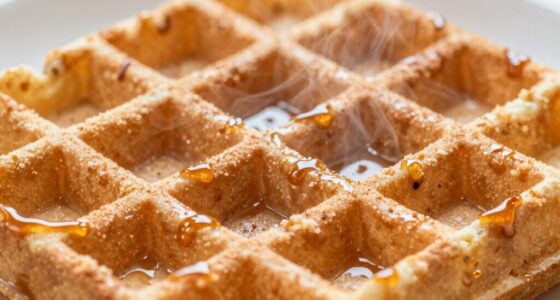
A rubbery waffle often happens if you overmix the batter, which develops too much gluten and toughens the texture. Using too high heat can also cause the outside to burn before the inside cooks properly, resulting in a dense, chewy feel. Additionally, undercooking or not allowing the batter to rest can lead to uneven textures. To prevent this, control your mixing, temperature, and cooking time carefully—if you want to get it just right, there’s more to contemplate.

Get baking supplies delivered free — and shop member deals
- Fast, free delivery on millions of items
- Access to Prime Big Deal Days deals on October 6–7
- Prime Video, Amazon Music and more included
Key Takeaways
- Overmixing batter develops excessive gluten, leading to a tough, rubbery waffle texture.
- Cooking at too high a temperature causes uneven cooking and a rubbery crust.
- Insufficient or imbalanced batter moisture results in dense, chewy waffles.
- Under-cooking leaves the interior soggy and rubbery rather than tender.
- Using ingredients that are too cold or improperly measured can affect batter consistency and texture.
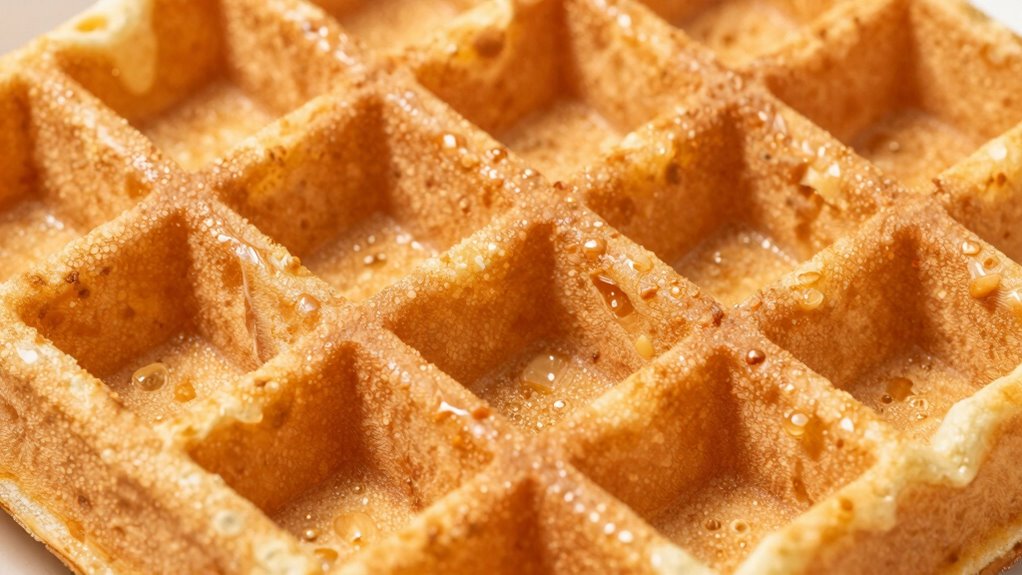
If your waffles turn out rubbery instead of crisp and tender, it’s likely due to a few common mistakes in the cooking process. One of the most frequent causes is the waffle batter consistency. If your batter is too thick, it can lead to dense, chewy waffles. On the other hand, if it’s too thin, the waffles may not hold their shape or develop the desired texture. To get it just right, aim for a batter that’s pourable but not runny—similar to pancake batter. This balance ensures the waffle heats evenly, allowing it to crisp up on the outside while remaining tender inside. Using too much liquid or not enough flour can tip the scale, so measure your ingredients carefully and consider adjusting the liquid content if your batter feels off.
Another key factor is how you handle the cooking time adjustments. Waffles that cook for too long can become rubbery because prolonged heat can dry out the exterior and overwork the gluten in the batter, making it tough. Conversely, undercooking results in a soggy, rubbery interior that hasn’t set properly. It’s essential to follow your waffle iron’s recommended cooking times, but don’t be afraid to make small adjustments based on your specific appliance. If your waffles frequently turn out rubbery, try decreasing the cooking time slightly, especially if you notice over-browning or dryness. Conversely, if they’re undercooked and soft, extend the cooking time a bit. Keep a close eye on the color and texture, and remember that every waffle iron heats differently. Proper batter consistency is crucial for achieving the ideal waffle texture. Additionally, understanding cooking temperature and how it impacts the Maillard reaction can help you troubleshoot and achieve the perfect crispness. Maintaining the correct temperature control can also prevent the formation of a rubbery crust.
Temperature also impacts texture. Too high a heat causes the outside to burn before the inside cooks through, which can give a rubbery or tough result. Too low, and the waffles may not crisp properly, resulting in a dense, chewy texture. Experiment with the heat settings to find that perfect balance that produces a crispy exterior and a fluffy interior. Additionally, avoid overmixing your batter, as overworking it can develop too much gluten, leading to tougher waffles. Proper batter mixing is crucial for achieving the ideal waffle texture. Furthermore, allowing the batter to rest for a few minutes before cooking can help improve the final texture by allowing the flour to hydrate fully and the gluten to relax, reducing toughness.
best waffle iron for even cooking
As an affiliate, we earn on qualifying purchases.
As an affiliate, we earn on qualifying purchases.
Frequently Asked Questions
Can Using Different Waffle Iron Brands Affect Texture?
Yes, different waffle iron brands can affect texture because of brand consistency and iron temperature control. Some brands may heat more evenly or have precise temperature settings, ensuring crispiness. Others might struggle with inconsistent heat, leading to rubbery waffles. To get the best results, stick to a trusted brand and monitor the iron’s temperature, adjusting as needed. Proper heat management helps produce crispy, golden waffles every time.
Does Altitude Impact Waffle Consistency?
Altitude effects can dramatically alter your waffle’s texture, almost like a culinary rollercoaster. When you bake at high elevations, the air pressure drops, causing ingredients to behave differently—think unstable batter and uneven cooking. This can lead to rubbery waffles if ingredients don’t rise properly or cook evenly. To fix this, you might need to adjust the recipe or baking time, ensuring ingredient stability and that perfect, fluffy waffle every time.
How Does Ingredient Freshness Influence Waffle Texture?
Using fresh ingredients markedly improves your waffle texture, making them crisp on the outside and tender inside. Fresh ingredient quality guarantees proper starch and protein levels, which contribute to the ideal structure. If ingredients sit too long, flavors can alter, and the batter may become gummy, resulting in a rubbery texture. Always use fresh milk, eggs, and flour to achieve the best flavor and consistency in your waffles.
Can Storage Methods Cause Waffles to Become Rubbery?
Yes, storage methods can cause waffles to become rubbery. If you store waffles improperly, they absorb moisture from the air, leading to a chewy, rubbery texture. Keeping waffles at inappropriate storage temperatures, especially in humid environments, accelerates moisture absorption. To avoid this, store waffles in an airtight container at a cool, dry temperature, and reheat them properly to maintain their crispness and prevent that undesirable rubbery feel.
Are There Specific Dietary Modifications That Affect Waffle Texture?
Yes, dietary modifications can affect waffle texture. If you’re gluten-free, reduced gluten development can lead to a denser, often rubbery waffle. Increasing fat content, such as butter or oil, helps create a tender, crisp exterior, preventing rubberiness. Conversely, cutting back on fat might make the waffle denser and chewier. Adjusting ingredients based on your dietary needs influences gluten development and fat levels, directly impacting the final texture of your waffle.
Conclusion
So, next time your waffle turns rubbery, remember it’s all about the batter and cooking time. Overmixing or undercooking can turn your breakfast into a sad, chewy mess—like a bad vinyl record. To avoid this, stick to the recipe, use the right heat, and don’t rush the process. With these tips, you’ll be serving up crispy, fluffy waffles faster than you can say “Great Scott!” and impress everyone at the breakfast table.
Fall Picks
fall essentials
As an affiliate, we earn on qualifying purchases.