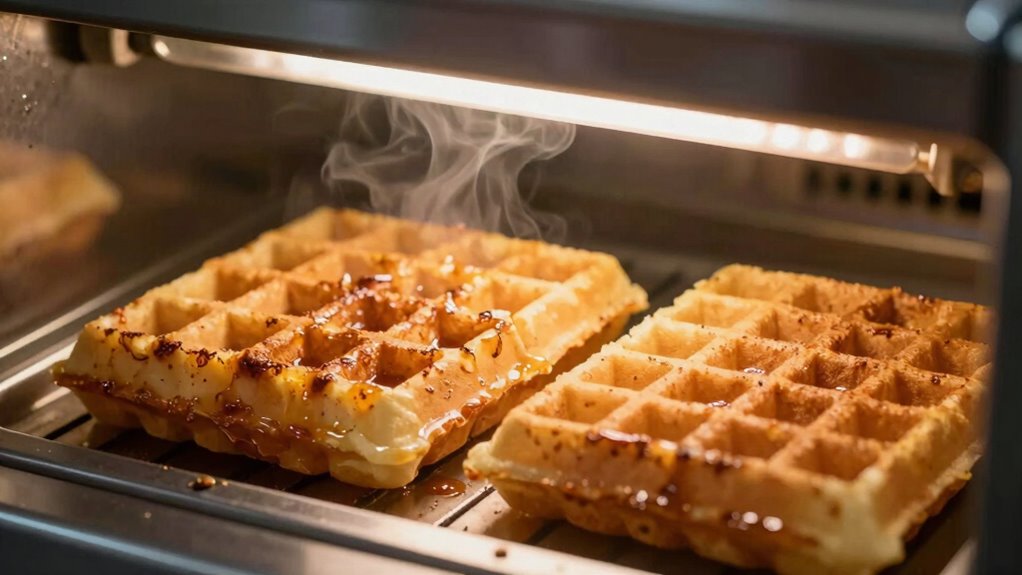
Heat lamps work well for crispy, firm waffles because they help maintain their crunch longer without making them soggy. If your waffles are soft or moist, they tend to absorb more heat and moisture, turning limp or soggy quickly. Proper temperature control and waffle thickness also matter; too much heat or uneven warming can burn or spoil them. Keep these factors in mind to get better results—there’s more to discover if you keep exploring.

Get baking supplies delivered free — and shop member deals
- Fast, free delivery on millions of items
- Access to Prime Big Deal Days deals on October 6–7
- Prime Video, Amazon Music and more included
Key Takeaways
- Crispy waffles resist sogginess, maintaining texture under heat lamps, while soft or moist waffles absorb moisture and become limp.
- Proper temperature regulation prevents over-crisping or burning, crucial for effective warming.
- Thicker or wetter waffles retain heat longer but risk becoming soggy, affecting how well heat lamps work.
- Initial waffle quality and handling influence how they respond to heat and whether they stay appealing.
- Consistent control of heat and timing ensures waffles remain crisp and fresh, while poor regulation leads to failure.
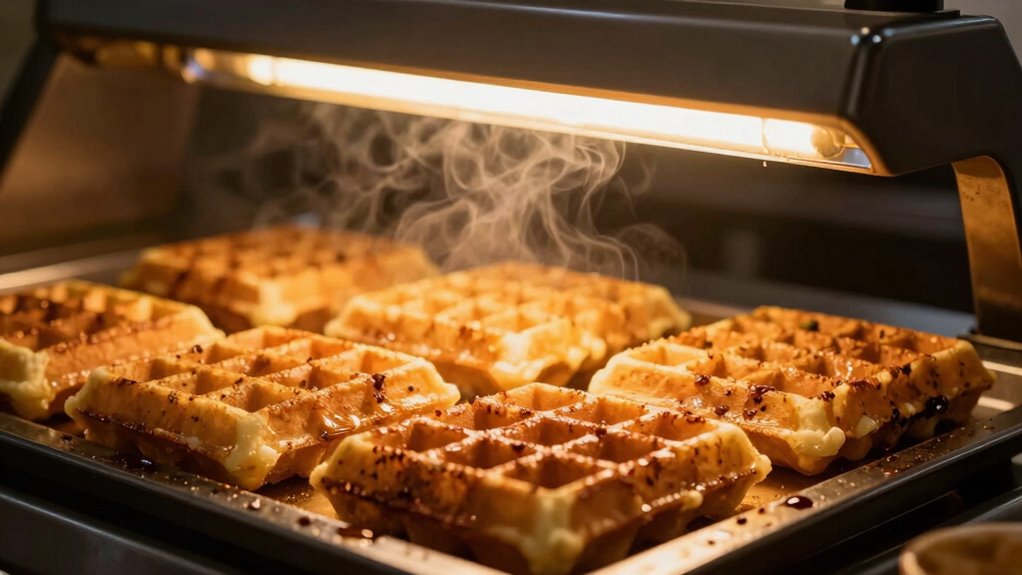
Heat lamps are a popular solution for keeping waffles warm, but their effectiveness varies from one waffle to another. When you place waffles under a heat lamp, you’re relying on the warmth to maintain their freshness without making them soggy. However, your success depends heavily on factors like waffle texture and temperature regulation. If the waffle is crispy and has a firm exterior, the heat lamp can help preserve that crunch longer. But if the waffle is soft or has absorbed moisture during cooking, the heat lamp might turn it limp or soggy instead. The way a waffle’s texture reacts to heat is vital because it determines whether the warming process enhances or ruins its quality.
Heat lamps work best with crispy waffles; soft or moist ones risk becoming soggy or limp.
Your ability to control the temperature with the heat lamp plays a significant role in how well it works. If the lamp provides just enough gentle heat, it can keep the waffle warm without compromising its structure. But if the temperature is too high or inconsistent, the waffle’s outer layer can become overly crisp or start to burn, while the inside remains cold or unevenly heated. Proper temperature regulation ensures that the waffle stays at an ideal serving temperature without sacrificing its texture. You want a balance—enough heat to prevent cooling but not so much that it damages the waffle’s integrity. Temperature regulation is crucial for achieving consistent results. Additionally, understanding how heat transfer affects different waffle textures can help you optimize your warming process. Recognizing the thermal properties of various waffle types allows for better control over the warming process, ensuring optimal results.
The thickness and moisture content of the waffle also influence how well heat lamps work. Thicker waffles or those with higher moisture levels tend to retain heat longer but are also more prone to becoming soggy if exposed to prolonged warmth. Conversely, thinner or drier waffles might stay crispy longer but can cool down quickly if not kept at the right temperature. Your goal is to find that sweet spot where the waffle remains warm, retains its desirable texture, and doesn’t become overly moist or dry out. Moisture content plays a crucial role in how a waffle responds to heat and impacts its overall texture. Recognizing how different waffle types respond to heat can help you adjust your warming method for better results.
In practice, you might notice that some waffles stay perfectly crisp and warm under a heat lamp, while others turn limp and unappetizing. This inconsistency comes down to the initial waffle texture, how well you manage the temperature, and how long the waffle stays under the heat lamp. Understanding these factors helps you better predict the outcome and adjust your approach accordingly. By paying attention to waffle texture and maintaining precise temperature regulation, you maximize the chances that your waffles stay delicious and appealing, no matter when you serve them.
As an affiliate, we earn on qualifying purchases.
Frequently Asked Questions
Do Heat Lamps Affect the Texture of Waffles?
Heat lamps do affect the texture of waffles. They cause temperature variations that can lead to uneven warming, which impacts texture preservation. If the heat is too intense or uneven, waffles may become dry or soggy. To keep your waffles crispy and maintain their ideal texture, monitor the heat lamp’s temperature and avoid leaving waffles under it for too long. Proper control guarantees they stay fresh and delicious.
Can Heat Lamps Cause Waffles to Become Soggy?
Yes, heat lamps can cause waffles to become soggy. The heat retention from the lamp keeps the waffles warm, but if left under it too long, moisture builds up and turns the crispy exterior soggy. To maintain waffle crispiness, remove them promptly once heated and avoid covering them with foil or stacking. This way, you prevent excess moisture from compromising their texture and keep them delightfully crispy.
Are Some Waffle Ingredients More Sensitive to Heat?
Yes, some waffle ingredients are more sensitive to heat due to ingredient sensitivity. For instance, delicate batters with high moisture content or eggs can overcook or become soggy if exposed to uneven heat distribution from heat lamps. You should consider how heat impacts these ingredients, as uneven heat distribution can cause inconsistent textures. Adjusting the heat or using a different warming method can help maintain a perfect waffle, especially with sensitive ingredients.
How Does Waffle Size Influence Heat Lamp Effectiveness?
Waffle size considerably shapes the success of heat lamps. Thicker waffles tend to trap heat longer, making them more receptive to warming, while thinner waffles cool quickly and may dry out. Larger, round-shaped waffles require more heat and time to warm evenly, whereas smaller, compact shapes heat uniformly. Your waffle’s thickness and shape influence how well the heat lamp can maintain warmth, ensuring each bite is perfectly crispy and cozy.
Do Heat Lamps Impact Waffle Flavor Over Time?
Heat lamps can impact waffle flavor over time by causing flavor degradation and aroma loss. As waffles sit under the heat lamp, moisture evaporates, dulling their taste and aroma. You might notice a stale or burnt flavor developing if they stay too long. To preserve freshness, serve waffles promptly or keep them in a warming drawer instead of prolonged exposure to heat lamps.
Conclusion
So, next time your waffle under the heat lamp looks more like a soggy relic than breakfast royalty, remember: it’s not just about power, but timing, moisture, and a dash of culinary cruel irony. Heat lamps, those seemingly simple saviors, are actually the divas of food warmth—demanding patience and precision. Master their fickle nature, and you’ll turn your waffle from a soggy disappointment into a golden masterpiece. Or, at the very least, stop blaming the lamp.
Halloween Picks
halloween
As an affiliate, we earn on qualifying purchases.