Waffle shapes have become part of regional food identity because they reflect local history, culture, and craftsmanship. Each shape tells a story—like Belgian waffles’ intricate patterns symbolizing medieval craftsmanship or Scandinavian hearts representing love and community. These designs often symbolize social values or regional pride, connecting communities to their culinary traditions. If you’re curious, you’ll discover how these shapes carry deeper stories about heritage, shared customs, and local identity that make each waffle uniquely meaningful.
Key Takeaways
- Waffle shapes originate from regional iron molds, reflecting local craftsmanship and cultural heritage.
- Shapes like Scandinavian hearts symbolize love, emphasizing cultural values and social bonds.
- Regional ingredients influence waffle textures and shapes, reinforcing local culinary traditions.
- Waffle designs serve as symbols of community, status, and historical storytelling.
- Shaped waffles act as visual markers of regional identity, heritage, and artisanal pride.
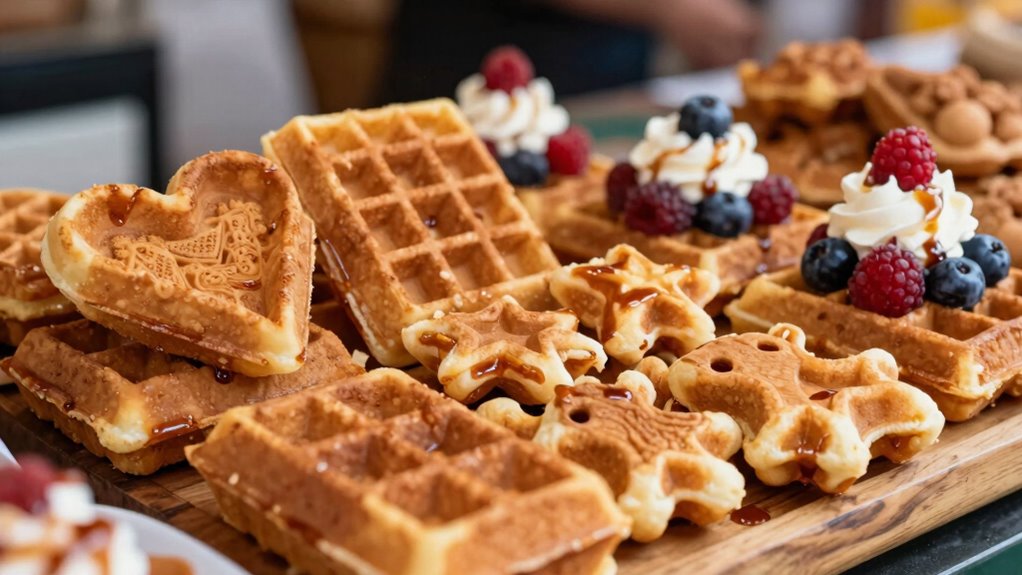
Waffle shapes are more than just a matter of aesthetics; they reflect the unique culinary identities of different regions. The variations in shape, size, and pattern aren’t random—they’re deeply rooted in cultural influence and historical origins that tell stories about the places they come from. When you see a Belgian waffle’s grid pattern or a Scandinavian waffle’s heart shape, you’re witnessing more than just design; you’re experiencing a piece of regional history and tradition. These shapes serve as visual cues that connect you to the local customs, ingredients, and techniques that have been passed down through generations.
Waffle shapes embody regional history, culture, and tradition, connecting us to local customs and culinary heritage.
The historical origins of waffle shapes reveal how culinary practices evolved within specific communities. For example, the intricate, ornate patterns of Belgian waffles can be traced back to medieval times, where they were made using special iron molds that showcased craftsmanship as much as flavor. Over centuries, these molds influenced the design and became a symbol of regional pride. In Scandinavia, the heart-shaped waffles emerged from a different cultural influence—simple, functional, yet meaningful. They originated in rural kitchens where practicality met tradition, often served during special occasions or family gatherings. These shapes were more than just food; they became a way to communicate cultural values, like love and togetherness. Additionally, the design and craftsmanship of waffle molds historically reflected skilled artistry, elevating waffle-making into a cultural craft.
As you explore various regional waffles, you’ll notice how local ingredients and cooking techniques further reinforce their cultural significance. In Germany, the thinner, crispier waffles reflect a long history of baking traditions shaped by local tastes and available ingredients. In the United States, the rise of the Belgian-style waffle in the 20th century incorporated the shape and texture into a broader culinary identity, blending immigrant influences with American innovation. Each region’s waffle shape encapsulates a story—whether about social status, local resources, or shared customs—that continues to influence how people enjoy and celebrate their food today. Furthermore, understanding the cultural symbolism behind these shapes deepens appreciation for their enduring importance in regional cuisine. The preservation of traditional waffle mold designs also highlights the importance of maintaining artisanal craftsmanship in culinary history.
Ultimately, the way waffle shapes have become integral to regional food identity isn’t coincidental. These designs serve as a visual language, expressing cultural influence and historical origins that go beyond mere taste. They help define a community’s culinary landscape, making each waffle more than just a breakfast item; it’s a symbol of heritage, craftsmanship, and regional pride. When you bite into a waffle with a distinctive shape, you’re tasting a slice of history, shaped by centuries of cultural exchange and tradition.
Belgian waffle iron with intricate pattern molds
As an affiliate, we earn on qualifying purchases.
As an affiliate, we earn on qualifying purchases.
Frequently Asked Questions
Are Specific Waffle Shapes Linked to Particular Local Traditions?
Yes, specific waffle shapes are often linked to regional variations and traditional symbolism. You might notice heart-shaped waffles in areas celebrating love or community, while star-shaped waffles could symbolize local festivals or cultural icons. These shapes reflect local traditions, history, or beliefs, serving as edible symbols that connect communities to their heritage. By embracing these unique forms, you can experience how regional variations enrich the cultural significance of waffle shapes.
How Do Waffle Shapes Influence Regional Culinary Competitions?
You’ll find waffle shapes totally revolutionize regional culinary competitions! They inspire you to push boundaries with creative presentation, transforming simple waffles into edible art. Competitors experiment wildly, blending flavor variations that match the unique shapes—like star-shaped waffles bursting with berry compote or heart-shaped ones filled with caramel. These shapes become symbols of regional pride, turning every contest into a dazzling showcase of creativity, skill, and delicious innovation.
Have Waffle Shapes Evolved With Modern Baking Technology?
Yes, waffle shapes have evolved with modern baking technology. You’ll notice innovative designs thanks to baking advancements like flexible molds and precision heat controls. These innovations allow you to experiment with unique shapes and intricate patterns, making waffles more visually appealing and customizable. As technology progresses, you can expect even more creative options, enabling you to craft waffles that reflect current trends and personal style, enhancing your culinary experience.
Are Certain Waffle Shapes More Popular Among Tourists?
You’ll notice that certain waffle shapes, like hearts or stars, are more popular among tourists because of their visual appeal and symbolic meaning. Waffle shape symbolism resonates with visitors seeking memorable, Instagram-worthy experiences. Tourist preference trends show they gravitate toward these distinctive designs, making them feel connected to local culture. These shapes help create a unique, authentic experience, encouraging tourists to share their culinary adventures and deepen their appreciation for regional traditions.
Do Regional Waffle Shapes Have Symbolic or Historical Meanings?
Regional waffle shapes often carry cultural symbolism and historical significance. You’ll notice that certain shapes represent local traditions, legends, or historical events, serving as edible storytelling. These unique designs honor regional identity, connecting communities through shared history and cultural pride. When you see a specific waffle shape, it’s more than just food — it’s a symbol that reflects the area’s heritage and longstanding traditions, making each bite meaningful.
Conclusion
As you see, the unique shapes of waffles aren’t just about style—they reflect regional stories and traditions. You might imagine a waffle’s grid as a map, each pattern symbolizing local culture, history, or even a specific ingredient. This visual connection helps you understand how food shapes become part of regional identity, turning a simple breakfast into a flavorful, visual history. So, next time you enjoy a waffle, think about the story behind its shape.