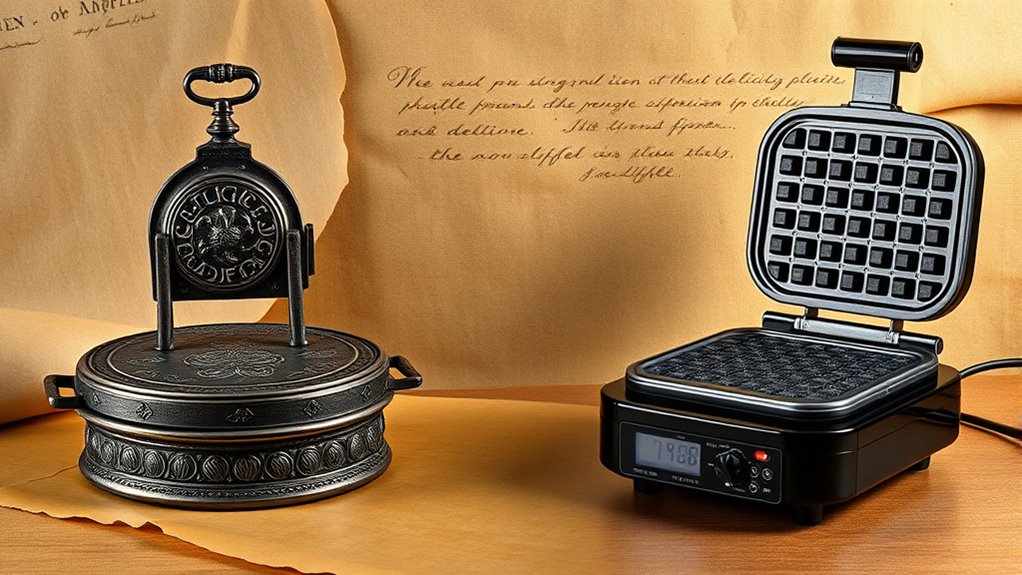
From medieval griddles to modern irons, the journey of waffles shows a fascinating evolution. Early waffles used simple batter cooked between stones or basic griddles, gaining flavor with added ingredients over time. Innovations like cast iron waffle irons in the 18th century made things safer and more uniform. In the 19th and 20th centuries, electric irons and adjustable controls appeared, allowing endless customization. To discover how these developments continue today, explore the full timeline of waffle history.

Get baking supplies delivered free with Prime
- Fast, free delivery on millions of items
- Prime Video, Amazon Music and more included
- Member-only deals all year
Key Takeaways
- Early waffles originated in medieval Europe using simple flour and water batter cooked on stone or metal griddles.
- The 18th century saw the introduction of cast iron waffle irons with wooden handles, improving safety and pattern consistency.
- The 19th and 20th centuries saw the rise of electric waffle irons, enabling faster, more convenient cooking with advanced features.
- Modern accessories include non-stick coatings, digital controls, and interchangeable plates for various waffle styles.
- Contemporary trends feature diverse ingredients like gluten-free options and innovative appliances catering to dietary preferences.
Have you ever wondered how waffles have evolved from simple batter to the versatile breakfast staple we enjoy today? It all starts with understanding how their ingredients and accessories have transformed over centuries. Early waffles, dating back to medieval Europe, used basic waffle ingredients like flour, water, and sometimes eggs, mixed into a batter that was cooked between heated griddles or stones. These early waffles weren’t the fluffy or crispy treats we know now; they were more like flat, bread-like cakes. Over time, people experimented with different waffle ingredients, adding milk, butter, sugar, and spices to improve flavor and texture. This evolution allowed waffles to become more than just a basic bread—they turned into a delicacy enjoyed across social classes.
Waffles evolved from simple batter and basic tools into a versatile, delicious breakfast staple through centuries of innovation.
As the centuries passed, innovations in waffle accessories considerably impacted their preparation and presentation. The earliest tools were simple metal or stone grids, heated over open flames. These basic waffle irons lacked the intricate patterns we see today, but they marked a major step in making waffles more consistent and easier to cook. By the 18th century, the introduction of cast iron waffle irons with wooden handles made waffle-making safer and more accessible. These accessories allowed for more uniform cooking and the creation of distinctive waffle patterns, which later became a defining characteristic. Waffle accessories also evolved to include specialized molds and accessories for different shapes and sizes, making waffles more decorative and appealing. Additionally, the development of different waffle styles and accessories reflected regional preferences and technological advances.
The 19th and 20th centuries saw the rise of electric waffle irons, revolutionizing home cooking. These appliances made waffle preparation more convenient and faster, encouraging experimentation with waffle ingredients. You could now add ingredients like chocolate chips, fruit, or even savory items directly into the batter, creating endless variations. Waffle accessories expanded further, with non-stick coatings, adjustable temperature controls, and even waffle makers with multiple plates for making different types of waffles—Belgian, American, or even Liege-style. These innovations helped the waffle become a customizable breakfast treat, tailored to personal preferences.
Today, waffle ingredients include everything from gluten-free flours to vegan options, reflecting dietary trends. Waffle accessories have become more sophisticated too, with digital controls and interchangeable plates for different waffle styles. This constant evolution shows how a simple batter cooked on medieval griddles transformed into a versatile dish, thanks to innovations in ingredients and accessories that cater to every taste and occasion. So, next time you enjoy a crispy waffle, remember the centuries of technological innovation that made it possible.
electric waffle maker with adjustable temperature
As an affiliate, we earn on qualifying purchases.
As an affiliate, we earn on qualifying purchases.
Frequently Asked Questions
How Did Medieval Griddles Influence Modern Waffle Design?
Medieval cooking with griddles laid the foundation for modern waffle design by introducing the idea of heat regulation and patterned surfaces. As iron technology advanced, people created more intricate, heated molds that shaped waffles with unique patterns. You can see how these early innovations influenced today’s waffle makers, combining medieval cooking techniques with modern iron technology to produce waffles that are both flavorful and visually appealing.
Were Waffles Popular Outside Europe During Medieval Times?
During medieval times, waffles weren’t widely popular outside Europe, mainly due to limited exposure to European culinary traditions and breakfast customs. You might find that outside regions, such as Asia or Africa, different traditional foods took precedence over waffles. While Europeans embraced waffles as a breakfast staple, their popularity outside Europe remained minimal, influenced by differing culinary customs and available ingredients during medieval times.
What Materials Were Used in Early Waffle Irons?
The materials in early waffle irons are like ancient secrets waiting to be uncovered. You’d find cast iron, which was incredibly durable and retained heat efficiently, making it ideal for baking. Clay ceramics were also used, offering a non-stick surface and even heat distribution. These materials revolutionized waffle making, turning simple ingredients into crispy, golden treats that have stood the test of time. Their innovation truly changed breakfast forever.
When Did Waffles Become a Global Breakfast Staple?
You’ll see that waffles became a global breakfast staple in the 20th century, thanks to their cultural impact and regional variations. As international cuisines embraced waffles, they adapted with unique toppings and flavors, making them popular worldwide. This widespread appeal transformed waffles from a regional treat into a versatile, beloved breakfast item enjoyed across different cultures, highlighting their significance in global culinary traditions.
How Have Waffle Recipes Evolved Over Centuries?
You see, waffle recipes have evolved considerably over centuries. You can now experiment with dough variations, like incorporating different flours or adding leavening agents. Flavor enhancements, such as spices, vanilla, or fruit, have also become common, making each waffle unique. This evolution reflects cultural influences and technological advances, allowing you to enjoy a wide array of textures and tastes, transforming waffles from simple batter to gourmet breakfast treats.
Conclusion
Now that you’ve seen the fascinating journey from medieval griddles to today’s high-tech irons, it’s clear waffle-making has come a long way. Did you know that the global waffle market is projected to reach over $4 billion by 2025? Whether you prefer classic or innovative styles, understanding this evolution enhances your appreciation. So next time you enjoy a crispy waffle, remember the centuries of innovation that brought it to your plate—it’s truly a delicious history!
Halloween Picks
halloween
As an affiliate, we earn on qualifying purchases.