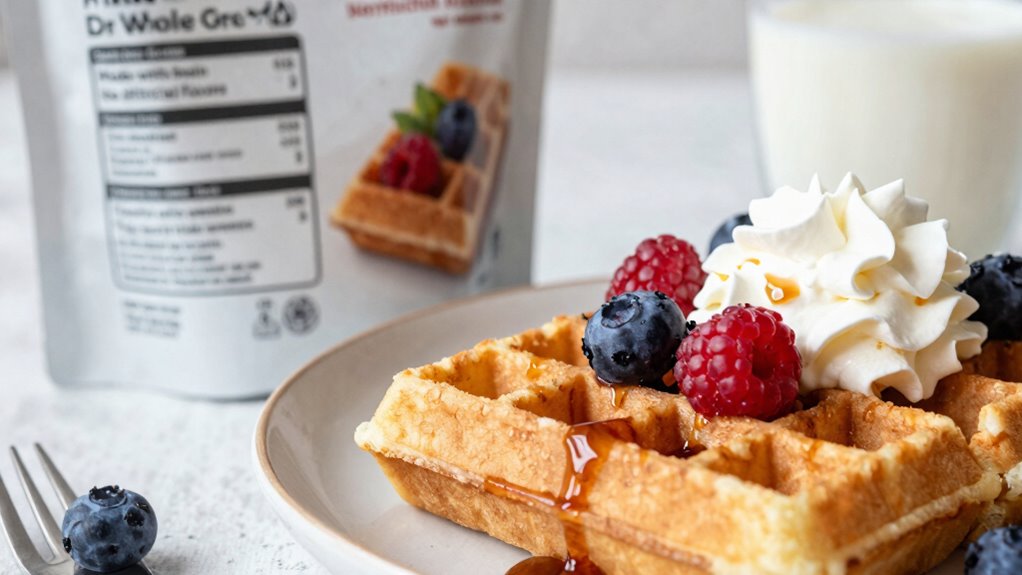

When evaluating ‘healthy’ waffle claims, watch for misleading buzzwords like “light,” “low-fat,” or “reduced sugar,” and always check the nutrition facts panel. Scrutinize ingredient lists for added sugars, artificial preservatives, or flavorings, even if the label says “all-natural.” Marketing language can hide less healthy ingredients and true nutritional value. To make better choices, it’s important to understand how these claims are made and what they really mean—continuing this guide will help clarify those details.

Get baking supplies delivered free — and shop member deals
- Fast, free delivery on millions of items
- Access to Prime Big Deal Days deals on October 6–7
- Prime Video, Amazon Music and more included
Key Takeaways
- Verify nutritional labels rather than relying solely on health-related marketing claims.
- Check ingredient lists for added sugars, artificial preservatives, or unhealthy fats.
- Be cautious of promotional words like “light,” “low-fat,” or “reduced sugar” that can be misleading.
- Recognize that “gluten-free” or “high in fiber” claims may lack context or true health benefits.
- Scrutinize marketing tactics that obscure the product’s actual nutritional quality and ingredient integrity.

When it comes to marketing healthy waffles, making truthful and transparent claims is essential to build consumer trust and avoid legal pitfalls. Many brands use clever marketing tactics to appeal to health-conscious consumers, but it’s crucial to look beyond the buzzwords and understand what’s really in the product. One common tactic is to highlight certain ingredients or qualities that sound healthy but may be misleading. For instance, emphasizing that a waffle is “gluten-free” or “high in fiber” can give the impression that it’s inherently healthy, but you should check whether the product contains added sugars, unhealthy fats, or artificial ingredients that undermine those benefits.
Beware of health claims; always check ingredients to truly assess a waffle’s nutritional value.
Artificial ingredients are another area where marketing tactics can be tricky. Some brands claim their waffles are “all-natural” or “made with real ingredients,” but they might still include artificial preservatives, flavorings, or sweeteners. These additives can be used to prolong shelf life or enhance taste, but they don’t align with the idea of a truly healthy product. As a consumer, it’s important to scrutinize ingredient lists rather than relying solely on health claims made on packaging. If a waffle contains artificial ingredients, it’s worth questioning whether it genuinely fits your definition of healthy. Recognizing marketing tactics and understanding their intent can help you make more informed choices.
Promotional language often plays a significant role in how you perceive a product’s healthiness. Words like “light,” “low-fat,” or “reduced sugar” can be appealing, but they don’t automatically mean the product is nutritious. For example, a waffle labeled “low-fat” might compensate with added sugars or artificial sweeteners to maintain flavor, which can have other health implications. Always check the nutrition facts panel and ingredient list to get a clear picture of what you’re consuming. Recognizing ingredient quality and how it influences product healthfulness can help you make more informed choices. Understanding nutritional content is also key—paying attention to fiber, protein, and sugar levels will give you a better sense of whether the product aligns with your health goals.
As an affiliate, we earn on qualifying purchases.
Frequently Asked Questions
Are All “Healthy” Waffle Claims Regulated by Authorities?
Not all “healthy” waffle claims are strictly regulated by authorities. You should be cautious and look for ingredient transparency, as some brands may use vague marketing tactics to suggest health benefits. Regulations vary, so companies might label waffles as “healthy” without providing detailed nutritional info. Always check the ingredient list and nutrition facts yourself to verify if the claim is genuine or just a marketing tactic.
How Can Consumers Verify the Accuracy of Healthy Waffle Claims?
You can verify healthy waffle claims by checking nutritional labels carefully—did you know many products boast “low fat” or “high fiber” without clear proof? Use these labels to compare ingredients and nutrition facts. Additionally, consumer education plays an essential role; learn to recognize misleading marketing tactics. Stay informed and skeptical of claims that sound too good to be true, ensuring you make healthier choices based on accurate information.
Do “Gluten-Free” Waffles Always Mean They Are Healthier?
No, gluten-free waffles don’t always mean they’re healthier. While they cater to those with gluten sensitivities or allergies, they can still be high in sugar, fat, or calories. You should check the gluten content and ingredient list carefully, especially if you have dietary restrictions. Just because a waffle is labeled gluten-free doesn’t automatically make it a healthier choice; it’s important to take into account the whole nutritional profile.
What Ingredients Are Typically Used in “Healthy” Waffle Marketing?
In “healthy” waffle marketing, manufacturers often highlight ingredients like whole grains, oats, or added fiber, but you should look for ingredient transparency and detailed nutritional labeling. They may also include natural sweeteners or plant-based fats. Always read labels closely to verify what’s truly in the product. Don’t assume “healthy” means low-calorie or low-sugar—check the nutritional info to see if it aligns with your dietary goals.
Are There Specific Certifications That Validate “Healthy” Waffle Claims?
Yes, specific certifications can validate “healthy” waffle claims. Look for symbols like USDA Organic, Non-GMO Project Verified, or Gluten-Free certification, which bolster trust. These certifications guarantee nutritional labeling is truthful and ingredients are transparent, giving you confidence in product healthiness. By spotting these seals, you’re better equipped to discern genuinely nutritious waffles from those simply marketing healthiness, making smarter, more satisfying snack choices.
Conclusion
So next time you’re browsing for waffles, remember that not all “healthy” claims are created equal. Sometimes, a product’s marketing aligns perfectly with your goals, just like that unexpected sunny morning when everything feels right. Keep your eyes open, ask the right questions, and trust your instincts. After all, the best choices often come when you’re truly paying attention—just like catching that rare, perfect moment in a busy day.
Fall Picks
fall essentials
As an affiliate, we earn on qualifying purchases.