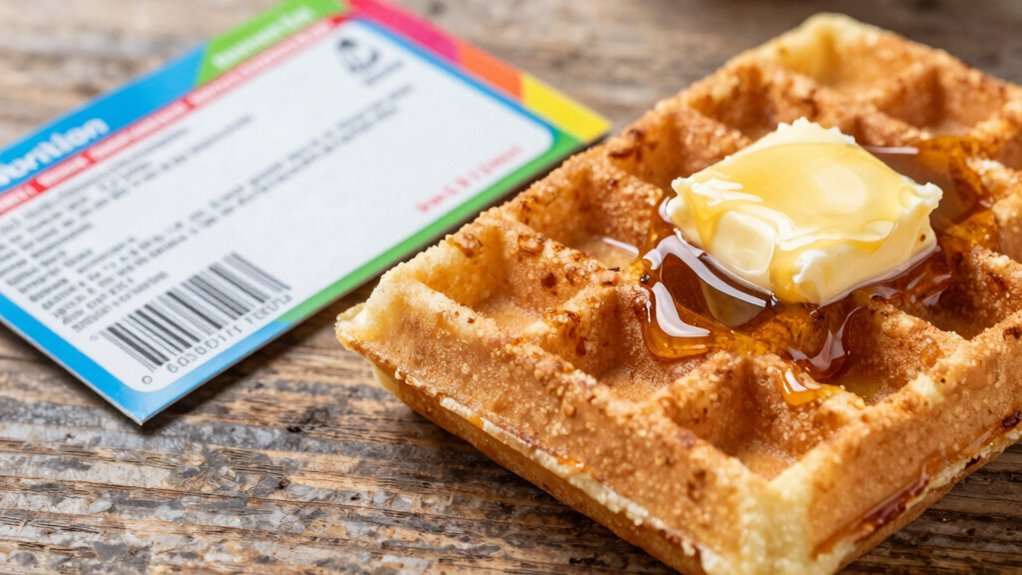

Nutrition labels mainly highlight calories, fats, sugars, and proteins, but they skip over details about ingredients, additives, and processing levels. This means they don’t reveal whether a waffle contains artificial flavors, preservatives, or less nutritious ingredients hidden behind appealing claims. Marketing and sourcing influence what’s shown, often masking the full story. To truly understand what you’re eating, it’s important to look beyond the label—there’s more to uncover about what’s really inside.

Get baking supplies delivered free with Prime
- Fast, free delivery on millions of items
- Prime Video, Amazon Music and more included
- Member-only deals all year
Key Takeaways
- Nutrition labels focus on basic nutrients, neglecting detailed ingredient composition and processing levels.
- They often hide additives, preservatives, and artificial ingredients behind appealing claims.
- Marketing strategies can distort the true health value, emphasizing attractive packaging over transparency.
- Sourcing and regulatory standards influence label accuracy but are often not fully disclosed.
- Labels lack context on ingredient interactions and processing, requiring critical evaluation beyond the numbers.
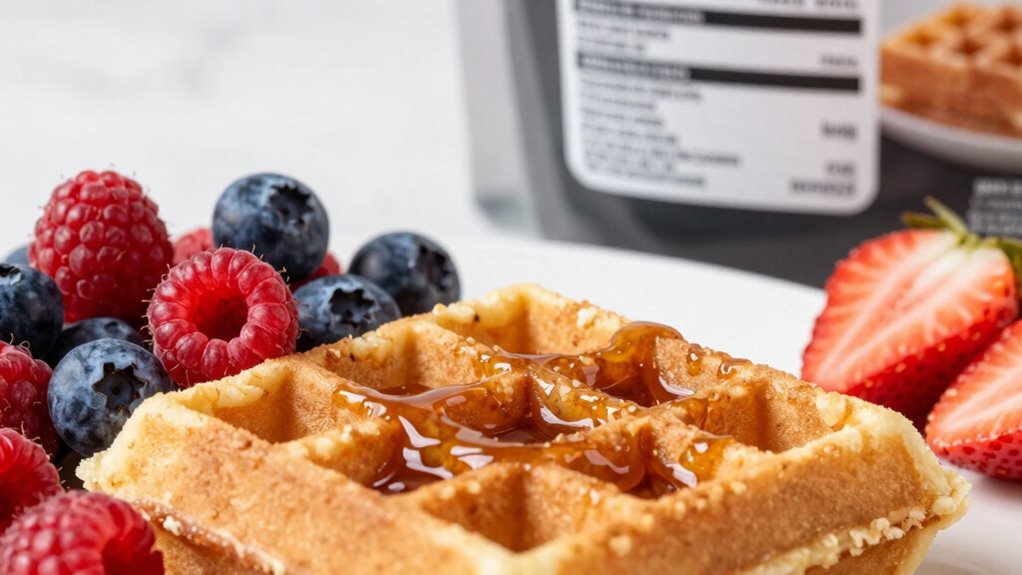
When you pick up a box of waffles, the nutrition label might seem like just a list of numbers, but it tells a story about what’s really inside. These labels are designed to give you quick facts—calories, fats, sugars, and proteins—but they don’t reveal the full picture. Most of the time, they focus on the end result: how much energy or nutrients you’re consuming. But they don’t tell you about the ingredients that make up those nutrients or the story behind how the product is marketed. This is where ingredient transparency becomes essential. Not all ingredients are created equal, and many products contain additives, preservatives, or processed ingredients that aren’t obvious from the label alone. You might see “wheat flour” and “sugar,” but what about the artificial flavors or the stabilizers used to extend shelf life? Ingredient transparency would mean having clear, honest information about what’s actually in your waffles, yet many companies choose to highlight only the most appealing ingredients, sometimes masking less desirable ones.
Marketing influence also plays a significant role in shaping what you see on the packaging and in your perceptions. Manufacturers know that attractive packaging, colorful images, and health claims can influence your buying decisions more than the actual nutrition facts. They often emphasize “whole grain” or “low fat” labels to catch your eye, even if the product contains significant amounts of sugar or additives. This marketing influence can lead you to believe you’re making a healthier choice than you really are. The nutrition label, in this case, becomes a tool that supports the marketing message, rather than a complete guide to the product’s true nutritional quality. Recognizing the impact of marketing strategies can help consumers develop a more critical eye when evaluating food products. Additionally, understanding the role of product sourcing can shed light on the quality and ethical considerations behind what you consume. Furthermore, considering regulatory standards can reveal how much oversight and transparency is actually enforced in labeling practices.
What’s missing from these labels is context—how ingredients interact, how processed a product is, and what that means for your health. For example, two waffle brands may have similar calorie counts but vastly different ingredient lists and processing levels. One might use whole grains and minimal preservatives, while the other relies heavily on refined flour and artificial additives. The label alone can’t tell you how these differences affect your health or how the ingredients were sourced. Ultimately, nutrition labels are a helpful starting point, but they only tell part of the waffle story. To make truly informed choices, you need to look beyond the numbers and be aware of ingredient transparency and marketing influence that shape the products you buy. Recognizing the importance of ingredient transparency can help you make healthier, more informed decisions.
ingredient transparency waffle maker
As an affiliate, we earn on qualifying purchases.
As an affiliate, we earn on qualifying purchases.
Frequently Asked Questions
How Accurate Are Nutrition Labels Across Different Brands?
Nutrition labels can vary in accuracy across different brands due to label discrepancies and brand variations. You might find some brands slightly overstate or understate ingredients or calorie counts. While most labels are generally reliable, it’s wise to remember that manufacturing differences, testing methods, and ingredient sources can influence the accuracy. Always check for third-party testing or reviews if you want the most precise information about a product’s nutritional content.
Do Labels Account for Food Additives and Preservatives?
Food labels are like a snapshot, but they often miss the full picture, especially when it comes to additives and preservatives. They do include some details, but food additive transparency isn’t always complete. You might not see the preservative impact or fully understand how these substances affect your health. Always check ingredient lists thoroughly, as labels can underestimate the influence of additives and preservatives on your overall diet and well-being.
How Do Serving Sizes on Labels Influence Actual Intake?
Serving sizes on labels heavily influence your actual intake by shaping your portion perception. If labels show a small serving, you might unknowingly consume more, leading to label deception. This can cause you to underestimate how much you’re eating, encouraging overeating. Always check the serving size and multiply the nutrition info accordingly. Recognizing label tricks helps you make more accurate choices, preventing unintentional overconsumption and supporting better portion control.
Are There Legal Standards for Nutrition Label Accuracy?
You’ll be amazed how strict laws are, but regulatory loopholes sometimes let labels slip. There are legal standards for nutrition label accuracy, demanding manufacturers guarantee truthful info, but label compliance can vary. Companies might exploit gaps in regulations, making it tricky to rely solely on labels. Still, government agencies actively monitor and enforce rules, aiming to keep manufacturers honest and protect consumers from misleading claims.
How Do Personal Dietary Needs Alter Interpretation of Labels?
Your personal dietary needs substantially influence how you interpret nutrition labels. Personalized guidelines, based on your health goals or dietary restrictions, help you focus on specific nutrients like sugar, fat, or sodium. For example, if you’re gluten-free or diabetic, you’ll scrutinize labels more carefully to avoid ingredients or nutrients that don’t align with your restrictions. This tailored approach guarantees your choices support your individual health and wellness objectives.
Conclusion
So, next time you glance at a nutrition label, remember it’s just the tip of the iceberg—like trying to see the entire universe through a keyhole. These labels can’t tell you everything about a food’s true story, from hidden ingredients to processing methods. Don’t let the numbers fool you; dig a little deeper and ask questions. Because understanding the full waffle story could mean the difference between a good choice and a nutritional disaster.
Halloween Picks
halloween
As an affiliate, we earn on qualifying purchases.