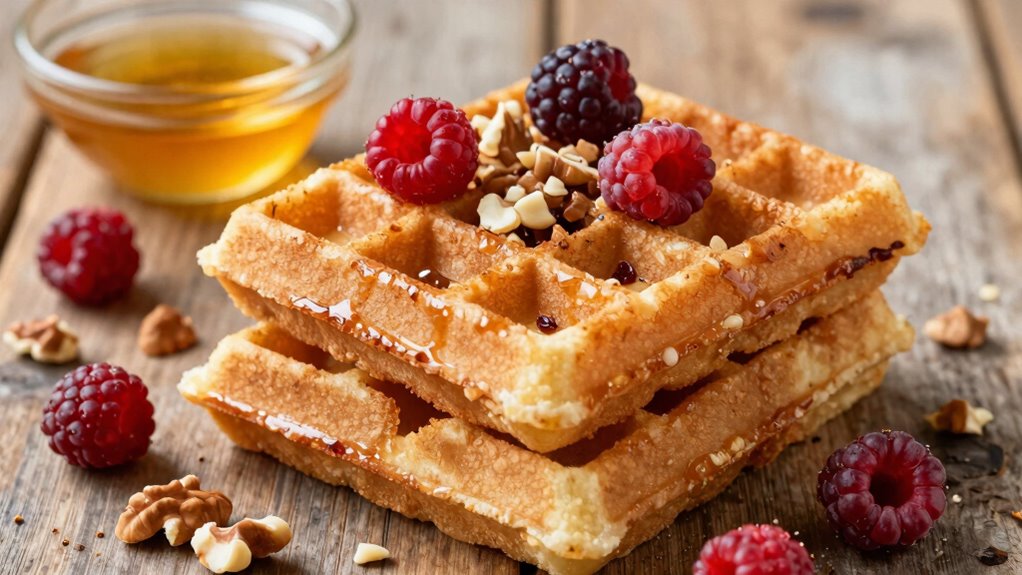

The nutritional quality of gluten-free waffles depends on the ingredients used and how they’re processed. Waffles made with almond or coconut flour offer healthy fats, fiber, and protein, making them more nutritious. In contrast, those with refined rice or potato starch tend to have fewer nutrients. Choosing minimally processed, whole-food ingredients and natural flavorings can boost health benefits. Stay with us to discover how different choices can help you enjoy tastier, more nourishing gluten-free waffles.
Key Takeaways
- Waffles made with whole, minimally processed ingredients like almond or coconut flour are more nutrient-dense than those with refined starches.
- The type of gluten alternative used influences the waffle’s nutritional content, with natural flours offering more health benefits.
- Less processed waffles retain more natural nutrients and avoid artificial additives, enhancing nutritional quality.
- Incorporating natural flavorings like cinnamon or vanilla adds antioxidants and anti-inflammatory compounds without empty calories.
- Homemade waffles allow control over ingredients, enabling the addition of nutrient-rich foods like fruits and spices for better nutrition.

Have you ever wondered how gluten-free waffles stack up nutritionally? The truth is, not all gluten-free options are created equal. Some are packed with nutrients, while others fall short, mainly because of the ingredients used. When you’re choosing a waffle, pay attention to what’s inside. The type of gluten alternatives used plays a big role in determining its nutritional quality. For example, waffles made with almond flour or coconut flour tend to offer more healthy fats, fiber, and protein compared to those made with refined rice or potato starch. These gluten alternatives can boost your intake of essential nutrients and help keep you full longer, giving you more energy throughout the day. On the other hand, some gluten-free waffles rely heavily on processed ingredients, which can strip away nutrients and add unnecessary sugars or preservatives. That’s why reading labels is essential—you want options that incorporate whole, minimally processed ingredients for better nutrition. Paying attention to the ingredients used in gluten-free products can help you make more nutritious choices that support your overall health. Additionally, selecting whole-food ingredients can significantly enhance the nutrient density of your waffles. Incorporating nutrient-dense foods can further improve the overall health benefits of your breakfast options. Moreover, understanding the impact of processing methods can help you identify products that retain more of their natural nutrients. Choosing minimally processed ingredients ensures that you’re getting the maximum nutritional value from your waffles. Natural flavorings like vanilla extract, cinnamon, or nutmeg not only enhance taste without adding empty calories but also provide some antioxidants and anti-inflammatory benefits. If you prefer to make your waffles at home, you have the advantage of controlling what goes in. You can experiment with adding mashed bananas or blueberries for natural sweetness and extra fiber, or incorporate spices like ginger or turmeric for added health perks. These natural flavorings also help you avoid the excess sugar and artificial additives often found in commercial waffles.
gluten-free almond flour waffles
As an affiliate, we earn on qualifying purchases.
As an affiliate, we earn on qualifying purchases.
Frequently Asked Questions
Do Gluten-Free Waffles Contain More Sugar Than Regular Waffles?
Gluten-free waffles can contain more sugar than regular waffles, but it depends on the recipe and brand. When comparing sweeteners, some gluten-free options use added sugars to enhance flavor, leading to higher sugar content variations. Always check the nutrition label because some gluten-free waffles have sugar levels similar to traditional ones, while others are sweeter due to different sweetener choices. Being aware helps you make healthier choices.
Are Gluten-Free Waffles Suitable for People With Other Food Allergies?
A word to the wise: “Don’t judge a book by its cover.” Gluten-free waffles can be suitable for people with other food allergies, but watch out for cross reactivity concerns and allergen cross contamination. Some products might contain traces of nuts, dairy, or eggs, so always read labels carefully. If you have multiple allergies, consult with your healthcare provider to make sure the waffles are safe for you.
How Does the Fiber Content Vary Among Gluten-Free Waffle Brands?
You’ll notice fiber content varies among gluten-free waffle brands depending on the grain variety they use. Some brands incorporate fiber enhancement by adding ingredients like oats, flaxseed, or chia seeds, boosting fiber levels. Others rely on more refined grains, which may have less fiber. To get the most nutritional benefit, check labels for whole grain options and brands that emphasize fiber enhancement, ensuring you enjoy higher fiber content in your waffles.
Can Gluten-Free Waffles Be Part of a Balanced Diet?
Yes, gluten-free waffles can be part of a balanced diet when you choose options with good nutrient balance. Incorporate gluten alternatives like almond or buckwheat flour for added nutrients and fiber. Pair your waffles with protein sources and fresh fruit to make your meal more nutritious. Moderation is key, and paying attention to ingredients helps guarantee you enjoy tasty, nourishing waffles as part of your overall healthy eating plan.
What Are Common Hidden Ingredients in Gluten-Free Waffle Mixes?
Did you know that up to 80% of gluten-free waffle mixes contain hidden additives? These hidden additives often include preservatives and stabilizers, which you might not expect. Many mixes have preservative concerns because they extend shelf life but can impact your health. Always check labels to spot hidden ingredients, and opt for mixes with minimal, natural components for a healthier breakfast option.
Conclusion
So, next time you’re craving waffles, remember that the secret to better nutrition might just be in the ingredients you choose. Could that small change make all the difference in your health? Keep exploring, and you might discover that some gluten-free waffles not only taste great but also pack a surprising nutritional punch. The real question is—are you ready to discover the full potential of your breakfast? The answer could change your mornings forever.