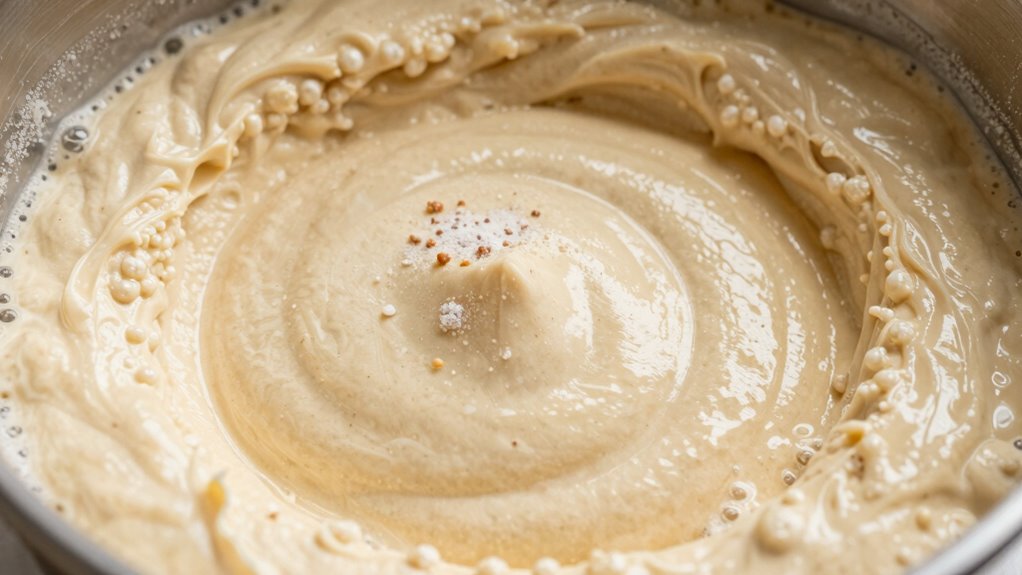

Adding protein powder to your batter may seem like a good idea, but it can cause an unexpected drying effect. The powder absorbs moisture, making your batter thicker and stiffer, which can lead to a drier, tougher final product. You might notice your baked or fried goods lack tenderness and develop cracks or break more easily. To avoid this, you’ll need to adjust liquids and ingredients carefully. Keep going, and you’ll discover how to master the best balance.
Key Takeaways
- Protein powder absorbs moisture, making batter thicker, drier, and harder to handle.
- Increased dryness can lead to tougher crusts and less tender final baked or fried goods.
- Additional liquids and binders are often needed to restore proper moisture balance.
- Flavored protein powders can mask tastes and interfere with the dish’s intended flavor profile.
- Drier batter may cause uneven cooking, cracking, or crumbling during baking or frying.

Adding protein powder to batter is an effective way to boost the nutritional content of your baked goods or fried treats. It’s a popular choice for those aiming to increase protein intake without sacrificing flavor or texture. However, while it seems straightforward, there’s a common issue many overlook: the drying effect that protein powder can have on your batter. This isn’t just a minor inconvenience; it can profoundly alter the final product’s quality if you’re not prepared.
When you incorporate protein powder, you might notice that the batter becomes thicker and stiffer than usual. This is because protein powders tend to absorb moisture, pulling it from other ingredients and creating a drier mixture. The texture alteration can be noticeable, making your batter harder to work with and potentially resulting in a denser, less tender finished product. If you’re frying or baking, this dry texture can translate into a tougher crust or crumb, which might not be what you’re aiming for. To counteract this, you often need to adjust your liquid ratios, adding a little more water, milk, or oil to compensate for the moisture the protein powder soaks up.
Another challenge that comes with adding protein powder is flavor masking. Many protein powders have a distinctive taste—ranging from chalky to overly sweet—that can interfere with the intended flavor profile of your dish. The added flavor masking can diminish the subtle nuances of your ingredients, especially if your recipe relies on delicate flavors or spices. This is particularly problematic if you’re using flavored protein powders, which might overpower or clash with the other ingredients. To mitigate this, consider using unflavored or neutral-tasting protein powders, or tweak your seasonings to better balance the masked flavors.
Additionally, the drying effect can influence how your batter behaves during cooking. A drier batter may not adhere as well to fried foods or might not develop the same crisp exterior you’re used to. It can also cause uneven cooking or result in a product that’s more prone to cracking or breaking apart. To prevent this, it’s essential to test and refine your recipe, ensuring you add enough moisture and maybe even incorporating binders like eggs or yogurt to improve cohesion.

Isopure Zero Carb 100% Pure Whey Isolate Protein Powder, Gluten Free, with Vitamins, Unflavored, 25g Protein Per Serving, 1 Lb, 16 Servings (Packaging May Vary)
One 1 lb bag (16 servings) of Isopure 100% pure whey isolate protein powder to help support daily…
As an affiliate, we earn on qualifying purchases.
As an affiliate, we earn on qualifying purchases.
Frequently Asked Questions
Can Protein Powder Be Substituted With Other Dry Ingredients?
Yes, you can substitute protein powder with alternative dry ingredients like oats, almond flour, or coconut flour. These ingredient substitutions work well in batter recipes and can help maintain the texture and consistency. Just keep in mind that different dry ingredients may affect flavor and moisture, so adjust the liquid content accordingly. Experimenting with these options allows you to tailor your batter while avoiding the drying effects of protein powder.
How Does Humidity Affect Drying When Using Protein Powder?
A stitch in time saves nine, and humidity impact is no different. When you use protein powder, high humidity can cause it to absorb moisture, leading to a wetter batter and uneven drying. Conversely, low humidity helps maintain the dry texture you want. Keep an eye on the environment, as moisture absorption varies with humidity, affecting the batter’s consistency and drying time, so adjust your ingredients accordingly.
Are There Specific Brands Better Suited for Batters?
You should look for brands with high protein quality, as they blend better and reduce drying issues in your batter. Opt for protein powders that match your flavor preferences, ensuring the taste remains pleasant and compatible with your recipe. Some popular options include whey isolates or plant-based blends known for smooth textures and subtle flavors, helping you achieve a moist, well-balanced batter without unwanted dryness.
What Is the Best Way to Prevent Excessive Drying?
To prevent excessive drying, focus on moisture retention by adjusting your ingredient balancing. You can add a little extra liquid, like milk or water, to keep the batter moist. Incorporate ingredients such as eggs or yogurt, which help retain moisture. Also, avoid overmixing, as it can dry out the batter. These steps ensure your batter stays moist and flavorful without sacrificing texture or consistency.
Does the Type of Protein Powder (Whey, Plant-Based) Matter?
Yes, the type of protein powder matters. Whey generally offers better mixability and neutral protein flavor, making it easier to incorporate into batter without drying it out. Plant-based options may have stronger flavors and less smooth consistency, which can affect the batter’s moisture and texture. Choose a protein powder that blends well and complements your recipe to prevent excessive drying and achieve the desired batter consistency.

Gold Bond Men's Essentials Talc Free Body Powder, 10 oz., Refresh 360 Scent, Body Powder for Men, Wetness Protection
Men's Essentials Gold Bond Powder protects against moisture to keep you feeling fresh
As an affiliate, we earn on qualifying purchases.
As an affiliate, we earn on qualifying purchases.
Conclusion
So, next time you add protein powder to your batter, remember the drying effect can turn your mix into a desert wasteland. Don’t let it catch you off guard—adjust your liquids or consider alternative binders. With a little practice, you’ll master the perfect balance, transforming your batter from a parched wasteland into a moist masterpiece. After all, avoiding this hidden trap is the key to baking greatness—don’t let dry batter be your culinary downfall.

LEANBAKERS, Baker's Protein Powder Pure Natural Protein Blend, Whey Isolate, Whey Concentrate, Casein, Gluten Free, no sweeteners, Unflavored, 17.1 oz, for Baking high Protein Low Calorie Snacks
👩🏻🍳 Formulated for Baking – Our protein powder is made to partially replace flour using a blend of…
As an affiliate, we earn on qualifying purchases.
As an affiliate, we earn on qualifying purchases.

Flex Vegan Protein Cookie Butter Powder – Brownie Batter | Dairy-Free, Keto-Friendly, Low Carb, Sugar-Free, Gluten-Free | Easy to Mix, Bake and Spread | 8.1oz
INCREDIBLE FLAVOR: Our dairy-free Brownie Batter Protein Cookie Butter replicates that thick batter that nobody can resist dipping…
As an affiliate, we earn on qualifying purchases.
As an affiliate, we earn on qualifying purchases.