
TL;DR

Get baking supplies delivered free with Prime
- Fast, free delivery on millions of items
- Prime Video, Amazon Music and more included
- Member-only deals all year
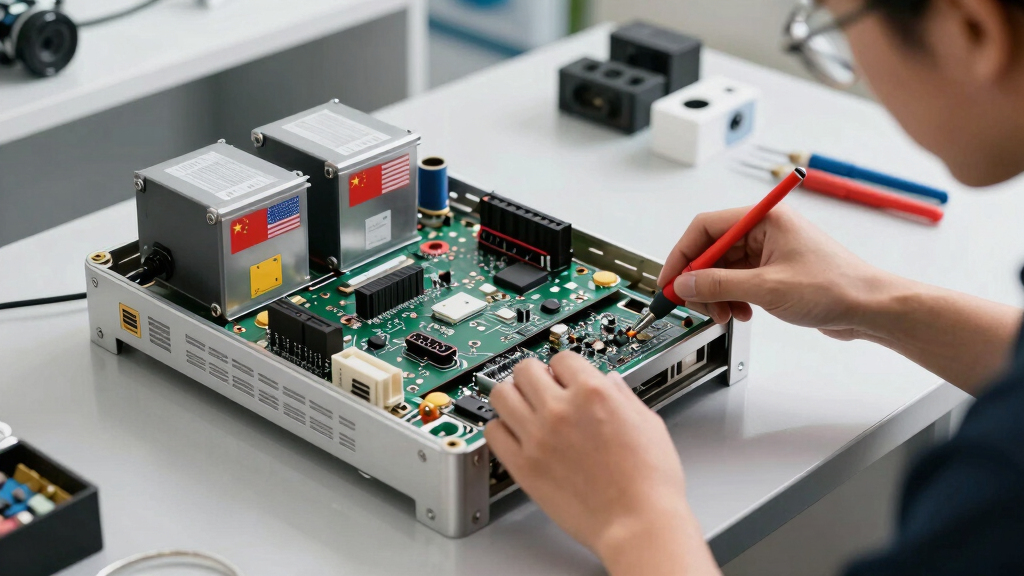
China is positioned for AI dominance due to its extensive, high-capacity energy infrastructure. The US is countering by developing flexible, innovative energy solutions. This dynamic influences future AI development and global tech power balance.
China’s extensive and high-capacity energy infrastructure gives it a significant advantage in powering AI technologies, while the US is actively engineering around its grid limitations to support AI growth, according to recent expert analyses.
Recent studies indicate that China’s energy grid, with its large gigawatt capacity, is inherently suited to support large-scale AI computing needs. This structural advantage is rooted in China’s aggressive investment in energy infrastructure, enabling the country to sustain the high power demands of AI development. Meanwhile, the United States faces a ‘gigawatt gap,’ a capacity shortfall that complicates scaling AI infrastructure. To address this, US policymakers and industry leaders are focusing on innovative solutions, such as decentralized energy grids and advanced energy storage, to circumvent grid limitations. Experts like Thorsten Meyer highlight that China’s energy infrastructure provides a natural, scalable foundation for AI, whereas the US is relying on engineering solutions to compensate for existing constraints.
Why It Matters
This contrast matters because it influences the global race for AI leadership. China’s structural energy advantage could allow it to dominate large-scale AI deployment, impacting economic, technological, and geopolitical power balances. The US’s adaptive strategies reflect a different approach, emphasizing flexibility and innovation, which may shape future AI capabilities and competitive positioning.
high capacity energy storage batteries
As an affiliate, we earn on qualifying purchases.
As an affiliate, we earn on qualifying purchases.
Background
Over the past decade, China has prioritized building a robust energy infrastructure, including expanding gigawatt-scale power plants, to support its AI ambitions. The US, by contrast, has faced challenges with aging energy grids and regulatory hurdles, leading to a ‘gigawatt gap’ that limits large-scale AI deployment. Recent policy initiatives aim to modernize the grid and incorporate renewable energy sources, but these efforts are still underway. The debate over energy capacity and infrastructure resilience is central to understanding future AI development trajectories in both countries.
“China’s energy infrastructure provides a natural, scalable foundation for AI, whereas the US is relying on engineering solutions to compensate for existing constraints.”
— Thorsten Meyer
“The gigawatt gap in the US represents a critical bottleneck for scaling AI, but innovative grid solutions could mitigate this challenge.”
— Energy policy analyst
What Remains Unclear
It remains unclear how quickly the US can effectively close its gigawatt gap through technological innovation and policy reforms. Additionally, future developments in China’s energy infrastructure and potential shifts in policy could alter the current comparative landscape. The long-term impact of these structural differences on AI leadership is still uncertain.
What’s Next
Next steps include monitoring US policy initiatives aimed at modernizing the energy grid and increasing capacity, as well as China’s continued expansion of its energy infrastructure. Further analysis will assess how these developments influence AI deployment scales and international competitiveness.
Key Questions
What is the gigawatt gap?
The gigawatt gap refers to the shortfall in energy capacity—measured in gigawatts—that limits the ability of a country, particularly the US, to support large-scale AI infrastructure and computing needs.
Why does China’s energy infrastructure give it an advantage in AI?
China’s extensive, high-capacity energy grid can reliably power large AI data centers and computing facilities, enabling faster and larger-scale AI development.
How is the US responding to its energy limitations?
The US is investing in innovative solutions like decentralized grids, energy storage, and renewable energy integration to bypass or mitigate the gigawatt gap and support AI growth.
What are the potential long-term impacts of these differences?
If China maintains its structural advantage, it could lead to faster AI deployment and technological dominance. The US’s success depends on how quickly it can modernize its energy infrastructure and implement adaptive strategies.
Source: Thorsten Meyer AI
Evergreen bestsellers Picks
bestsellers
As an affiliate, we earn on qualifying purchases.