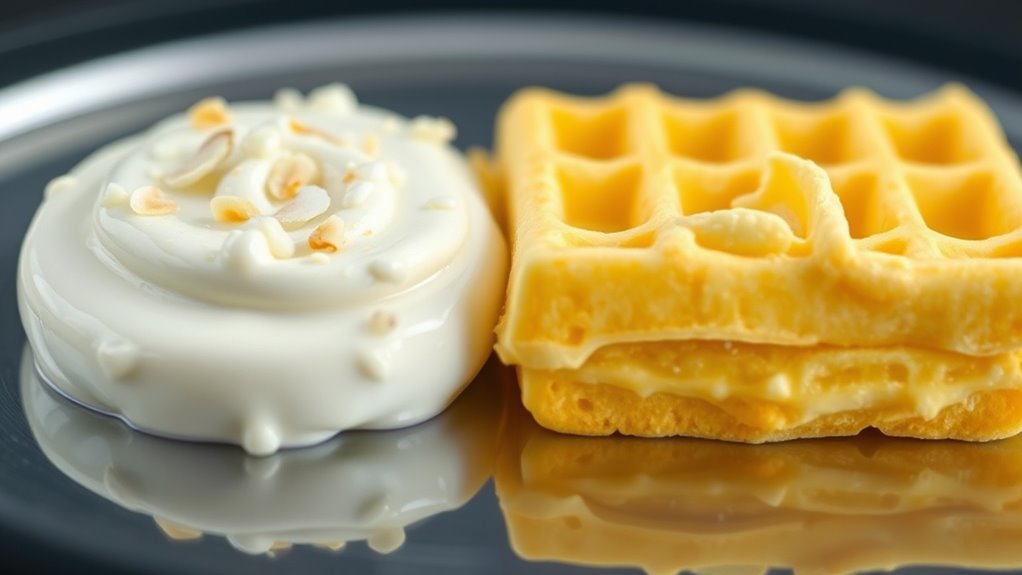

When choosing between coconut fat and butter for industrial waffles, consider their impact on flavor, stability, and health. Coconut fat offers a neutral, tropical taste, high oxidation resistance, and aligns with vegan trends, making it great for shelf stability. Butter provides a rich, traditional flavor but is more sensitive to heat and contains dairy. Understanding these differences helps you optimize your formulations for flavor, shelf life, and dietary preferences—discover more if you continue exploring these options.
Key Takeaways
- Coconut fat offers high thermal stability, ideal for industrial waffle production and longer shelf life.
- Butter provides a rich, savory flavor that enhances traditional, classic waffle profiles.
- Coconut fat’s plant-based nature makes it suitable for vegan formulations, unlike butter.
- Both fats influence flavor and texture; coconut fat imparts a tropical aroma, while butter adds nuttiness.
- Consider health implications: coconut fat’s saturated fats may raise cardiovascular concerns, unlike butter’s nutrient profile.

When choosing between coconut fat and butter, understanding their differences can help you make healthier and more suitable dietary choices, especially in industrial waffle formulations. Both ingredients influence not just the taste but also the overall health implications of the final product. Coconut fat, derived from the meat of mature coconuts, is high in saturated fats, but these are primarily medium-chain triglycerides (MCTs). MCTs are processed differently by your body, often providing quick energy and potentially supporting weight management. However, their high saturated fat content still raises concerns about cardiovascular health if consumed excessively. Proper dilution of fats and oils in formulations ensures optimal texture and stability, which is crucial for large-scale production. Butter, on the other hand, comes from dairy and contains a mix of saturated fats, along with small amounts of monounsaturated and polyunsaturated fats. Its health implications are often debated because it also provides beneficial nutrients like vitamins A, D, E, and K, which are absent in coconut fat.
In the context of industrial waffle formulations, flavor profiles are vital because they directly impact consumer preferences. Coconut fat imparts a distinct, tropical aroma and taste that can add a unique character to waffles. Its subtle sweetness and creamy mouthfeel can enhance the overall sensory experience, especially when paired with ingredients like bananas, chocolate, or tropical fruits. Butter, however, is valued for its rich, savory flavor and the depth it adds to baked goods. Its slightly nutty, caramel-like notes can create a more traditional and comforting waffle profile, appealing to consumers seeking classic flavors. When choosing between the two, consider how each flavor profile complements the other ingredients and the target market’s preferences.
From an industrial perspective, coconut fat’s stability at high temperatures and resistance to oxidation make it an attractive choice for large-scale production where shelf life and consistency matter. Butter, while offering excellent flavor, can be more sensitive to heat, which may affect product stability and storage. Additionally, coconut fat’s plant-based origin makes it suitable for vegan formulations, whereas butter requires modification or labeling as a dairy product. This distinction can influence formulation decisions based on dietary trends and consumer demand for plant-based options. Both fats have their pros and cons regarding health implications and flavor profiles, but understanding these differences allows you to tailor waffle products that meet specific nutritional goals and sensory expectations, ultimately enhancing product appeal and marketability.

Viva Naturals Organic Coconut Flour, 4 lbs (1.81 kg) – Gluten Free Flour for Keto, Paleo & Vegan Baking, Good Source of Fiber, Low Fat, Non-GMO, Unbleached & Unrefined
✔️ FRESH & FLAVORFUL ORGANIC FLOUR – Gently milled from some of the freshest organic coconuts, our coconut…
As an affiliate, we earn on qualifying purchases.
As an affiliate, we earn on qualifying purchases.
Frequently Asked Questions
How Does Coconut Fat Affect Waffle Shelf Life?
Coconut fat extends your waffle’s shelf life by offering preservation benefits and enhancing microbial stability. Its natural properties help prevent spoilage and slow down microbial growth, keeping waffles fresher longer. By using coconut fat, you guarantee your products stay moist and tasty, reducing waste and maintaining quality. This makes coconut fat an excellent choice for industrial waffle formulations aiming for longer-lasting waffles without compromising texture or flavor.
Are There Allergen Concerns With Coconut Fat Versus Butter?
Like a key unfastening a hidden door, understanding allergen risks reveals the truth about coconut fat and butter. You need to know that coconut fat can trigger allergen concerns for those with coconut allergies, while butter may pose issues for dairy-sensitive individuals. Both ingredients carry allergen risks, impacting dietary restrictions. Always check labels carefully to protect consumers, ensuring your waffles are safe and enjoyable for everyone.
What Is the Cost Difference Between Coconut Fat and Butter?
You’ll find that coconut fat generally costs less than butter, making it a more budget-friendly choice for industrial waffle formulations. The cost comparison varies based on supply availability; coconut fat tends to be more readily available year-round, which helps keep prices stable. Butter, however, can fluctuate more due to seasonal supply and dairy market conditions. Overall, coconut fat offers a more consistent and economical option for large-scale production.
Can Coconut Fat Replace Butter Entirely in Recipes?
You can replace butter with coconut fat, but keep in mind it may impact the flavor and texture of your recipes. Coconut fat substitutions work well in many baked goods, yet they might alter the butter flavor impact, making your waffles less rich and creamy. If you choose to substitute, consider adding flavor enhancers or adjusting other ingredients to maintain the desired taste and consistency.
How Do Flavor Profiles Differ in Waffles Made With Each Fat?
You’ll notice flavor nuances differ markedly between waffles made with coconut fat and butter. Coconut fat imparts a subtle sweetness and a tropical aroma, giving your waffles an exotic, slightly nutty flavor. Butter, on the other hand, provides richer, creamy notes with classic dairy aroma variations. These aroma variations enhance the overall taste experience, making each fat’s flavor profile distinct. Your choice impacts the waffle’s aroma and taste, shaping the final indulgence.

JumpingLight 5 Hole Wooden Sugar Mold Wood Candle Holder Primitive Cheese Butter Press Cast Iron Decor for Vintage Industrial Home Accessory Decorative Gift
Cast iron products will be suitable for child or teen room, mud room, porch, kitchen, bedroom, bath, barn,…
As an affiliate, we earn on qualifying purchases.
As an affiliate, we earn on qualifying purchases.
Conclusion
When choosing between coconut fat and butter for your waffle recipes, consider their unique properties. Coconut fat offers a dairy-free alternative with a higher melting point, giving your waffles a crispier texture. Surprisingly, about 70% of the world’s population consumes some form of coconut fat regularly, highlighting its global popularity. So, whether you prefer the rich flavor of butter or the versatility of coconut fat, understanding their differences helps you craft perfect waffles every time.

Carrington Farms Organic Liquid Coconut Cooking Oil, 16 Fl Oz –Unflavored, Unscented, High Smoke Point, MCT-Rich, No Trans Fat – For Cooking, Sautéing, Frying & Baking – Gluten Free, Non-GMO, Hexane Free, BPA Free Bottle
Cooking Oil Alternative: Replace traditional cooking oils such as vegetable, olive, canola, and corn oils with Carrington Farms…
As an affiliate, we earn on qualifying purchases.
As an affiliate, we earn on qualifying purchases.
DairySky Lactose Free Milk Powder 11 Oz – Non GMO Fat Free Powdered Milk for Baking & Coffee, Kosher with Protein & Calcium, Great Substitute for Liquid Milk, RBST Hormone – Free – 1 Pack
DAIRY FLAVOR WITHOUT THE LACTOSE – The natural sugars in our lactose free powdered milk are broken down,…
As an affiliate, we earn on qualifying purchases.
As an affiliate, we earn on qualifying purchases.