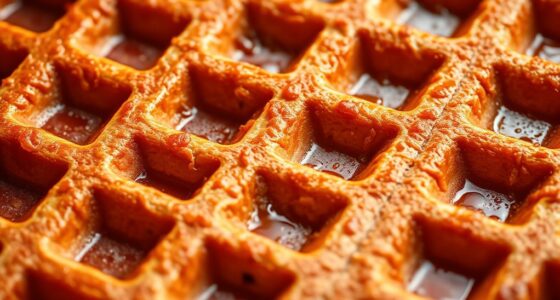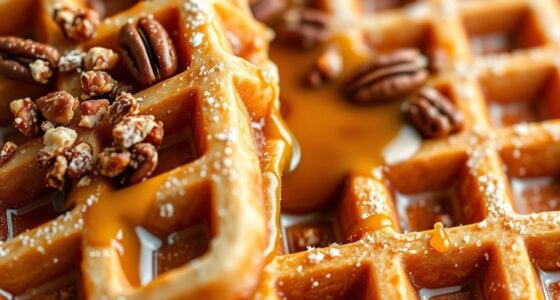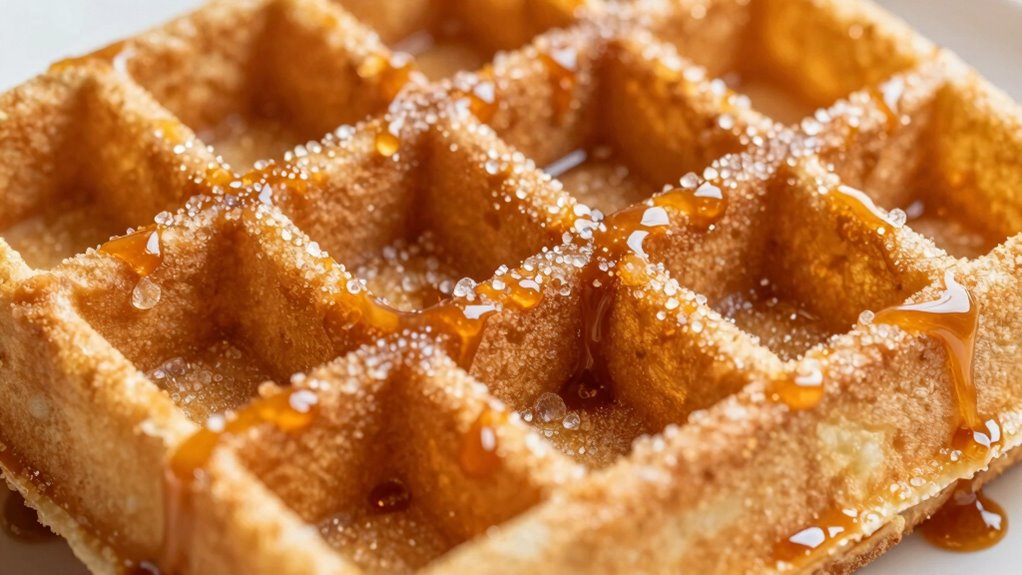
When you cook waffles, sugar starts changing color almost immediately through caramelization, which happens above 320°F and quickly darkens the surface. At the same time, Maillard reactions between proteins and sugars occur around 280°F to 330°F, adding depth to the color. These reactions happen long before the flavor fully develops, with temperature and time controlling how dark your waffle gets. To discover more about how these processes influence your waffle, keep exploring the details.
Key Takeaways
- Sugar begins to caramelize above 320°F, causing surface browning before flavor significantly develops.
- Caramelization produces visual color changes rapidly, while flavor changes are more gradual.
- Maillard reactions between proteins and sugars contribute to color without immediate flavor impact.
- Temperature controls the rate of browning, allowing color change to precede flavor development.
- Visual cues like darkening surface indicate ongoing chemical reactions before flavor intensifies.
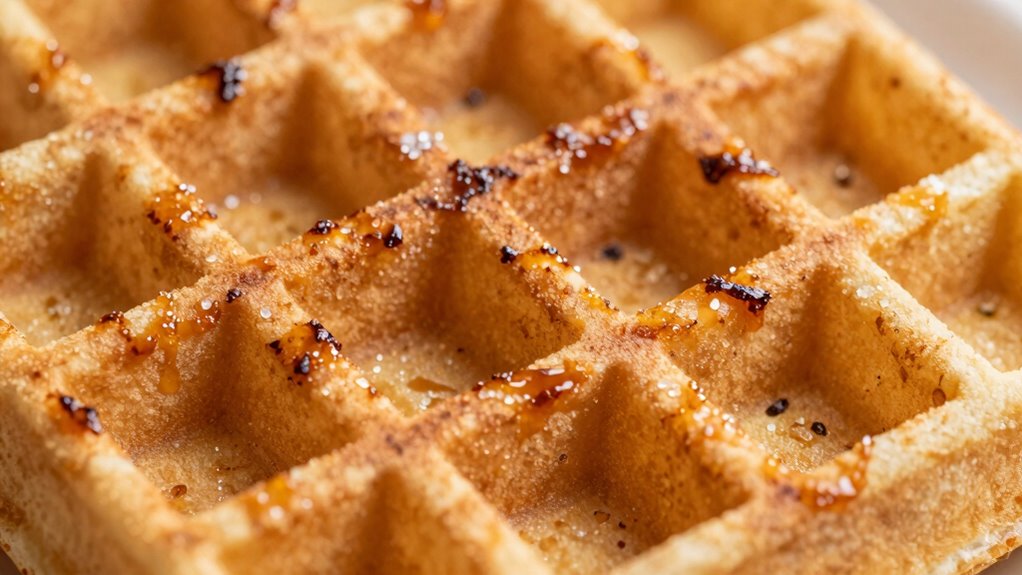
When you cook a waffle with sugar, you might notice its color changing from golden to a richer, darker shade. This transformation isn’t just about aesthetics; it signals complex chemical changes happening within the batter. Two key processes drive this color shift: caramelization processes and Maillard reactions. Understanding these reactions helps you see how sugar influences your waffle’s appearance long before it affects its flavor.
Caramelization occurs when sugar is heated to high temperatures, typically above 320°F (160°C). As the sugar heats, its molecules break down and reassemble into new compounds, creating that deep amber or brown hue. This process is responsible for the rich, caramel-colored surface of your waffle. When you add sugar to the batter and cook it, the heat causes these molecules to undergo caramelization, giving your waffle its initial darkening. The more sugar you add, the more pronounced this effect becomes, leading to a visibly darker crust. Caramelization is a purely sugar-driven process, so it begins as soon as the temperature rises beyond the critical point, making the color change almost immediate once the waffle hits the hot waffle iron. Additionally, the temperature at which you cook influences the rate and extent of this process.
Caramelization begins instantly above 320°F, transforming sugar into a rich, caramel-colored crust on your waffle.
Meanwhile, Maillard reactions play a significant role in browning when proteins and sugars interact. In your waffle batter, proteins from eggs, milk, or flour combine with sugars under heat, creating complex new compounds. These reactions tend to happen around 280°F to 330°F (140°C to 165°C), overlapping with caramelization but involving different chemical pathways. The Maillard process produces a spectrum of brown hues, from light tan to deep mahogany, and contributes more to flavor development than color. Still, it influences how your waffle looks, especially around the edges and surface. As heat continues to apply, these reactions accelerate, intensifying the browning without necessarily adding sugar. This means that even if your batter isn’t overly sweet, the Maillard process can produce a darker, more appealing crust. Temperature control plays a crucial role in how quickly and intensely your waffle browns.
Furthermore, controlling the cooking time allows for better management of these reactions, ensuring your waffle achieves the desired color and texture. In essence, the color change in your waffle is a visual cue of ongoing chemical reactions. Caramelization takes the spotlight with its direct sugar transformation, while Maillard reactions add a layer of complexity involving proteins and sugars. Both happen simultaneously, shaping the final appearance well before you taste the sweetness or savor the flavor.

Cuisinart Waffle Maker, 5-Setting Browning Control, Stainless Steel
- Professional-quality waffle maker: Fast, easy breakfast waffles
- Large traditional waffle: Bakes one big waffle at a time
- Deep waffle pockets: Extra-deep for toppings
As an affiliate, we earn on qualifying purchases.
As an affiliate, we earn on qualifying purchases.
Frequently Asked Questions
Does Waffle Batter Composition Affect Browning Speed?
Yes, waffle batter composition affects browning speed. When you add more sweetening agents like sugar, it accelerates the caramelization process, causing the waffle to brown faster. The type and amount of sugar influence how quickly this happens, so adjusting ingredients changes the browning rate. For a lighter waffle, use less sugar; for a darker, crispier one, increase the sweetening agents to boost caramelization.
Can Different Sugar Types Influence Waffle Color Differently?
Imagine your waffle as a canvas, where different sugars paint unique shades. Yes, different sugar types influence waffle color differently through their crystallization rates and caramelization points. For instance, glucose browns faster, giving a darker hue, while sucrose develops a golden color. These variations affect not just appearance but also flavor development, creating a symphony of sweetness and color that transforms your waffle into a masterpiece.
How Does Altitude Impact Waffle Browning?
Altitude effects your waffle browning because higher elevations cause faster moisture evaporation, which dries out the batter more quickly. This rapid moisture loss can lead to darker, crisper waffles before they’re fully cooked inside. To counteract this, you might need to adjust your recipe by reducing baking time or adding a bit more liquid. Keep an eye on your waffles, as altitude influences browning and overall texture considerably.
Is There a Way to Prevent Over-Browning Without Altering Flavor?
To prevent over-browning without altering flavor, focus on controlling the heat during cooking. Use a lower temperature to slow sweet caramelization, which helps manage color without impacting taste. Additionally, you can adjust the cooking time or use a waffle iron with a color control feature. These methods give you better color control, ensuring your waffles stay golden without sacrificing flavor or texture.
What Role Does Heat Distribution Play in Waffle Coloration?
Heat distribution plays a vital role in waffle coloration by ensuring even heat transfer across the surface. When heat is evenly distributed, the Maillard reaction occurs uniformly, leading to consistent browning without overcooking certain areas. If heat concentrates in specific spots, it accelerates browning prematurely, causing uneven color. To prevent this, use a well-calibrated waffle iron, preheat thoroughly, and avoid hotspots, ensuring a balanced Maillard reaction for perfect color and flavor.
Conclusion
As you watch your waffle turn golden, remember that sugar’s secret transformation is like a painter’s brush, adding color long before the taste buds catch on. It’s a silent artist, crafting a visual masterpiece that hints at the sweet flavors to come. So next time you see that perfect browning, know that sugar’s magic is at work—painting your waffle’s canvas, setting the stage for a delicious, flavorful masterpiece that’s as much about looks as it is about taste.