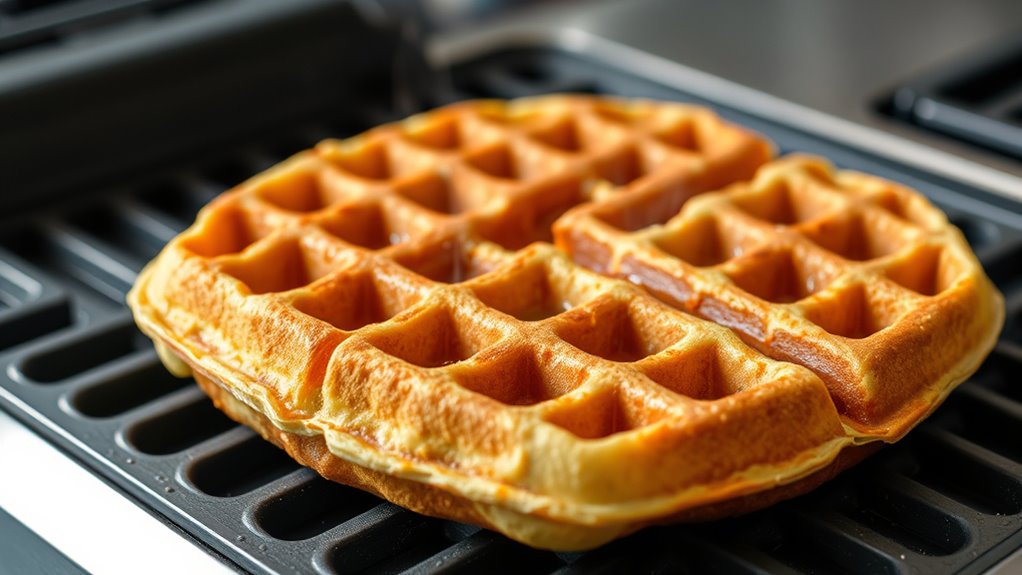

To keep waffles crispy when reheating, start by using a stovetop or skillet. Warm it over medium heat and place the waffle directly on the surface, lightly spraying with cooking spray or adding a small pat of butter. Cover loosely to help it reheat evenly without becoming soggy. For quicker, softer waffles, a short microwave burst followed by a quick stint on the skillet works well. Keep these tips in mind, and you’ll discover even more ways to restore perfect crispness every time.
Key Takeaways
- Use a stovetop skillet over medium heat to re-crisp waffles, flipping until evenly heated and crispy.
- Lightly spray or add butter to prevent sticking and maintain texture during stovetop reheating.
- Microwave waffles briefly on low power covered with a paper towel to warm without sogginess.
- Combine microwave warming with a quick skillet finish to restore crispness effectively.
- Monitor moisture levels and control heat to prevent sogginess and preserve the original crunch.

Have you ever wondered how to reheat waffles without sacrificing their crispy texture and delicious flavor? Reheating waffles can be tricky because they tend to lose their crunch and become soggy if not handled properly. Luckily, there are effective methods to preserve that perfect crispness, whether you’re using stovetop techniques or microwave tips.
If you prefer the stovetop approach, you’ll want to start by preheating a non-stick skillet or griddle over medium heat. Once it’s hot, place your waffles directly on the surface and cook for a few minutes on each side. This method allows the heat to evenly re-crisp the waffle’s exterior while warming the inside thoroughly. To prevent sticking, you can lightly spray the surface with cooking spray or add a small amount of butter. Keep a close eye to avoid burning, and don’t rush the process—slow and steady ensures the waffle stays crispy and flavorful. If you’re reheating multiple waffles, you might want to cover the skillet loosely with a lid to trap some heat, which helps reheat the waffle evenly without making it soggy.
Preheat skillet over medium, add waffles, cook until crispy, and cover lightly for even reheating.
When using microwave tips, it’s important to note that this method can often lead to sogginess if not done carefully. To mitigate this, place the waffle on a microwave-safe plate and cover it with a paper towel. The paper towel helps absorb excess moisture, which is a common cause of sogginess. Microwave the waffle in short bursts—about 20 to 30 seconds at a time—checking after each interval. This prevents overheating and keeps the waffle from becoming rubbery. For better results, you can also reheat the waffle in short intervals on a low power setting, which preserves some of the original texture. After microwaving, transferring the waffle to a hot skillet for a minute or two can restore crispness, combining the convenience of the microwave with the stovetop’s ability to crisp the exterior.
Ultimately, the key to maintaining crispness when reheating waffles is controlling the heat and moisture. Stovetop techniques give you more control to re-crisp without sogginess, making them ideal if you want that fresh-out-of-the-iron crunch. Microwave tips, on the other hand, offer quick convenience but require extra steps to avoid sogginess. By choosing the right method based on your time and texture preferences, you can enjoy warm, crispy waffles every time, even after they’ve been stored.
Frequently Asked Questions
Can I Reheat Waffles in a Microwave Without Sogginess?
Yes, you can reheat waffles in a microwave without sogginess by using a paper towel. Place the waffle on a microwave-safe plate, cover it with the paper towel, and microwave in short bursts of 20-30 seconds. This helps retain microwave crispness and preserves the waffle texture. Keep an eye on it to prevent over-melting, ensuring your waffle stays crispy and delicious.
What’s the Best Way to Store Leftover Waffles?
For ideal waffle storage and leftover preservation, let your waffles cool completely before placing them in an airtight container or resealable bag. Store at room temperature if you’ll eat them within a day, or refrigerate for up to a week. For longer storage, freeze them individually on a baking sheet, then transfer to a freezer bag. This method keeps your waffles fresh, prevents freezer burn, and makes reheating more effective.
How Do I Prevent Waffles From Drying Out During Reheating?
To prevent waffles from drying out during reheating, you should wrap them loosely in foil or a damp paper towel to retain moisture. Use a toaster or oven with reheating utensils like a baking sheet or wire rack to evenly warm them. Avoid microwaving directly on high, as it can make waffles soggy or dry. Keep an eye on the process, and reheat just until warm to preserve their crispness.
Is It Safe to Reheat Waffles Multiple Times?
You shouldn’t reheat waffles multiple times because it can compromise food safety and increase the risk of bacterial growth. Each reheating cycle raises concerns about food safety, so it’s best to reheat only once. To maintain quality, reheat waffles properly and quickly, avoiding multiple reheating frequency. This ensures your waffles stay safe to eat and taste fresh, minimizing health risks associated with repeated reheating.
Can I Reheat Frozen Waffles Directly From the Freezer?
Reheating frozen waffles directly from the freezer is like flipping a switch—it’s quick and easy. You can do it using your toaster or microwave, but keep in mind, these reheating techniques may affect the waffle texture, making them softer or less crispy. To keep the best texture, try thawing them slightly first, then reheat for a crisp exterior. This way, you enjoy warm, tasty waffles with minimal effort.
Conclusion
Reheating waffles is like tending a delicate flame—you want just enough heat to revive their crispness without burning them. I once tried microwave reheating, only to end up with soggy waffles; it was like watching a beautiful painting smudge. But when I used the oven or toaster, they came out perfectly crispy, like a fresh batch. Remember, a little care goes a long way—treat your waffles gently, and they’ll reward you with that perfect crunch every time.