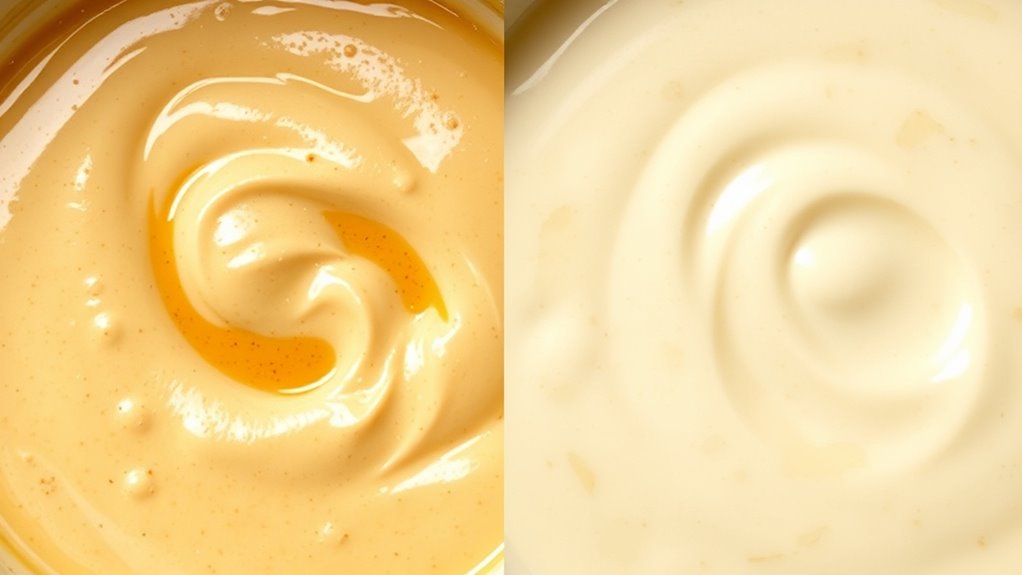

Waffle batter is thicker and more viscous, helping it hold shape in the iron and develop crispy edges, while pancake batter is thinner and more pourable for a soft, fluffy interior. Waffles often contain more flour and richer fats for that crisp texture, whereas pancakes use ingredients like buttermilk for tenderness. Understanding these differences can help you achieve perfect results, and if you keep exploring, you’ll uncover tips for customizing each batter to suit your taste.
Key Takeaways
- Waffle batter is thicker and more viscous, helping it hold shape in the iron, while pancake batter is thinner and more pourable for easy spreading.
- Thicker waffle batter yields crispy edges and a sturdy structure, whereas thinner pancake batter creates soft, fluffy interiors.
- Waffle batter typically contains more flour and fats like melted butter, enhancing crispness, while pancake batter often includes buttermilk for tang and lightness.
- Adjusting batter thickness influences final texture: thicker batter for crunch, thinner for fluffiness.
- Flavor variations include richer, buttery waffle batter and lighter, tangier pancake batter, allowing customization.
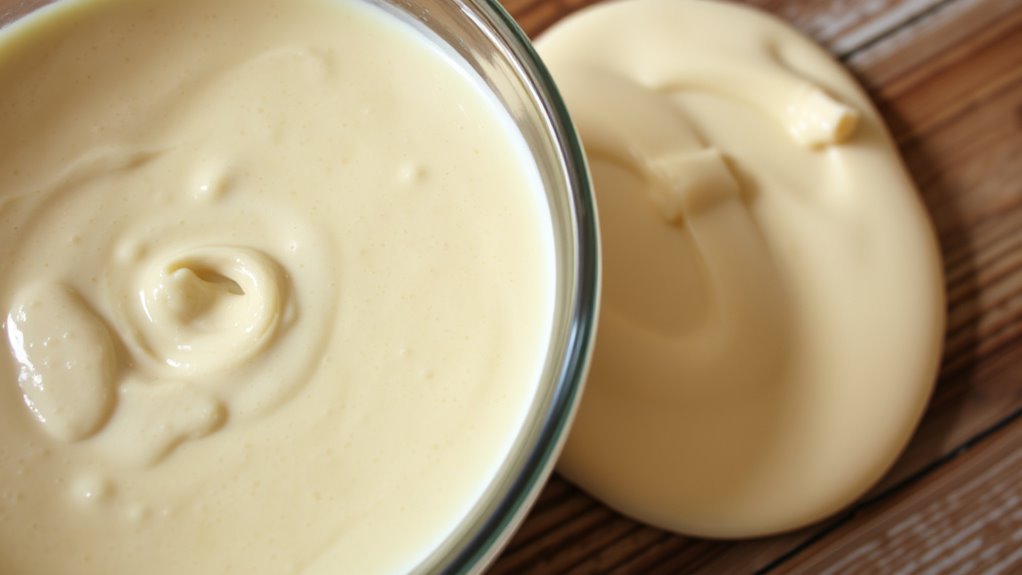
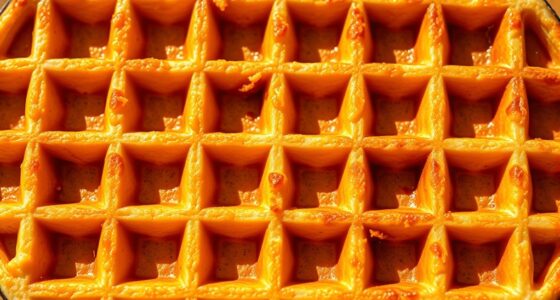
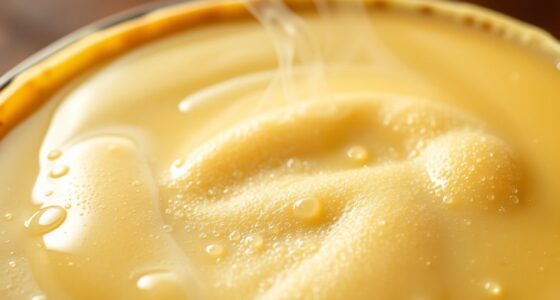
When it comes to breakfast favorites, waffles and pancakes often steal the spotlight, but their batters have distinct differences that influence texture and flavor. The key to understanding these differences lies in the batter consistency and flavor variations you’ll notice when preparing each. Waffle batter tends to be thicker and more viscous, which helps it hold its shape when poured into a waffle iron. This thicker consistency results in those characteristic crispy edges and a sturdy structure that supports toppings well. Pancake batter, on the other hand, is usually thinner and more pourable, making it easier to spread on a griddle and creating a softer, more tender texture once cooked.
Your choice of batter consistency plays a crucial role in the final product. A thicker waffle batter contains more flour or less liquid, ensuring it doesn’t spread too much during cooking. This allows the waffle to develop that desirable crunch and a well-defined grid pattern. When making pancakes, a slightly runnier batter helps achieve a fluffy interior, as the thinner mixture spreads evenly across the pan and captures air bubbles that give pancakes their lift. Adjusting batter consistency is easy—if your waffle batter is too runny, it may not hold its shape, and if your pancake batter is too thick, your pancakes might turn out dense and heavy.
Adjust batter thickness to perfect your waffles’ crunch or pancakes’ fluffiness.
Flavor variations are another aspect that distinguishes waffle and pancake batters. While both can be customized with ingredients like vanilla, cinnamon, or fruit, waffles often incorporate richer flavors because of their denser batter. Some recipes include melted butter or oil directly in the batter, enhancing both taste and crispiness. Pancake batters tend to be lighter, sometimes with added buttermilk, which lends a tangy flavor and tender crumb. You can also experiment with flavor variations—adding blueberries, chocolate chips, or spices—to suit your palate. Waffles might have a more pronounced buttery or caramelized taste once cooked, while pancakes can be more subtly flavored, allowing toppings like syrup or fresh fruit to shine.
In essence, understanding the differences in batter consistency and flavor variations helps you craft the perfect breakfast. Whether you prefer the crispy, structured waffles or the soft, fluffy pancakes, adjusting these elements ensures your breakfast turns out just right. It’s all about tailoring the batter to match the texture and flavor profile you desire, giving you the flexibility to enjoy both classics in your own kitchen.

Cuisinart Waffle Maker, 1250W Round Classic Waffle Iron, 5-Setting Adjustable Browning Control, WMR-CANAS, Brushed Stainless
SUPERIOR FUNCTION: This Cuisinart Waffle Maker offers professional quality for home use, making delicious breakfast waffles fast and…
As an affiliate, we earn on qualifying purchases.
As an affiliate, we earn on qualifying purchases.
Frequently Asked Questions
Can You Use Waffle Batter to Make Pancakes?
You can use waffle batter to make pancakes, but keep in mind the batter consistency. Waffle batter is usually thicker, so you’ll want to thin it with a bit of milk or water to achieve a smoother, pourable consistency. Also, consider flavor variations—waffle batter often has more sugar or spices, which can make your pancakes slightly sweeter or richer. Adjust the ingredients to suit your taste and desired pancake texture.
What Are Common Substitutions for Waffle or Pancake Batter?
Did you know over 60% of people seek dairy-free options? When substituting waffle or pancake batter, you can swap all-purpose flour for alternative flours like almond or oat flour. For dairy-free needs, use almond milk or coconut milk instead of dairy. These substitutions work well, making your breakfast options versatile and inclusive. Just remember to adjust liquids slightly to maintain the batter’s consistency and guarantee perfect results.
How Does Batter Temperature Affect Waffle and Pancake Texture?
Batter temperature greatly impacts your waffle and pancake texture by affecting batter consistency and how it cooks. If your batter is too cold, it’ll be thick and dense, resulting in a less fluffy texture. Conversely, warm batter spreads more easily and creates lighter, crispier waffles or pancakes. By practicing temperature control, you guarantee your batter remains ideal, leading to better rise, texture, and overall quality in your breakfast treats.
Are There Gluten-Free Options for Waffle and Pancake Batters?
Yes, you can definitely find gluten-free options for waffle and pancake batters. Using gluten-free flours like almond, rice, or oat flour, you can create delicious, allergen-friendly versions. Don’t worry about texture or taste—many recipes are designed to be just as satisfying as traditional ones. By choosing gluten-free flours, you also address allergen considerations, making your breakfast safer and enjoyable for everyone.
What Are the Health Differences Between Waffle and Pancake Batters?
You’ll notice that waffle and pancake batters have different nutritional content due to ingredient differences. Waffle batter often contains more fat and sugar, making it more calorie-dense, while pancake batter tends to be lighter with fewer calories. These differences impact health choices, especially if you’re watching your intake. Check ingredient lists to see added sugars or fats, and opt for healthier substitutions if you want a more nutritious option.

Nordic Ware Better Batter Bowl, White, 10 Cups
Designed with a convenient pour spout, to pour the batter and other ingredients without making a mess
As an affiliate, we earn on qualifying purchases.
As an affiliate, we earn on qualifying purchases.
Conclusion
Now that you know the difference, you’re like the hero choosing between two paths—each promising a delicious adventure. Whether you opt for the crispiness of waffles or the fluffy comfort of pancakes, remember, it’s your unique touch that makes them special. So go ahead, channel your inner culinary wizard and create breakfast magic. After all, as in any great story, it’s your choice that turns simple batter into a memorable masterpiece.
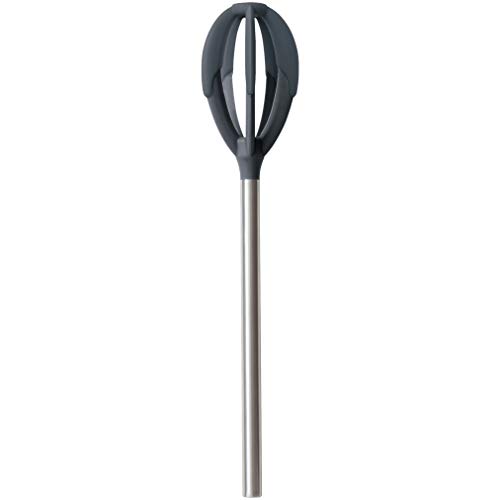
Tovolo Better Batter Tool (Charcoal) – Silicone & Stainless Steel Kitchen Gadget for Mixing Pancake, Waffle, Cake, Muffin, & More Baking Batters / BPA- Free & Dishwasher-Safe
THICK BLADES FOR FAST MIXING: Wide nylon fins cut through thick ingredients to mix them quickly, reducing the…
As an affiliate, we earn on qualifying purchases.
As an affiliate, we earn on qualifying purchases.

Waffles, Crepes, and Pancakes: With Delicious Toppings and Fillings
As an affiliate, we earn on qualifying purchases.
As an affiliate, we earn on qualifying purchases.