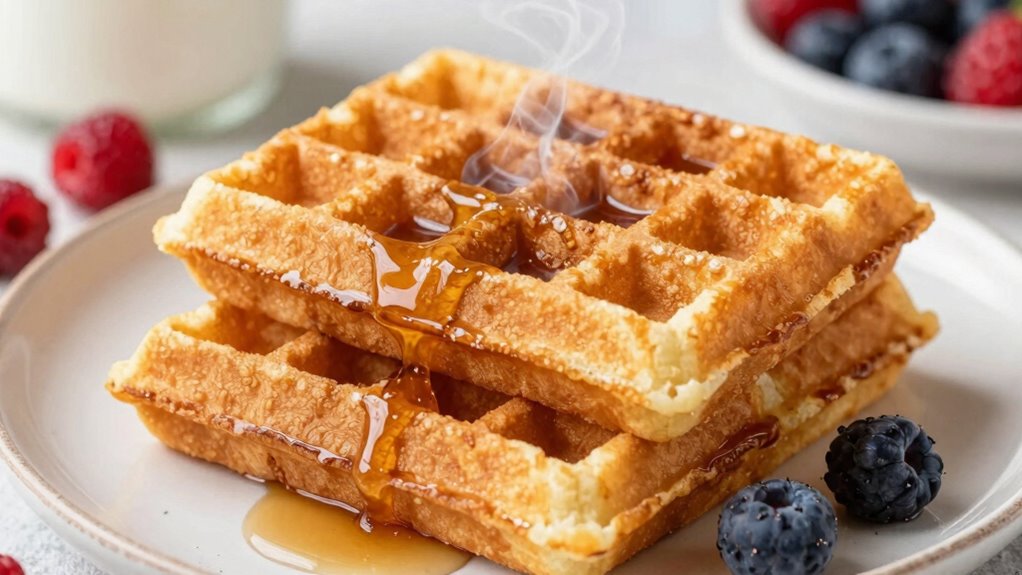

To fix heavy-feeling waffles that taste fine, start by lightening your batter with less flour or switch to cake flour, and add a bit of cornstarch for extra lift. Make sure your leavening agents are fresh, and avoid overmixing to keep the batter airy. Properly preheat your waffle iron and don’t overload it. Small changes to ingredients, handling, and cooking can make a big difference—continue to explore simple tweaks for even better results.

Get baking supplies delivered free — and shop member deals
- Fast, free delivery on millions of items
- Access to Prime Big Deal Days deals on October 6–7
- Prime Video, Amazon Music and more included
Key Takeaways
- Use lighter flour like cake flour or reduce the amount of flour in the batter.
- Avoid overmixing to prevent gluten development, which can make waffles dense.
- Ensure the waffle iron is preheated properly for even cooking and crust formation.
- Do not overload the waffle iron with batter, which can cause undercooking and heaviness.
- Adjust cooking time and temperature to ensure thorough cooking and a crisp exterior.
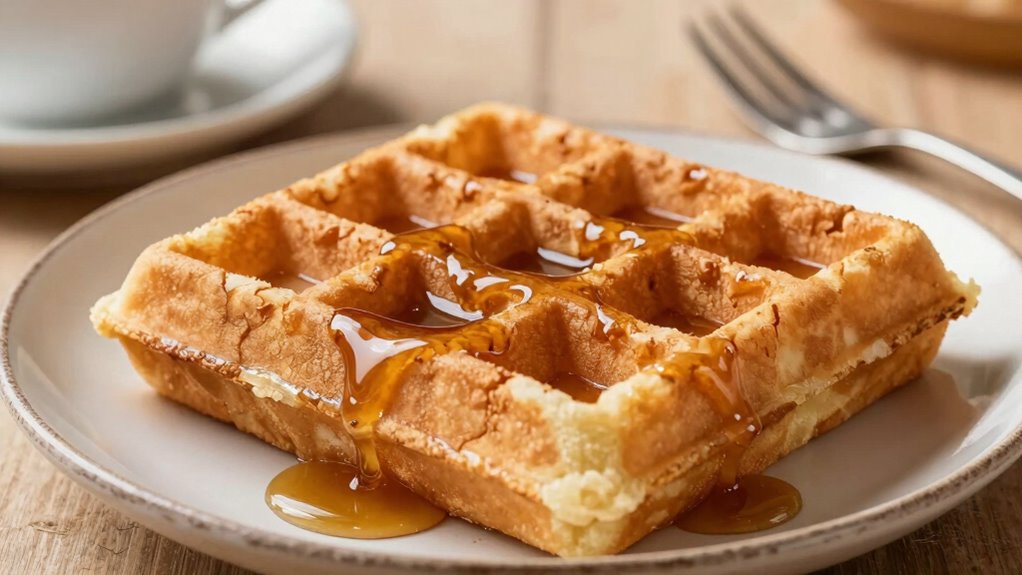
If your waffles taste good but feel heavy and dense, it’s a sign that something in the batter or cooking process needs adjustment. Heavy waffles often result from too much flour, not enough leavening, or overmixing the batter. To improve the texture and make your waffles lighter, start by revisiting your ingredients. Use a bit less flour, or switch to a lighter flour like cake flour, which can help reduce density. Incorporating a little cornstarch can also lighten the batter, giving your waffles a fluffier feel. Additionally, check your leavening agents—baking powder or baking soda should be fresh. Old or insufficient leavening won’t generate enough gas to lift the batter, leading to dense waffles. Proper leavening is essential for creating the airiness you desire in your waffles.
When it comes to flavor enhancement, consider adding ingredients that boost taste without adding weight. For example, a splash of vanilla extract or a pinch of cinnamon can elevate the overall flavor profile, making the waffles taste richer and more appealing even if their texture isn’t perfect. If you like a touch of sweetness, try incorporating a small amount of sugar or honey, which can also help with browning and crust formation. These small adjustments can make your waffles taste more vibrant and satisfying, even if the batter’s consistency isn’t ideal. Sometimes, experimenting with these flavoring options can also improve the perception of the waffle’s texture. A balancing of flavors can help distract from minor textural imperfections and enhance overall enjoyment.
Texture improvement is just as important as flavor. Overmixing the batter is a common culprit for dense waffles because it develops gluten, resulting in tougher, chewier textures. Mix your ingredients just until they’re combined—lumps are fine. This gentle approach preserves the lightness of the batter. Also, ensure your waffle iron is properly preheated; a hot surface creates a quick, even crust that can help trap steam, making the waffles rise better. Don’t overload the iron with too much batter, as this can prevent proper expansion and lead to heaviness. Instead, pour just enough to fill the waffle pattern without overflowing. Proper batter handling can significantly influence the final batter consistency, which plays a crucial role in achieving the desired lightness and fluffiness. Additionally, paying attention to the cooking temperature can help ensure the waffles develop the right texture and don’t turn out heavy.
Finally, consider the cooking time. If you remove waffles too early, they might feel heavy and undercooked inside. Give them a few extra seconds to develop a crisp exterior and ensure they’re cooked through. By fine-tuning your ingredients, handling, and cooking process, you can achieve waffles that are both flavorful and light with a pleasing texture. It’s all about small adjustments—each one contributing to a better, more satisfying waffle every time.
best waffle iron for fluffy waffles
As an affiliate, we earn on qualifying purchases.
As an affiliate, we earn on qualifying purchases.
Frequently Asked Questions
Can the Type of Flour Affect Waffle Heaviness?
Yes, the type of flour can affect waffle heaviness. Flours with higher protein content, like bread flour, develop more gluten, which can make waffles denser and heavier. Conversely, all-purpose or cake flour has lower protein levels, resulting in a lighter texture. To avoid heaviness, choose a flour with balanced gluten development, and don’t overmix the batter, as this can also increase gluten formation and make your waffles dense.
Does Storing Waffles Improperly Impact Their Texture?
Improper storage can definitely impact your waffle’s texture. When you store waffles carelessly, they tend to become soggy, dry, or stale, ruining their crispness and freshness. To maintain that perfect texture, use proper storage techniques like airtight containers or wrapping tightly with plastic wrap. Reheat them properly to preserve their original crunch. By following these storage techniques, you guarantee your waffles stay delicious and their texture remains just right.
Are Certain Toppings Contributing to the Heaviness?
Yes, certain toppings can make your waffles feel heavier. Rich flavor combinations like whipped cream, nut butters, or dense fruit preserves add thickness and weight. Also, thick toppings, such as chunky fruit or syrup, can contribute to the heaviness. To lighten your waffles, opt for thinner toppings like light yogurt or fresh berries, and use smaller amounts of dense toppings. This balances flavor and texture without making your waffles feel overly heavy.
How Does Altitude Affect Waffle Texture and Weight?
Altitude effects can notably influence waffle density and texture. When you bake at high altitudes, the lower air pressure causes the waffle batter to rise faster and more extensively, which can result in a lighter, fluffier waffle or, conversely, a denser one if the batter over-expands and collapses. To adapt, you should adjust leavening agents and liquids, ensuring your waffles maintain the desired texture and weight, regardless of altitude.
Can Dietary Allergies Cause Heavier Waffle Feelings?
Yes, dietary allergies like gluten sensitivity and dairy intolerance can cause heavier feelings in your waffles. When you consume ingredients that your body reacts to, it can lead to bloating, discomfort, and a heavier sensation. To avoid this, try using gluten-free flours and dairy-free alternatives. These substitutions can help lighten the texture and make your waffles feel less heavy, ensuring a more enjoyable breakfast experience.
Conclusion
So, next time your waffles taste delicious but feel heavy, remember it’s like a delicate dance between flavor and texture. Think of your batter as a tightrope walker—balancing lightness with structure. By adjusting ingredients and technique, you’ll transform that weighty heaviness into airy perfection. Ultimately, it’s about finding harmony, where every bite feels like a gentle breeze—not a heavy cloud. Keep experimenting, and your waffles will always rise to the occasion.
Halloween Picks
halloween
As an affiliate, we earn on qualifying purchases.