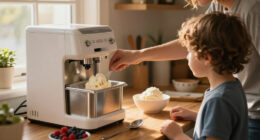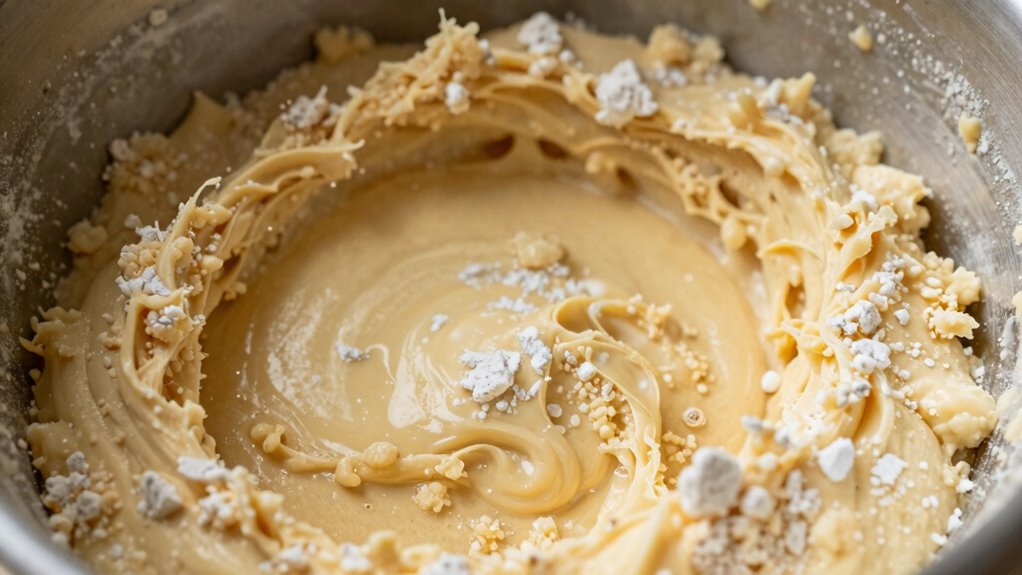

If your batter looks grainy, start by gently folding or stirring to distribute ingredients evenly. Gradually add small amounts of warm liquid—like milk or water—and keep mixing to help dissolve dry flour particles and smooth out the texture. Sifting dry ingredients before mixing can also help prevent clumps. With a few small adjustments, you’ll improve the batter’s consistency. For more tips on fixing graininess and achieving perfect results, keep exploring how to refine your technique.

Get baking supplies delivered free — and shop member deals
- Fast, free delivery on millions of items
- Access to Prime Big Deal Days deals on October 6–7
- Prime Video, Amazon Music and more included
Key Takeaways
- Gently fold or stir the batter to evenly distribute ingredients and reduce graininess.
- Gradually add small amounts of warm liquid (milk, water) while mixing to dissolve dry flour particles.
- Sift dry ingredients to break up clumps and aerate the flour for a smoother batter.
- Ensure accurate ingredient measurements to maintain proper batter consistency.
- Avoid overmixing to prevent gluten development, which can worsen texture.
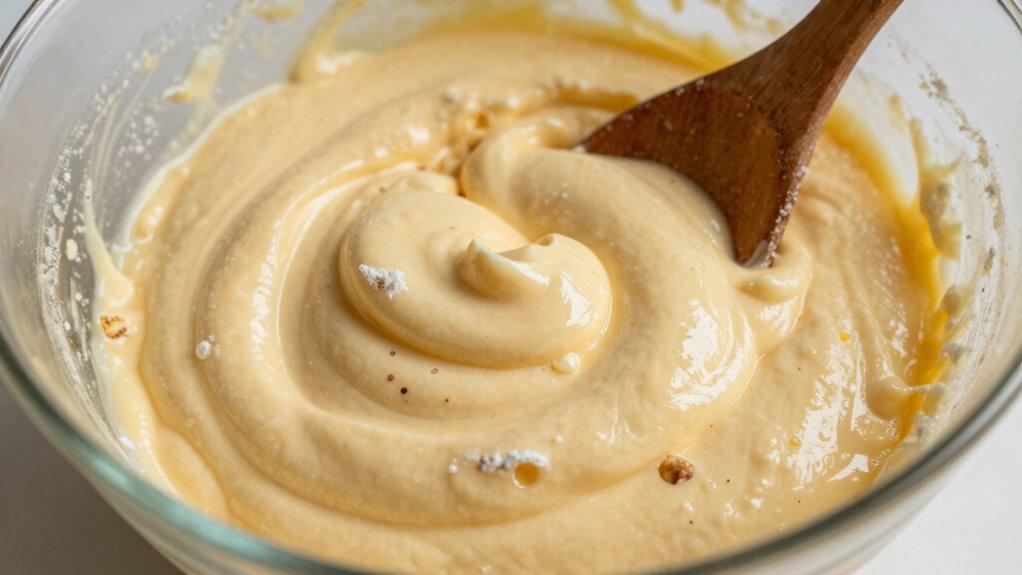
If your batter looks grainy before cooking, don’t panic—this is a common issue with simple solutions. Graininess often results from ingredient proportions, temperature, or mixing techniques, but it’s usually fixable. The first step is to identify whether the graininess is due to dry flour particles not fully incorporated or if the batter has become clumpy. Once you recognize the cause, you can take targeted action to improve the batter’s overall quality.
To smooth out a grainy batter, start by gently folding or stirring it with a spoon or whisk. Sometimes, just mixing a bit more can help distribute the dry ingredients evenly, reducing the gritty texture. If the batter remains stubbornly grainy, consider adding a small amount of liquid—like milk, water, or melted butter—gradually while stirring. This not only helps dissolve remaining flour particles but also enhances the batter’s overall texture, making it smoother and more uniform. Be cautious not to add too much at once; small increments prevent over-thinning the mixture, which could affect the final outcome.
In addition to fixing the texture, this process can also serve as a flavor enhancement. When you incorporate a splash of milk or other liquids, you often bring out subtle flavors in your batter that might have been muted or uneven. Proper hydration allows the ingredients to meld better, creating a more cohesive flavor profile. This step is particularly useful when working with recipes like pancakes or muffins, where flavor balance is essential for a delightful result. Additionally, warming the liquids slightly before adding them can improve ingredient blending and help achieve a more uniform batter. Warming liquids can also activate leavening agents more efficiently, giving your baked goods a better rise and a lighter texture.
Another technique to improve both texture and flavor is to gently warm the liquid ingredients before adding them to the batter. Slightly warmed liquids help dissolve sugar and flour particles more thoroughly, leading to a smoother consistency. Plus, warm liquids can activate leavening agents more efficiently, giving your baked goods a better rise and a lighter texture. Just make sure the liquids aren’t too hot, as excessive heat can cook or alter the batter’s ingredients prematurely. Additionally, if you find that your batter remains grainy despite these efforts, consider sifting your dry ingredients before mixing. Sifting breaks up clumps and aerates the flour, resulting in a finer, more even batter. This small step can make a significant difference in the final texture and flavor, ensuring your baked goods are light, tender, and flavorful. Proper ingredient proportions and sifting dry ingredients play a crucial role in achieving the right batter consistency and should be checked if graininess persists. For optimal results, always measure ingredients carefully to maintain the proper ingredient proportions, which is essential in avoiding grainy textures. Remember, the key to a perfect batter is patience and gentle handling—small adjustments can turn a grainy, unappealing mixture into a smooth, flavorful base ready for baking.
As an affiliate, we earn on qualifying purchases.
Frequently Asked Questions
Can Overmixing Cause Batter to Become Grainy?
Yes, overmixing can cause your batter to become grainy. When you mix excessively, gluten develops too much, altering the texture and leading to a coarse, grainy feel. Use mixing techniques that combine ingredients gently and just until they’re incorporated. Stop mixing as soon as the batter is smooth and combined. This prevents texture alteration and keeps your batter tender and light, ensuring a better final result.
Is It Okay to Add More Liquid to Fix Grainy Batter?
Yes, you can add more liquid to fix grainy batter, but do it carefully to avoid over-thinning. Adding a small amount of milk, water, or other liquid helps adjust consistency and smooths out the texture. While doing so, consider adding flavorings or spices to enhance taste. Mix gently to incorporate the added liquid evenly, ensuring your batter becomes smooth without becoming too runny.
How Does Temperature Affect Batter Texture?
Temperature greatly influences your batter’s texture and flavor enhancement. If it’s too cold, the fats can solidify, making the batter grainy and dense. Warming ingredients slightly can improve texture and help incorporate flavors better. Conversely, if it’s too hot, it can cause the batter to cook unevenly. Maintaining a suitable temperature ensures a smooth batter, enabling better texture modification and flavor enhancement, resulting in lighter, more consistent baked goods.
Should I Use Different Flour to Prevent Graininess?
Yes, using different flour can help prevent graininess. You might try alternative flour options like almond, oat, or rice flour, especially if you want gluten-free options. These flours tend to create a smoother, more consistent batter. When mixing, make certain you thoroughly incorporate the flour to avoid lumps. Experimenting with different flours can improve texture and give your batter a better, more uniform appearance before cooking.
Can Using Old Ingredients Lead to Grainy Batter?
Yes, using old ingredients can lead to grainy batter. Over time, ingredient freshness diminishes, especially with flour and eggs, which can cause uneven mixing and a gritty texture. Poor storage conditions, like exposure to moisture or air, accelerate spoilage and graininess. To prevent this, always check ingredient freshness before mixing and store them properly in airtight containers in cool, dry places. Fresh ingredients ensure a smooth, cohesive batter.
Conclusion
When your batter looks grainy before cooking, don’t panic. Sometimes, a quick stir or a gentle fold can smooth things out. For example, I once had a pancake batter turn grainy because I added the sugar too quickly. After mixing carefully, it turned silky and cooked perfectly. Remember, patience and gentle mixing can save your batter and guarantee delicious results every time. Trust your instincts, and don’t be afraid to adjust as needed.
Halloween Picks
halloween
As an affiliate, we earn on qualifying purchases.