If your waffle batter foams too much, it’s a sign that fermentation is happening too quickly, often due to warm temperatures or overactive leavening agents. This extra foam weakens the batter’s structure, making it hard to achieve a fluffy texture. It may also make the batter difficult to pour smoothly. If you want to understand how to control this excessive foaming and improve your waffle results, there’s more to discover here.
Key Takeaways
- Excessive foaming indicates over-fermentation, often caused by high temperature or long resting times.
- Natural leavening agents produce more gas, leading to increased foam compared to chemical leaveners.
- Over-fermentation weakens batter structure, making it difficult to achieve fluffy waffles.
- Batter that foams too much may be too warm, accelerating fermentation and gas production.
- Managing fermentation conditions helps prevent excessive foaming and ensures batter stability.
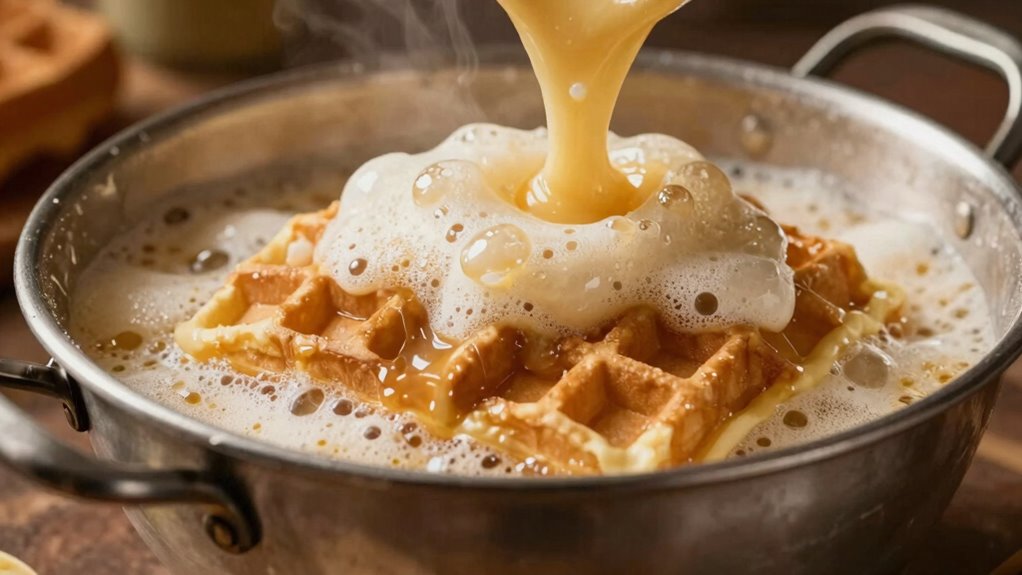
If your batter is overly bubbly and you notice it’s difficult to pour or spread smoothly, consider the fermentation stage. Over-fermentation can weaken the batter’s structure, making it harder to produce fluffy waffles. To prevent this, you might want to reduce the fermentation time or adjust the amount of starter in your recipe. If you’re experimenting with ingredient substitutions, keep in mind that natural leavening agents tend to produce more gas than chemical leaveners, which means your batter will foam more. Monitoring fermentation times and understanding the activity of your ingredients can help you get the right consistency. Additionally, fermentation activity can be influenced by factors like temperature and time, so controlling these elements can help manage foaming. In some cases, excess foaming can also indicate that your batter is too warm or that fermentation is happening too quickly. Cool environments slow down microbial activity, reducing excessive bubbling, while warmer conditions speed it up. So, if you want to control foaming, regulate your kitchen temperature and timing accordingly. When it comes to ingredient substitutions, always consider how they influence fermentation and gas production. Being aware of leavening agents and their effects can help you better manage batter behavior. Understanding the role of temperature in fermentation can give you greater control over the foaming process. Additionally, paying attention to batter consistency can help you determine the optimal fermentation duration for ideal results. Properly managing fermentation parameters ensures a balanced rise and prevents batter from becoming unruly. With a little attention and adjustment, you can harness the bubbling to create flavorful, well-textured waffles without the batter becoming unruly.
waffle batter fermenting control thermometer
As an affiliate, we earn on qualifying purchases.
As an affiliate, we earn on qualifying purchases.
Frequently Asked Questions
Can Overmixing Cause Excess Foaming in Waffle Batter?
Yes, overmixing can cause excess foaming in waffle batter. When you mix too vigorously, you introduce too much air, which creates bubbles and foam. Poor mixing techniques can also disturb ingredient stability, causing ingredients like baking powder to react prematurely. To prevent this, mix just until the ingredients are combined, maintaining a gentle touch to keep the batter smooth without excessive foam.
Does Adding More Leavening Increase Foam in the Batter?
Ever wonder if adding more leavening makes your batter foam more? It does, but only if your leavening balance is amiss. Too much baking powder or baking soda can cause excessive foaming, especially if your ingredients aren’t fresh. Fresh ingredients ensure proper rising, while excess leavening disrupts this balance, leading to over-foam. Keep your ingredients fresh and measured carefully to get the perfect, fluffy waffle every time.
Is Foaming a Sign of Spoiled or Expired Ingredients?
Foaming isn’t necessarily a sign of spoiled ingredients, but it can indicate fermentation or overactive leavening. If your batter foams excessively, it might be due to the fermentation process starting, which happens if ingredients weren’t fresh or if leavening agents reacted too quickly. Always check ingredient freshness before baking; expired or spoiled ingredients can affect batter quality and cause unexpected foaming, so use fresh supplies for the best results.
How Does Temperature Affect Batter Foaming?
Think of batter temperature as the thermostat for your baking symphony. When it’s too warm, the batter’s ingredient consistency shifts, causing more foam to form, like a boiling pot ready to overflow. Keep your ingredients cool and mix at a moderate speed to control foam. Cold temperatures slow down gas expansion, reducing foam, while warm makes it swell. Adjust temperature to keep your waffle batter smooth and perfect.
Can Foam Affect the Texture of the Finished Waffles?
Yes, foam can affect the texture of your finished waffles. If your waffle batter consistency is too airy from excess foam, your waffles might turn out lighter but also less crisp and dense. To avoid this, guarantee ingredient freshness and gently fold ingredients to maintain the right batter consistency. Properly managing foam helps produce waffles with a desirable texture—crispy on the outside and tender inside.
Conclusion
When waffle batter foams excessively, it’s a sign to pause and check your ingredients, your mixing technique, and your timing. It’s a cue to adjust, to refine, to improve. Foam signals over-activity, over-aeration, or sometimes a simple misstep. By understanding what the foam means, you can prevent ruined waffles, perfect your batter, and enjoy breakfast with confidence. Embrace the foam, learn from it, and turn every batch into a delicious success.