
TL;DR

Get baking supplies delivered free — and shop member deals
- Fast, free delivery on millions of items
- Access to Prime Big Deal Days deals on October 6–7
- Prime Video, Amazon Music and more included
PepsiCo is giving culinary insights a more strategic role in product development, with a team led by trained chef Mitchell Dingwall tracking food trends and testing whether they can work in packaged snacks. A Lay’s World Cup flavor project shows how the company adapted Brazilian garlic sauce for chip production and U.S. tastes; the company has not disclosed results for Dingwall’s process measures.
PepsiCo is using professional chefs and culinary research to identify flavors and techniques that could translate into packaged snacks, according to a Food Dive interview with Mitchell Dingwall, the company’s director of global culinary capabilities. The approach combines trend research, food science and business review, with a Lay’s World Cup flavor project illustrating how a regional cuisine can be adapted for a mass-produced chip.
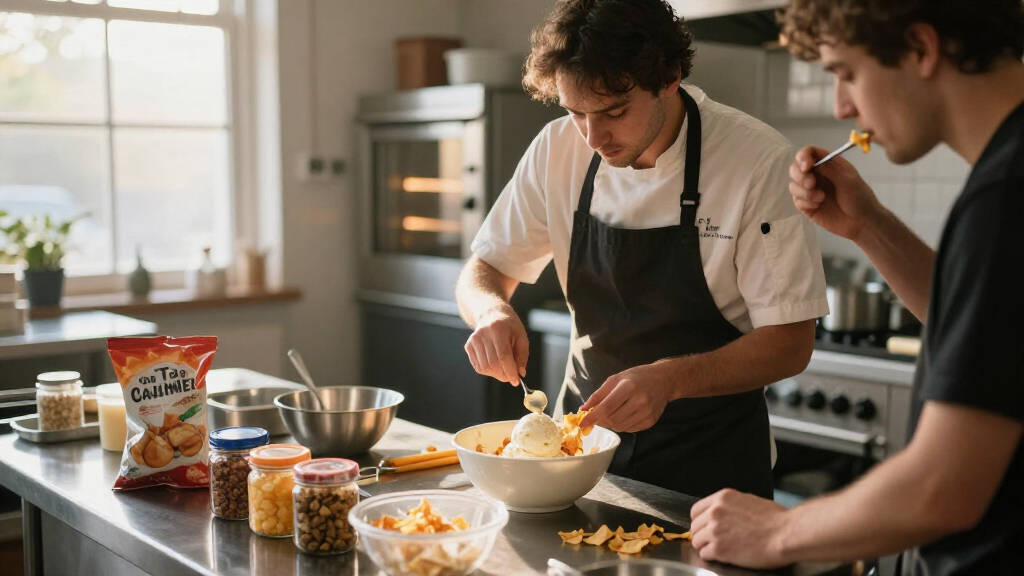
Dingwall leads a team that includes trend spotters, growth strategists, food scientists, brand builders and culinary anthropologists. Based in Texas, the group looks at restaurant and home cooking as well as grocery shelves for ingredients, flavors and techniques that may offer product ideas. It then evaluates candidates for taste, ingredient availability and whether the product makes sense for PepsiCo’s business.
One example involved Lay’s flavors tied to the World Cup and different national cuisines. For Brazil, the team researched local flavors, visited a Brazilian market in Texas and worked with marketing and consumer insights colleagues. A chef in Brazil helped assess whether the team’s choices reflected the cuisine. They focused on a garlic sauce popular in Brazil and considered how to preserve its character in a seasoning that could be manufactured for chips.
Dingwall said the team also considered how the flavor might suit U.S. consumers, including using caramelized or toasted garlic for a more familiar profile. He described the work as translating a culinary reference into a scalable product while retaining its identity. The source does not report sales results or consumer testing outcomes for the example.
From Restaurant Signals to Chips
The process shows how a large food company can draw on culinary expertise to make product development more structured. A restaurant dish or unfamiliar ingredient may spark an idea, but it must pass several practical tests before it can become a packaged snack: taste, sourcing, manufacturing and commercial fit.
That matters as food companies seek products that appeal to changing consumer tastes. PepsiCo’s approach also highlights the challenge of adapting culturally specific flavors for another market. The Brazilian garlic example involved local input and a deliberate adjustment for U.S. palates; it does not establish that one version is more authentic or that the resulting product succeeded commercially.
A Culinary Role Inside PepsiCo
PepsiCo sells brands including Doritos, SunChips and Lay’s. The Food Dive report describes the company as having annual revenue of $94 billion, without specifying the year for that figure. Dingwall said chefs work in many food companies, but characterized PepsiCo’s use of culinary expertise as strategic and forward-looking.
He said his own background combines professional cooking, food science and business and innovation work. In addition to contributing to projects, he said he uses some assignments to test a structured ideation process alongside project teams. He is examining its efficiency and speed and trying to establish key performance indicators. The interview excerpt does not provide those indicators or say whether the method has been adopted across PepsiCo.
“How do we take that thing, keep its integrity, and also bring it into something that we can manufacture on a chip and not lose that translation?”
— Mitchell Dingwall, speaking to Food Dive
Results Still Need Measuring
The interview does not give consumer research, sales figures or product launch details for the Brazilian-inspired Lay’s example. It also does not specify which products emerged from the team’s broader trend work, how often ideas reach market or whether the process has measurably shortened development time.
Dingwall said he was working to define performance indicators for his structured ideation method. The source provides no results from those measures, so its effectiveness remains unquantified in the material available here.
Testing the Ideation Process
Dingwall said he plans to use projects to test how efficiently and quickly his structured approach works and to develop key performance indicators. The next evidence of its impact would be those measures, along with details about products that reach consumers and their performance. The interview does not give a timetable for that reporting or identify a specific next launch.
Key Questions
What role do chefs play in PepsiCo’s innovation work?
They help identify culinary trends and assess how flavors or techniques might translate into packaged products, working alongside food scientists, strategists and other specialists.
How did PepsiCo research the Brazilian Lay’s flavor?
The team visited a Brazilian market in Texas, consulted marketing and consumer insights colleagues, and worked with a chef in Brazil to check its understanding of the cuisine.
What flavor did the team consider for the Brazil-themed chips?
The team focused on a garlic sauce popular in Brazil. Dingwall said caramelized or toasted garlic was considered as a way to make the flavor more familiar to U.S. consumers.
Has PepsiCo shown that this approach improves results?
The interview does not provide sales or consumer testing results for the example. Dingwall said he was working to establish performance measures for his structured ideation process.
Source: rss
Fall Picks
fall essentials
As an affiliate, we earn on qualifying purchases.