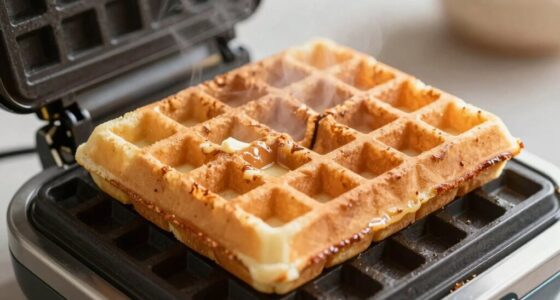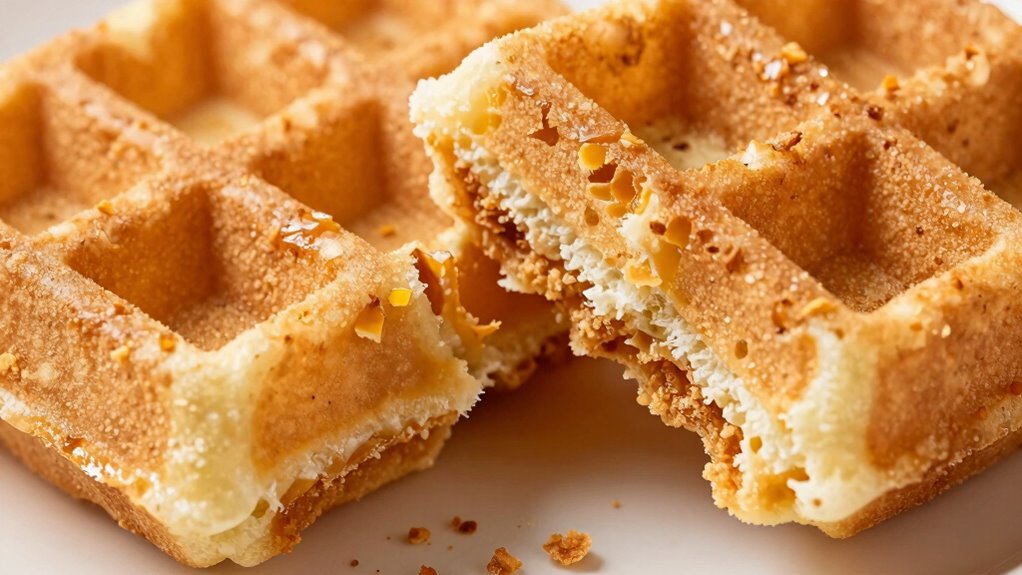

When you break a properly cooked waffle, it should make a satisfying, crisp crack, indicating the crust has firmed up perfectly while the interior stays fluffy. The sound is clear and sharp, reflecting the ideal balance of texture and doneness. If you hear a dull or overly harsh noise, it might mean it’s undercooked or overdone. Paying attention to this sound helps you perfect your waffle every time, so keep exploring for more tips.

Get baking supplies delivered free with Prime
- Fast, free delivery on millions of items
- Prime Video, Amazon Music and more included
- Member-only deals all year
Key Takeaways
- A properly cooked waffle should produce a clear, crisp crackling sound when broken.
- The sound indicates a firm crust with caramelized sugars and optimal doneness.
- It should not sound dull or muffled, which suggests undercooking.
- An excessively loud or harsh crackle may indicate overcooking or burning.
- The crack should be clean, revealing a fluffy, airy interior.
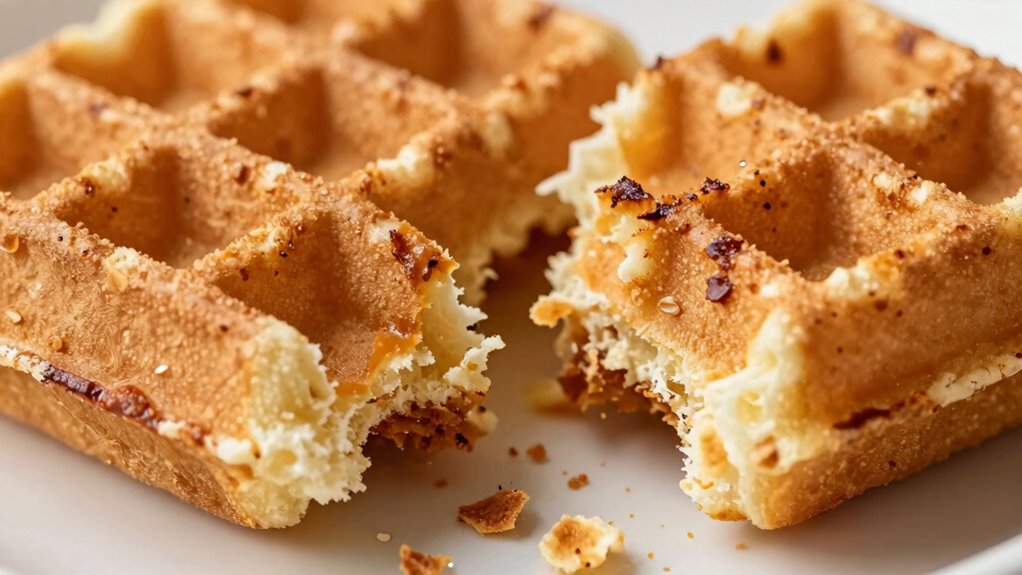
When your waffle is properly cooked, it produces a distinct, satisfying sound that signals it’s ready to enjoy. That sound isn’t just a random noise; it’s a sign that the waffle has reached the right internal state, with a perfect balance of texture and doneness. As you lift the spatula or plate it, you’ll notice a slight crackling or crisp sound, indicating that the exterior has firmed up to the ideal level. This is especially true when the waffle’s texture is just right—not too soft or soggy, but crisp and tender where it should be. The sound is a result of the Maillard reaction and caramelization happening at the right cooking temperature, creating a golden-brown crust that crackles when broken. Controlling the cooking temperature is key to achieving that perfect sound and texture. Proper temperature management ensures that the Maillard reaction occurs evenly, leading to consistent browning and crispiness.
The key to hitting that perfect sound lies in controlling the cooking temperature. If it’s too low, the waffle will cook slowly, resulting in a dull, muffled sound when you break it open, and the texture will be soft or even mushy. Conversely, if the heat is too high, the outside might burn before the interior is fully cooked, producing a harsh, crackling noise but risking an uneven texture. When you get the temperature just right, the waffle develops a satisfying crunch on the outside while remaining fluffy and tender inside. This contrast in textures is what creates that distinctive sound when you break it open — a crisp, satisfying snap that promises a delightful eating experience.
The waffle’s texture plays a crucial role in the sound it makes. A properly cooked waffle will have a firm, crisp exterior with a light, airy interior. This balance ensures that when you break it, you hear that audible crack rather than a dull thud. This sound signals that the waffle has developed a good crust, thanks to the right cooking temperature, which allows the sugars to caramelize properly. If you notice the sound is too muted or flat, it might mean the waffle isn’t cooked enough — either because the temperature was too low, or because it hasn’t been cooked long enough. On the other hand, an excessively loud or harsh crackle might mean it’s overdone or burnt on the outside. Additionally, the texture is influenced by the batter’s ingredients and the cooking method, which together influence the final sound and consistency.
In essence, that satisfying sound when breaking a properly cooked waffle is the culmination of precise temperature control and the waffle’s ideal texture. It’s a straightforward clue that tells you the waffle’s crust is just right, and the inside is perfectly fluffy, making each bite a pleasure. So, pay attention to that sound — it’s a simple but effective way to gauge when your waffle is perfectly done and ready to be enjoyed.
waffle maker with temperature control
As an affiliate, we earn on qualifying purchases.
As an affiliate, we earn on qualifying purchases.
Frequently Asked Questions
Does the Type of Waffle Affect the Sound When Breaking?
Yes, the type of waffle affects the sound when you break it. Thicker or denser waffles, like Belgian waffles, tend to crack loudly because of their sturdy structure. Thin waffles, such as waffle shapes used for sandwiches, break more softly. Waffle toppings can also influence the sound—gooey syrup or melted chocolate might muffle the crunch. So, the texture and design of your waffle, along with toppings, determine the breaking sound quite a bit.
Can the Sound Indicate if the Waffle Is Overcooked?
You might notice that if your waffle sounds too hollow or crumbles easily, it could be overcooked. Waffle texture is a key cooking indicator, and overcooking often results in a dry, brittle crust that breaks with a sharp, brittle sound. When you break it, listen for a firm but tender snap—if it’s too loud or sounds hard, your waffle may be overdone, signaling it’s time to tweak your cooking time.
How Does Moisture Content Influence the Breaking Sound?
Moisture content directly influences the breaking sound of a waffle. Higher moisture creates a softer, more tender texture variation, leading to a gentle, less audible crack when you break it. Conversely, a balanced moisture level results in a crisp exterior and a satisfying snap, producing a sharper sound. Too little moisture makes the waffle overly dry and brittle, causing a loud, crunching noise when you break it.
Is the Crunch Sound Consistent Across Different Waffle Makers?
Like the harmony in a symphony, the crunch sound varies across waffle makers, influenced by their unique textures and heat distributions. This consistency in crunch enhances flavor contrast, giving each bite a satisfying snap. While some machines produce a crisp, golden crack, others may yield a softer break. Your experience depends on your waffle maker’s design, but ultimately, the satisfying crunch should always elevate your tasting journey.
Does the Temperature of the Waffle Change the Breaking Sound?
Yes, the temperature of the waffle affects the breaking sound by impacting its texture contrast and flavor development. When you cook a waffle at the right temperature, it becomes crisp on the outside and tender inside, creating a satisfying crunch when broken. If it’s undercooked, it’ll be softer, and the sound will be dull. Overcooking makes it overly hard, resulting in a sharper, more brittle crack.
Conclusion
When you break into a perfectly cooked waffle, it should whisper of golden perfection—gentle cracks and tender snaps that hint at a warm, flaky interior. Like the quiet cheer of a sunrise, the sound tells you everything’s just right. A well-cooked waffle’s crackle is a soft, inviting melody, promising a satisfying bite. Trust that delicate symphony; it’s your secret signal that breakfast’s masterpiece is ready to enjoy.
Halloween Picks
halloween
As an affiliate, we earn on qualifying purchases.