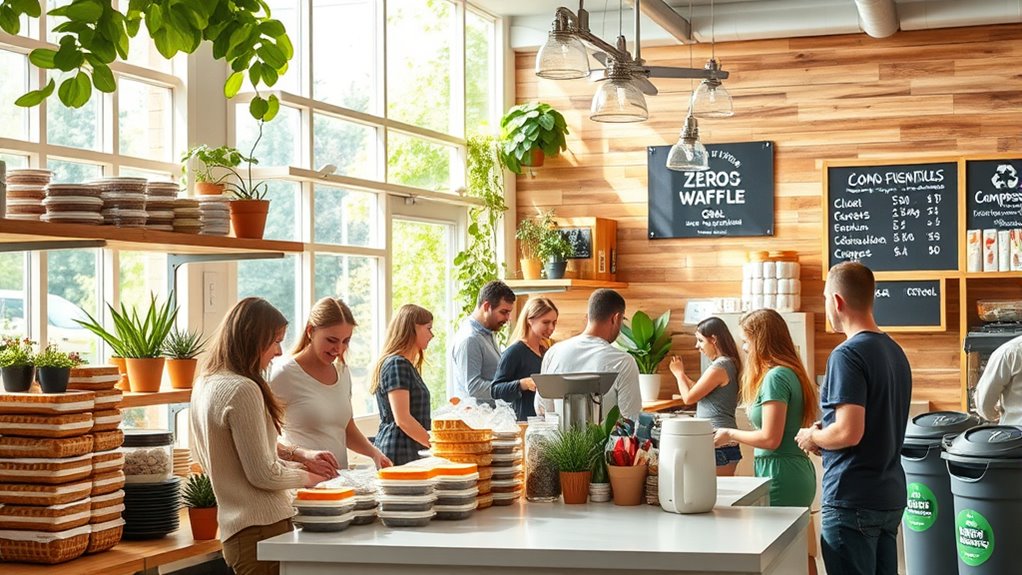

Implementing zero-waste initiatives in waffle shops helps you reduce environmental impact by cutting down on packaging waste and promoting composting of food scraps. By switching to biodegradable containers, reusing materials, and encouraging customer participation in waste sorting, you can lower your shop’s carbon footprint and support sustainability efforts. These practices also inspire eco-conscious behavior among your customers. To discover how these initiatives can transform your shop, keep exploring the benefits they bring.
Key Takeaways
- Zero-waste initiatives reduce waffle shop waste, lowering landfill contributions and environmental pollution.
- Adoption of biodegradable packaging enhances sustainability and appeals to eco-conscious customers.
- Composting food scraps and waste supports local agriculture and reduces overall waste volume.
- Waste reduction techniques, like portion control and reuse, improve operational efficiency and decrease costs.
- Promoting eco-friendly practices fosters customer loyalty and demonstrates a genuine commitment to environmental responsibility.
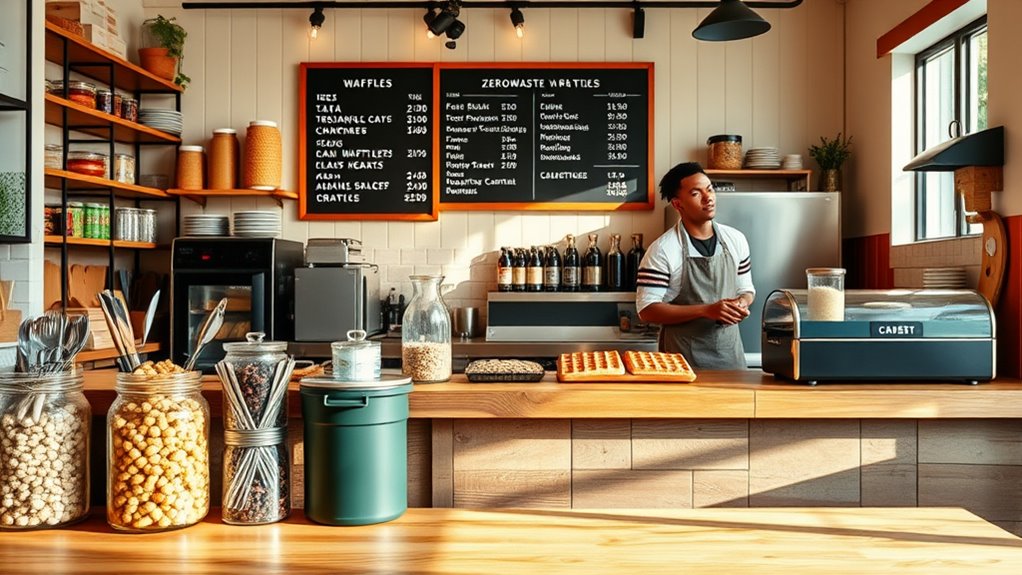
Many waffle shops are now adopting zero-waste initiatives to reduce their environmental impact. By doing so, they’re making conscious choices about how they package their products and handle waste, which can considerably cut down on landfill contributions. One key aspect is sustainable packaging, which involves using materials that are either biodegradable, recyclable, or compostable. Instead of traditional plastic wrappers or containers, many shops now opt for compostable boxes and wrappers made from plant-based fibers. These materials break down naturally, reducing pollution and minimizing the shop’s carbon footprint. As a customer, you might notice that your takeaway waffles come in these eco-friendly containers, and it’s part of a broader effort to promote sustainability.
In addition to sustainable packaging, waffle shops are implementing composting practices to manage organic waste more responsibly. When food scraps, napkins, or other compostable items are separated and processed properly, they can be turned into nutrient-rich compost rather than ending up in landfills. This practice not only reduces waste volume but also supports local sustainability initiatives, as the compost can be used in community gardens or farms. Many shops set up dedicated bins for compostable waste and educate staff and customers about sorting correctly. As someone who enjoys their waffles, you might be encouraged to participate in these efforts by rinsing containers or sorting waste properly, knowing that it contributes to environmental health. Additionally, some shops are exploring waste reduction techniques, such as reusing packaging or finding innovative ways to repurpose leftover ingredients.
These zero-waste strategies often extend beyond packaging and composting. Waffle shops are also exploring ways to minimize waste at the source, such as rethinking ingredient portions or donating surplus food. By adopting these practices, they not only reduce waste but also promote a culture of environmental responsibility that resonates with eco-conscious customers like you. The shift toward sustainable packaging and composting practices demonstrates a genuine commitment to sustainability, helping to preserve natural resources and reduce pollution. When you support these shops, you’re contributing to a movement that values environmental stewardship and encourages others to follow suit.

Aricsen Compostable 100 Pack 9×6 Inch Takeout Lunch Box Containers with Lid To Go Take Out Clamshell for Food, Disposable Eco-Friendly Biodegradable Bagasse, PFAS-Free, Brown
100% Compostable & Eco-Friendly: Made from FSC-certified wood, our container are a biodegradable and eco-friendly alternative to traditional…
As an affiliate, we earn on qualifying purchases.
As an affiliate, we earn on qualifying purchases.
Frequently Asked Questions
How Do Zero-Waste Practices Affect Waffle Shop Ingredient Sourcing?
Zero-waste practices encourage you to prioritize sustainable sourcing, reducing packaging waste and choosing local, eco-friendly suppliers. This shift enhances ingredient transparency, allowing you to better understand where your ingredients come from and how they’re produced. As a result, you can offer fresher, ethically sourced waffles, build trust with customers, and minimize environmental impact, all while supporting sustainable agriculture and responsible sourcing in your waffle shop.
What Are the Costs Associated With Implementing Zero-Waste Initiatives?
You might think zero-waste initiatives are costly, but a thorough cost analysis shows they often save money long-term through waste reduction. Initial investments in reusable materials, composting systems, and staff training are necessary, yet these expenses tend to decrease over time. Implementing waste reduction strategies can boost your shop’s efficiency and reputation, making the upfront costs worthwhile by lowering disposal fees and attracting eco-conscious customers.
How Do Customers Respond to Zero-Waste Waffle Shop Concepts?
You’ll likely see customers respond positively to zero-waste waffle shop concepts, especially if they value environmental awareness. Many appreciate your efforts to reduce waste, which can boost customer loyalty. When you communicate your commitment to sustainability clearly, customers feel more connected to your brand. As a result, they’re more inclined to return, recommend your shop, and support your eco-friendly initiatives, fostering a loyal, environmentally-conscious community around your waffle shop.
Are Zero-Waste Policies Sustainable Long-Term for Small Businesses?
Zero-waste policies are like planting a seed that can grow sustainably if you nurture it. For small businesses, they can be sustainable long-term if you implement effective recycling programs and composting methods. These initiatives reduce waste costs and appeal to eco-conscious customers. While initial efforts require investment, steady progress and community support can make zero-waste practices a lasting part of your waffle shop’s success.
What Challenges Do Waffle Shops Face When Adopting Zero-Waste Strategies?
You might face challenges like implementing effective waste management systems and providing recycling education to staff and customers. Balancing the cost of eco-friendly materials with your budget can be tough, and finding reliable suppliers for sustainable products isn’t always easy. Additionally, changing habits takes time, so consistently promoting waste reduction and recycling practices is essential to successfully adopt zero-waste strategies in your waffle shop.
![Fit Meal Prep [25 Pack] Pastry Boxes 8x8x3 White Bakery Box for Cookies, Compostable Kraft Paper Cardboard for Baked Goods Packaging, Cake, Food, Donut, Cupcake, Candy, Bread, Bridesmaid Gift Box](https://m.media-amazon.com/images/I/4130CfPfqhL._SL500_.jpg)
Fit Meal Prep [25 Pack] Pastry Boxes 8x8x3 White Bakery Box for Cookies, Compostable Kraft Paper Cardboard for Baked Goods Packaging, Cake, Food, Donut, Cupcake, Candy, Bread, Bridesmaid Gift Box
Dimensions: 8” length x 8” width x 3” height, with a total of 25 high-quality white boxes per…
As an affiliate, we earn on qualifying purchases.
As an affiliate, we earn on qualifying purchases.
Conclusion
By embracing zero-waste initiatives, you’re not just reducing waste—you’re transforming your waffle shop into a revolution of sustainability that could save the planet! Imagine your shop becoming legendary, inspiring others to follow your lead, and turning every waffle into a symbol of change. It’s more than a trend; it’s a movement that could make your tiny shop the epicenter of a global eco-warrior wave. So, go all-in and be the hero your community needs!
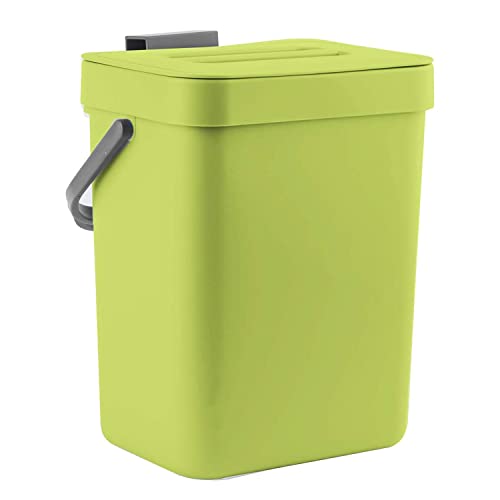
LALASTAR Food Waste Basket Bin for Kitchen, Small Countertop Compost Bin with Lid, Odor-Free Food Scrap Container, Wall Mounted Garbage Can, 3L/0.8 Gal, Green
Hangable & Mountable: The small trash can with lid can be easily hung on the doors of kitchen…
As an affiliate, we earn on qualifying purchases.
As an affiliate, we earn on qualifying purchases.
eco-friendly waffle shop supplies
As an affiliate, we earn on qualifying purchases.
As an affiliate, we earn on qualifying purchases.