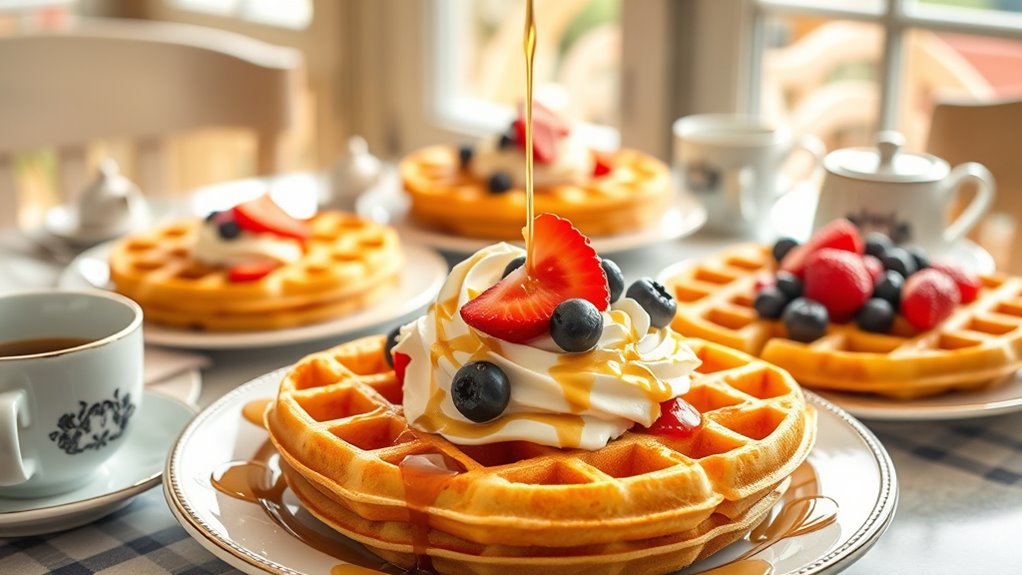

You’ve seen how waffles shifted from street snacks to a breakfast staple through cultural and technological changes. Around the 19th century, the invention of the waffle iron made preparing them faster and easier. Societal appreciation grew as people started sharing waffles during family mornings, adding toppings like syrup and fruit. This evolution reflects broader shifts in breakfast habits and regional influences. If you keep exploring, you’ll uncover even more fascinating stories behind their rise.
Key Takeaways
- Waffles shifted from street snacks to breakfast staples alongside societal appreciation for their cultural significance.
- The invention of the waffle iron made preparation faster, facilitating their integration into morning routines.
- Toppings like syrup and fruits transformed waffles into a comfort food, enhancing their appeal for breakfast.
- Globalization introduced regional variations, elevating waffles from street food to a breakfast icon worldwide.
- Societal changes in morning habits and shared meals contributed to waffles becoming a breakfast symbol.
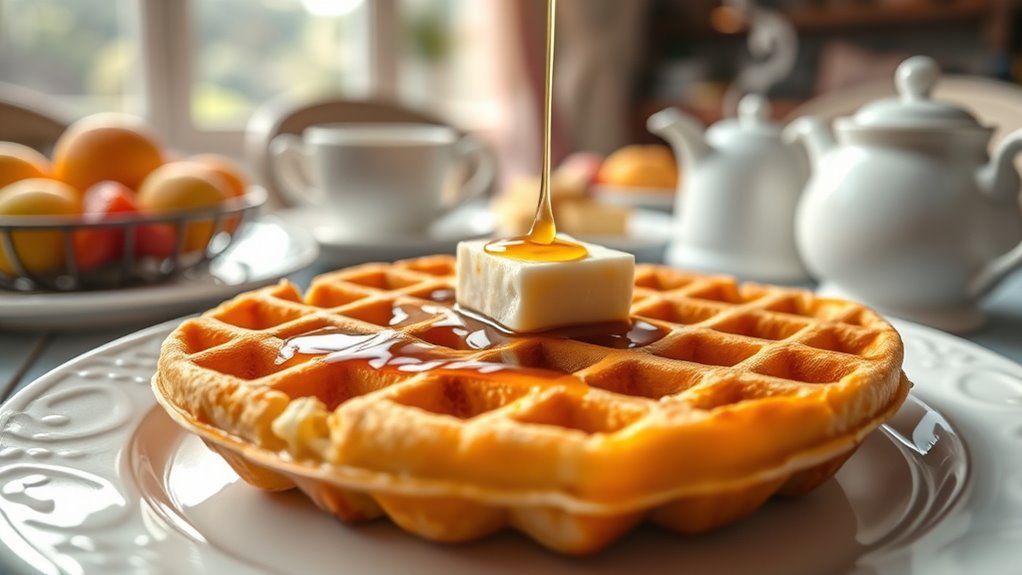
Waffles have long been a popular choice for breakfast, offering a delicious and versatile start to the day. But their place in morning routines didn’t happen overnight; it evolved through cultural significance and regional variations that shaped how people enjoy them today. In many parts of the world, waffles aren’t just a meal—they’re a symbol of tradition, family gatherings, or even national pride. For example, in Belgium, waffles are more than just a breakfast item; they’re a culinary icon, celebrated with different styles like the Brussels or Liège varieties, each with distinct textures and toppings. These regional variations reflect local ingredients, tastes, and customs, making waffles a mirror of cultural identity. As you explore different types, you’ll notice how the shape, thickness, and toppings tell a story about the place where they originate. Over time, such cultural significance helped elevate waffles from simple street food or snack to a breakfast staple, especially as societies began to value the communal aspect of sharing a warm, comforting meal in the morning.
Waffles symbolize cultural identity, tradition, and regional pride, evolving from street food to breakfast staple worldwide.
Furthermore, the shift toward waffles as a breakfast choice was influenced by societal changes, including technological advancements like the invention of the waffle iron. This device made it easier and faster to prepare waffles at home, turning them into an accessible morning option for families. As breakfast became more about convenience and variety, waffles fit perfectly because they could be customized with an array of toppings—fruits, syrups, whipped cream, or even savory ingredients—making each serving unique. This adaptability contributed to their rise in popularity across different regions, helping to embed waffles into daily breakfast routines.
You might also notice how cultural exchanges and globalization have played a role in transforming waffles into a breakfast favorite worldwide. American diners, for instance, adopted and adapted Belgian recipes, adding syrup and butter, which became symbols of comfort and indulgence. Meanwhile, countries with their own traditional breakfast foods sometimes incorporated waffles into their menus, blending local flavors with this European invention. The widespread availability of breakfast foods like waffles reflects how regional influences and innovations have shaped breakfast culture globally. The result is a layered history where cultural significance and regional variations continue to influence how waffles are prepared and enjoyed.
In essence, the widespread acceptance of waffles as a breakfast food hinges on their ability to adapt and resonate with different cultural identities. They’ve moved beyond their origins, becoming a versatile, comforting, and culturally rich dish that reflects regional tastes and traditions. So next time you bite into a waffle, remember it’s more than just a tasty treat—it’s a piece of culinary history, shaped by diverse cultures and regional influences that continue to define its place on our breakfast plates.

Cuisinart Round Flip Belgian Waffle Maker, Black/Silver, 1 inch thick, WAF-F30NAS
Bakes a restaurant-quality, 1" thick Belgian-style waffle
As an affiliate, we earn on qualifying purchases.
As an affiliate, we earn on qualifying purchases.
Frequently Asked Questions
How Did Waffles Become a Breakfast Staple Historically?
You see, waffles became a breakfast staple through their waffle symbolism—representing comfort and tradition—especially in European cultures. As waffle manufacturing improved and became more widespread, they gained popularity in American households. Their versatility and appealing texture made them ideal for breakfast, and over time, they shifted from special occasion treats to everyday morning fare. This transformation helped cement waffles as a beloved breakfast choice across many regions.
What Cultural Influences Shaped Waffle Popularity in the U.S.?
Waffles, like a bridge connecting worlds, gained popularity in the U.S. through diverse cultural influences. You see, culinary globalization brought Belgian traditions and European flavors into American kitchens, shaping their sociocultural impact. As immigrants shared their recipes, waffles became a breakfast icon, blending old-world charm with modern tastes. This cultural exchange fuels their rise, making waffles a symbol of multiculturalism and a beloved breakfast staple across the country.
Are There Regional Differences in Waffle Consumption?
You’ll notice regional differences in waffle consumption, with local preferences shaping flavors and toppings. In the South, you might enjoy waffles with pecans and sweet syrup, while the Midwest favors hearty, savory options. In the Northeast, fruit toppings are popular, reflecting local tastes. These regional flavors and local preferences influence how often and in what ways people indulge in waffles, making each area’s waffle experience unique.
How Have Nutritional Trends Affected Waffle Recipes?
Like a modern-day Pandora’s box, nutritional trends have transformed waffle recipes. You now find gluten-free options and plant-based toppings, catering to health-conscious and ethical consumers. These shifts make waffles more inclusive and adaptable, encouraging you to experiment with ingredients that nourish your body without sacrificing flavor. As a result, waffles reflect evolving dietary values, turning this beloved comfort food into a versatile, health-forward delight.
What Are Innovative Ways to Serve Waffles Today?
You can serve waffles creatively today by experimenting with alternative batters like cauliflower, quinoa, or beetroot to add unique flavors and nutrition. Top them with creative toppings such as fresh fruit, whipped yogurt, or savory options like smoked salmon and herbs. Try stacking waffles into a sandwich or making waffle tacos. These ideas make your waffle experience exciting, versatile, and personalized to suit breakfast, brunch, or even dessert.

Dash No-Drip Waffle Maker – Quad Waffle Maker for Hassle-Free Breakfasts – Dual Nonstick Heating Plates & Quick Heat-Up System – Easy-Release Surface – Silver
Consistently Perfect Waffles: The Dash No-Drip Waffle Maker is a family breakfast maker with dual nonstick heating plates…
As an affiliate, we earn on qualifying purchases.
As an affiliate, we earn on qualifying purchases.
Conclusion
So, next time you bite into that crispy waffle, remember it’s more than just a tasty treat—it’s a symbol of how breakfast transformed from a simple meal into a cultural staple. Like a golden sunrise on your plate, waffles have risen to symbolize comfort, community, and culinary innovation. They’ve woven themselves into the fabric of our mornings, turning ordinary mornings into celebrations. Embrace the waffle’s journey and savor the delicious history in every crispy bite.

Waffle Cone Pieces | Ice Cream Topping & Dessert Decoration | by Dasher's Spice & Beans | 1 lb.
Approximately 1/4" x 1/4" sized broken pieces of waffle cone
As an affiliate, we earn on qualifying purchases.
As an affiliate, we earn on qualifying purchases.

Silicone Belgian Waffle Mold, 2-Cavity Non-Stick Air Fryer Muffin Pan for Baking, Gray
VERSATILE BAKING: 2-piece set of Belgian waffle molds, each featuring 2 cavities for making 4 perfectly shaped waffles…
As an affiliate, we earn on qualifying purchases.
As an affiliate, we earn on qualifying purchases.