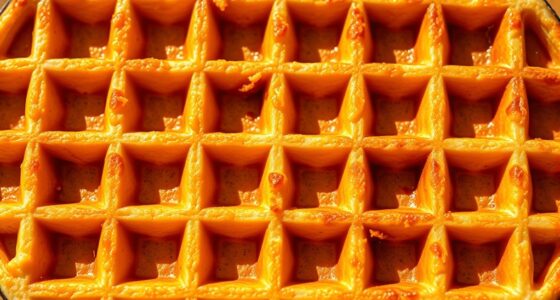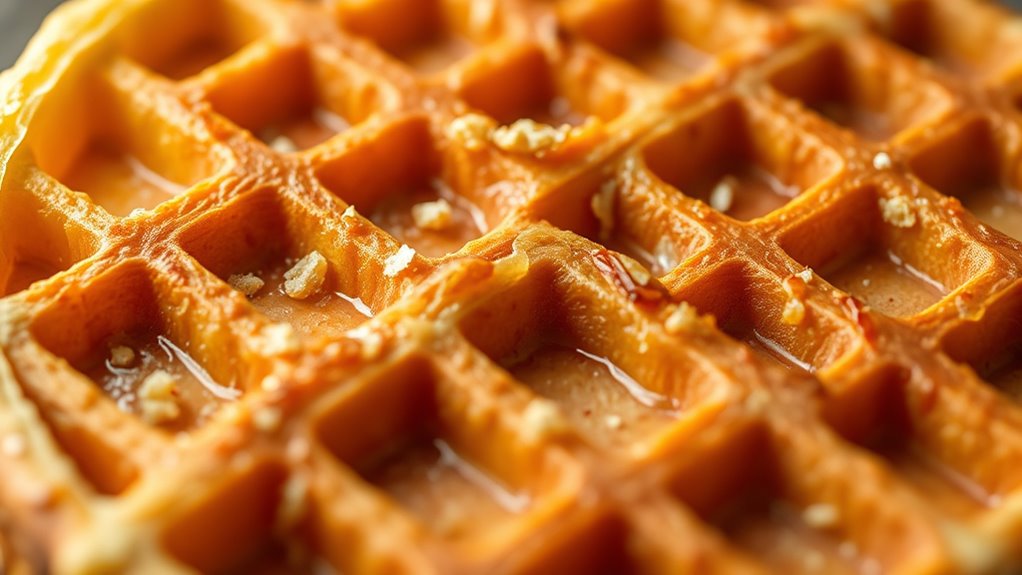

When you heat eggs in your waffle batter, their proteins unfold and link together, creating a network that traps air and moisture. This process, called coagulation, strengthens the batter’s structure, giving your waffle its rise and texture. Proper temperature control guarantees the eggs’ proteins coagulate just right—too much can make waffles dense and tough, while too little results in crumbling. Keep exploring to discover how different ingredients and techniques influence this fascinating process.
Key Takeaways
- Egg proteins unfold and denature when heated, forming a network that solidifies during cooking.
- Proper coagulation creates a stable protein matrix that traps air, contributing to waffle rise and texture.
- Excessive heat causes over-coagulation, resulting in dense, tough waffles, while insufficient heat leads to fragile structures.
- Heat-induced protein interactions develop the golden-brown crust and influence waffle crispiness.
- Balancing ingredient ratios and temperature control ensures optimal protein coagulation for light, tender waffles.

Waffles are more than just a delicious breakfast treat; they also showcase interesting protein structures that influence their texture and flavor. When you prepare waffles, you might notice how their surface is crisp yet tender inside. This texture results from a complex interplay of ingredients, especially eggs, which contain proteins that interact during cooking. Understanding egg protein interactions helps explain how waffles achieve their desirable texture and why they turn out so appealing.
Egg proteins are unique because they can form networks when heated, a process known as coagulation. When you whisk eggs into your batter, their proteins are suspended in liquid, keeping the mixture smooth and cohesive. As the waffle cooks, heat causes these proteins to unfold and link together, creating a firm but flexible network. This protein network helps trap air bubbles and moisture, which are essential for the waffle’s rise and lightness. The interaction between egg proteins and other ingredients like flour and sugar influences how the batter develops and ultimately how the waffle’s texture forms.
Egg proteins form networks when heated, trapping air and moisture to create a light, tender waffle texture.
During cooking, the heat causes the egg proteins to denature and coagulate, forming a gel-like structure that solidifies as the temperature rises. This process is essential because it creates the internal crumb structure of the waffle. If the egg proteins coagulate too quickly or too extensively, the waffle might turn out dense and tough. Conversely, if they don’t coagulate enough, the waffle might be too fragile or fall apart easily. Achieving the right balance in egg protein interactions guarantees a waffle that is crispy on the outside while remaining soft and airy inside.
The formation of waffle texture hinges on this delicate balance of protein behavior. As the heat continues to act on the batter, the egg proteins contribute to the development of a golden-brown crust while supporting the internal structure. This is why proper mixing, temperature control, and ingredient ratios matter—they all influence how well the egg proteins interact and coagulate. When done correctly, these interactions lead to a well-structured waffle with a satisfying crunch and a tender interior.

DOLAMOTY Upgrade Replacement Thermometer for Big Green Egg Grill with 3.3" Large Dial,Temperature Gauge for Big Green Egg Accessories 150-900°F with Waterproof and No-Fog Glass Lens
Large Temperature Range 150-900°F: With our replacement thermometer for big green eggs, enjoy your meat at a certain…
As an affiliate, we earn on qualifying purchases.
As an affiliate, we earn on qualifying purchases.
Frequently Asked Questions
How Does Egg Temperature Affect Waffle Texture?
You’ll notice that egg temperature greatly influences waffle texture. When eggs are too cold, they resist melting, leading to uneven batter and less fluffy waffles. Proper temperature control guarantees eggs melt smoothly, creating a uniform batter and tender texture. If you don’t, the eggs won’t coagulate evenly, resulting in dense or rubbery waffles. So, always warm your eggs slightly before mixing to achieve the perfect balance of fluffiness and crispness.
Can Alternative Proteins Replace Eggs in Waffle Batter?
Yes, plant-based alternatives can replace eggs in waffle batter by mimicking protein coagulation. You might try ingredients like flaxseed, chia seeds, or commercial egg replacers, which help bind and provide structure. These options activate proteins similarly to eggs, ensuring your waffles stay fluffy and cohesive. Experiment with different plant-based proteins to find the best texture and flavor, making your waffles suitable for vegans or those with allergies.
What Role Does Sugar Play in Egg Coagulation During Baking?
You might find sugar’s browning effect and moisture retention gently influence egg coagulation during baking. Sugar helps control the texture by promoting even heat distribution, leading to a tender, moist waffle. It slightly slows protein denaturation, giving eggs time to set properly. By retaining moisture, sugar guarantees the eggs don’t over-coagulate too quickly, resulting in a balanced, fluffy waffle with a rich, appealing crust.
How Do Additives Like Baking Powder Influence Protein Structure?
Additives like baking powder influence protein structure through chemical interactions that promote protein denaturation. When baking powder releases gases, it creates a bubbly environment that causes proteins in eggs and batter to unfold and form new bonds. This process results in a lighter, fluffier texture in your waffles. So, baking powder doesn’t just leaven; it actively alters protein structure, making your waffles rise and achieve the desired consistency.
Are There Health Benefits Linked to Egg Coagulation in Waffles?
Egg coagulation in waffles offers nutritional benefits by increasing protein digestibility and providing essential amino acids. When eggs coagulate, they form a firm structure that helps retain nutrients, making your waffles more nourishing. This process also enhances texture and flavor. So, by enjoying waffles with properly coagulated eggs, you’re boosting your intake of high-quality protein and other nutrients, supporting overall health and muscle maintenance.

Whiskware Pancake Bottle, Batter Dispenser and Mixer with BlenderBall Wire Whisk, Durable, No-Mess, BPA Free, Dishwasher Safe, Mint
BPA-free plastic|Easy clean up in the sink or dishwasher|Stainless steel blender ball replaces whisks and spoons|Measure up to…
As an affiliate, we earn on qualifying purchases.
As an affiliate, we earn on qualifying purchases.
Conclusion
Next time you enjoy a crispy waffle, remember eggs play a key role. Their proteins coagulate during cooking, giving waffles their structure and texture. Did you know that eggs contain over 6,000 different proteins? That’s like having a protein party in every bite! So, next time you whip up batter, think about how these tiny proteins transform into the delightful, sturdy waffles you love. It’s science you can definitely taste!
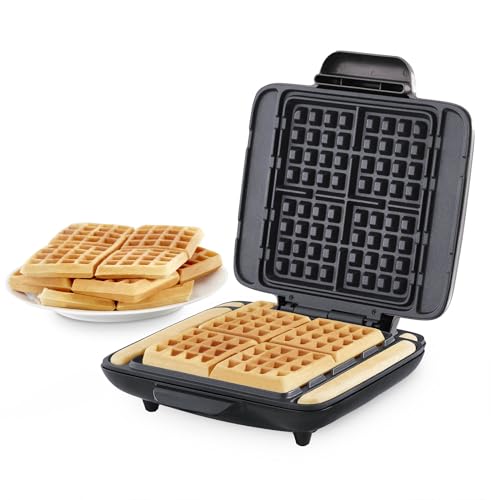
Dash No-Drip Waffle Maker – Quad Waffle Maker for Hassle-Free Breakfasts – Dual Nonstick Heating Plates & Quick Heat-Up System – Easy-Release Surface – Silver
Consistently Perfect Waffles: The Dash No-Drip Waffle Maker is a family breakfast maker with dual nonstick heating plates…
As an affiliate, we earn on qualifying purchases.
As an affiliate, we earn on qualifying purchases.

Avykalox Semi Automatic Whisk & Egg Yolk Separator, Stainless Steel Mini Hand Push Whisk, Hand Mixer Egg Beater Wisking Tool & Egg Separator for Raw Eggs Set, for Cooking, Baking
Quick Separation & Whisking: Innovative spiral separator for instant egg yolk/white separation; spring-design semi automatic whisk for effortless…
As an affiliate, we earn on qualifying purchases.
As an affiliate, we earn on qualifying purchases.